intact catasetum Care (Catasetum integerrimum)

intact catasetum

About intact catasetum

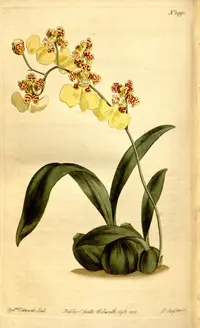
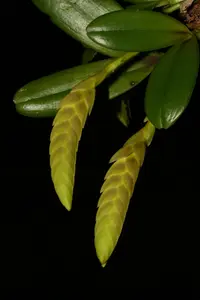
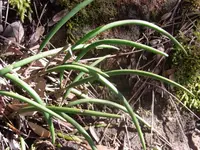
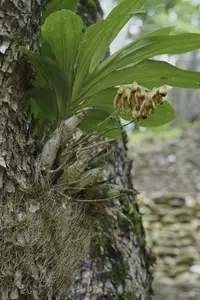
Catasetum integerrimum, often called intact catasetum, is a deciduous epiphytic orchid that grows on trees in warm forests of Mexico and Central America. It forms thick pseudobulbs with broad leaves that drop in the dry season, followed by dramatic, waxy flowers on arching stems.

This species has separate male and female flowers, which can look quite different, so its appearance changes through the year. It is considered moderately demanding because it needs strong light, a pronounced rest period, and careful watering to avoid rot.

Those who learn how to care for intact catasetum usually find it rewarding, as it grows fast when conditions are right and responds well to seasonal changes in care.

Main Plant Requirements

Care Difficulty

Moderate Care

Light Preference

Partial Sun

Water Requirements

Moderate Water

Temperature Preference

Tropical / Frost Sensitive

Hardiness Zone

11–12

Soil Texture

Sandy, Organic-rich

Soil pH

Acidic (5.5–6.5)

Soil Drainage

Well-drained

Fertilization

Heavy (weekly, diluted)

Get Personalized Care Plan

Scan your plant to receive care tips personalized for your specific plant

Available on iOS and Android

How to Care for the intact catasetum

This deciduous orchid needs strong, carefully managed light to build firm pseudobulbs and flower well.

  • Provide 6–8 hours of bright light daily, with 3–5 hours of gentle morning sun and shaded or filtered light from late morning onward.
  • Grow Catasetum integerrimum outdoors in bright dappled shade or under 30–50% shade cloth to prevent leaf burn while maintaining high light levels.
  • Watch foliage color: medium green with slightly firm leaves indicates correct light, while dark soft leaves signal too little light and yellow, scorched patches indicate excess sun.

Watering for this species must track its active growth and dry-season dormancy.

  • During active growth with leaves present, water thoroughly when the medium is almost dry, allowing the top 2–4 cm to dry while ensuring fast drainage.
  • Reduce watering sharply as leaves yellow and drop, then keep the plant nearly dry during full dormancy, giving only light sips if pseudobulbs begin to shrivel.
  • For Catasetum integerrimum, signs of overwatering include blackened roots and mushy pseudobulbs, while deep wrinkling and very light bulbs indicate underwatering during the growing season.

This orchid prefers warm to hot conditions with a clear seasonal shift between summer growth and winter rest.

  • Aim for 75–85°F (24–29°C) by day and 65–72°F (18–22°C) at night during active growth to support rapid leaf and pseudobulb development.
  • Protect from cold; avoid letting temperatures drop below 55°F (13°C), and never expose plants to frost, which damages roots and buds.
  • In hot spells above 90°F (32°C), increase air movement and shade to prevent heat stress, while in winter dormancy slightly cooler, drier conditions help set the next season’s growth.

This orchid prefers moderately high humidity during active growth but copes with short dry spells.

  • Aim for 50–70% humidity in the growing season, with stronger air movement at the upper end of the range to prevent fungal problems.
  • Tolerates indoor 35–40% humidity if watering is adjusted, but prolonged low humidity causes pleated leaves and stalled new growth in intact catasetum.
  • Increase humidity with a nearby humidifier, grouped plants, or a wide pebble tray under (not touching) the pot, rather than misting the foliage.

Catasetum integerrimum grows best in a very loose, airy medium that drains rapidly yet holds brief, even moisture around the roots.

  • Use a chunky mix such as medium orchid bark with 20–30% perlite or pumice and a small portion of sphagnum moss to retain short-term moisture.
  • Ensure the medium is coarse and open so water runs through in seconds, preventing roots from sitting in stagnant moisture that leads to rot.
  • A slightly acidic to neutral reaction, around pH 5.5–7.0, suits this species and supports nutrient uptake without causing leaf burn.
  • Avoid dense peat-heavy potting soil, fine bark dust, or decomposed mixes that compact and exclude air from the roots.

This species is well suited to container culture when stability and drainage are carefully managed.

  • Choose a relatively heavy pot or add top dressing stones to prevent the tall pseudobulbs from tipping the container in wind or when watered.
  • Select a pot only 2–3 cm wider than the root mass so the coarse medium dries predictably between waterings.
  • Use a container with multiple side and bottom holes to let water and humid air move freely through the chunky orchid mix.

Catasetum integerrimum responds strongly to feeding during its active growth phase, while a dry rest needs little to no nutrients.

  • Use a balanced NPK orchid fertilizer at 1/4–1/2 strength with every 1–2 waterings during active growth.
  • Apply from new shoot emergence until leaves yellow in late season, then stop during full dormancy.
  • Flush the medium with plain water monthly to prevent salt buildup around the roots.
  • For caring for intact catasetum, avoid slow-release granules; use liquid formulations suited to bark or inert media.

Pruning needs for Catasetum integerrimum are minimal and focus on hygiene rather than shaping.

  • Cut away spent flower spikes at the base once they dry completely, using sterilized scissors or snips.
  • Remove only dead, yellowed, or diseased leaves, leaving green foliage to support bulb growth.
  • Do not cut living pseudobulbs; they store water and nutrients for future growth and flowering.
  • Disinfect tools before and after use with alcohol or a flame to limit disease spread.

This orchid benefits from timely repotting to keep the medium fresh and roots healthy.

  • Repot every 1–2 years, or when roots circle the pot, medium decomposes, or growth slows.
  • Plan repotting just as new roots start from emerging shoots in spring for fastest recovery.
  • Gently remove old medium, trim dead roots only, and place pseudobulbs slightly above fresh, fast-draining orchid mix.
  • Water lightly for the first 7–10 days after repotting to reduce rot risk while new roots establish.

Propagation of Catasetum integerrimum is usually done by division of mature clumps rather than from seed.

  • Divide during early spring when new shoots and roots begin to emerge.
  • Ensure each division carries at least 3–4 healthy pseudobulbs to support stable regrowth.
  • Use a sterile knife or pruning tool and dust cut surfaces with fungicidal powder or cinnamon.
  • Pot divisions in small containers with airy orchid bark, keep warm, and water sparingly until new roots extend.

This species needs a cool, dry winter rest and does not tolerate frost.

  • After leaf drop, keep pseudobulbs dry and store at 55–65°F, with bright, indirect light.
  • Move container plants indoors before temperatures fall below 50°F.
  • Do not water dormant plants; resume gentle watering only when new growth and roots appear.
  • Avoid high humidity in cool conditions to reduce fungal problems on dormant bulbs.

Care Tips

Dormancy cue management

When new growths reach 5–8 cm, gradually increase water and fertilizer, then once leaves yellow and drop in autumn, stop watering completely and store the plant dry until eyes swell again in spring.

Targeted stake support

Stake each new pseudobulb early with a slim bamboo or fiberglass stake placed close to the bulb, tying loosely with soft ties so the inflorescences remain upright and the bulbs do not snap under their own weight.

Controlled repot timing

Repot only when new roots are just emerging from the base of new growth, trimming dead roots and resetting the plant high in the pot so new roots grow directly into fresh, airy medium.

Seasonal light adjustment

Provide brighter, almost unobstructed light during active growth, then move the plant to slightly shadier but still bright conditions during leafless dormancy to reduce dehydration of exposed pseudobulbs.

Preventive pest checks

Inspect leaf undersides, sheaths, and pseudobulb crevices every 1–2 weeks during active growth, removing old sheaths and treating early signs of scale or spider mites, which is critical when caring for intact catasetum in warm, dry rooms.

Common Pests and Diseases

Spider mites

This pest thrives in the warm, dry conditions often used to push Catasetum into fast growth, sucking sap from the undersides of leaves. Symptoms include fine stippling, dulling of foliage, and fine webbing between pseudobulbs and leaves.

Solution

Increase humidity and rinse foliage thoroughly with a strong tepid water spray, including leaf undersides, then allow good air movement so leaves dry quickly. For persistent infestations, use a miticide or insecticidal soap labeled for orchids, repeating at 5–7 day intervals until new growth appears clean.

Scale insects

These insects attach to pseudobulbs and leaf bases, feeding on sap and excreting sticky honeydew that encourages sooty mold. Symptoms include yellowing areas on canes, sticky surfaces, and small dome-shaped or flat shells along ridges and sheaths.

Solution

Isolate the plant, then physically remove visible scale with a cotton swab dipped in isopropyl alcohol, focusing on crevices and around new growths. Follow with 2–3 treatments of horticultural oil or insecticidal soap at 7–10 day intervals, and reduce plant stress by providing correct light, fertilizer, and watering during active growth.

Fusarium wilt

This disease is favored by high temperatures and repeated cuts on rhizomes or pseudobulbs, leading to vascular blockage. Symptoms include slow, stunted new growth, shriveling pseudobulbs, and a characteristic purple ring in cross-sections of affected rhizomes or canes.

Solution

Remove and discard all affected pseudobulbs and sections of rhizome, sterilizing cutting tools with flame or 70% alcohol between every cut. Repot into fresh, fast-draining medium, improve airflow, and avoid reusing pots or media; going forward, always disinfect cutting tools before dividing or trimming the plant.

Bacterial soft rot

This disease spreads quickly in hot, stagnant, very wet conditions around thick pseudobulbs and leaf bases. Symptoms include rapidly collapsing, water-soaked tissue with a foul odor, often starting at wounded or crowded areas between bulbs.

Solution

Immediately cut out all affected tissue well into healthy, firm tissue and discard it, then dust cuts with a dry bactericide or powdered cinnamon and keep the plant on the dry side until callused. Improve air movement, avoid water sitting in leaf axils or bulb crevices, and reduce overhead watering in very warm, humid weather.

Black rot

This disease affects roots, new shoots, and pseudobulbs in warm, wet conditions, especially when pots stay wet for long periods or water splashes frequently between plants. Symptoms include black, firm to mushy lesions that spread rapidly from roots or new growths upward, often with a sharp margin between healthy and diseased tissue.

Solution

Remove the plant from its pot, cut away all blackened tissue and affected roots, and discard contaminated media. Soak remaining healthy parts in a systemic fungicide labeled for Phytophthora/Pythium, then repot in fresh, coarse medium, keep watering moderate, and ensure strong drainage and airflow around the plants to reduce recurrence.

Interesting Facts

Explosive pollen launch

The flowers have a sensitive trigger mechanism on the column; when a visiting male euglossine bee touches it, the pollinarium is catapulted onto the insect in a split second.

Strong floral dimorphism

This species produces distinctly different male and female flowers on separate inflorescences, with male flowers often more showy and elaborate than the relatively reduced female flowers.

Seasonal leaf drop

It is a strongly deciduous orchid from seasonally dry habitats in Mexico and Central America, shedding its thin leaves completely during the dry season while surviving through swollen pseudobulbs.

Botan icon

Did you know?

Fragrance studies and field observations show that its male flowers specifically attract perfume-collecting male euglossine bees, which scrape aromatic compounds from the floral surfaces and store them in leg pouches, indirectly ensuring highly specialized pollination for the orchid.

FAQs about intact catasetum

Flowering depends on strong light, a distinct dry rest after leaf drop, and a well-fed, mature pseudobulb. If the plant stays too moist in winter or receives weak light, buds often fail to form or abort early.

Grow Healthy Plants with Botan Care

Keep your plants happy and healthy with plant identification, disease detection, and easy care guidance.


Botan plant care app — identify plants on mobile

Explore More Plants