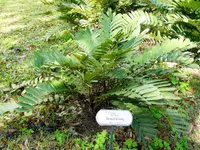
Voi cycad Care (Encephalartos kisambo)

Voi cycad

About Voi cycad

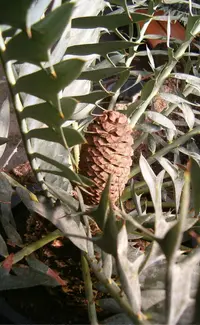
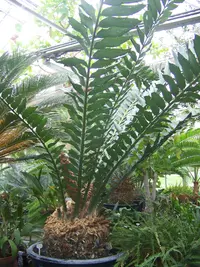
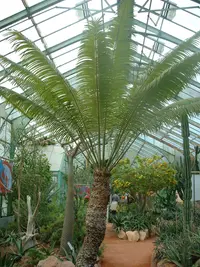
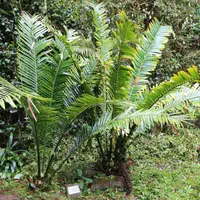
Encephalartos kisambo, commonly called Voi cycad, is a slow-growing, trunk-forming cycad with stiff, arching fronds that give it a bold, architectural look. Mature plants can form a stout woody stem topped with a dense crown of glossy leaflets.

This species is native to dry, rocky hillsides in Kenya, where it experiences strong light and seasonal drought. Its slow growth and sensitivity to overwatering make it more challenging than typical houseplants, but it is long-lived when conditions are stable.

Gardeners who care for Voi cycad usually focus on bright light, excellent drainage, and protection from prolonged cold and excessive moisture.

Main Plant Requirements

Care Difficulty

Hard Care

Light Preference

Full Sun

Water Requirements

Low Water

Temperature Preference

Warm Climate

Hardiness Zone

10–11

Soil Texture

Sandy, Loamy, Rocky

Soil pH

Slightly acidic (6.5–7.0), Neutral (7.0)

Soil Drainage

Well-drained

Fertilization

Minimal (feed rarely)

Get Personalized Care Plan

Scan your plant to receive care tips personalized for your specific plant

Available on iOS and Android

How to Care for the Voi cycad

Encephalartos kisambo prefers bright, high light but needs gradual acclimation to strong sun in warm climates.

  • Provide 5–7 hours of direct sun daily, ideally with morning sun and light afternoon shade to prevent leaflet scorch.
  • Plant Voi cycad in an open position with filtered or dappled light in the hottest regions, especially where summer sun is intense.
  • Watch for pale, stretched growth as a sign of insufficient light, and for brown, crispy leaflet tips as a sign of excessive, harsh sun.

Encephalartos kisambo prefers deep, infrequent watering in sharply drained soil that dries slightly between soakings.

  • Water only when the top 3–5 cm of soil are dry, applying a slow, deep soak so water reaches the full root zone, then let excess drain away fully.
  • During active growth in warmer months, expect to water more often, but in cool or dormant periods reduce watering and allow the soil to dry more thoroughly.
  • Yellowing, soft leaf bases or a rotten caudex indicate overwatering and poor drainage, while crisp leaflets and a very loose crown suggest underwatering.

This cycad thrives in warm, frost-free conditions and slows growth when temperatures drop too low.

  • Aim for 70–90°F (21–32°C) for strongest growth, with good air movement to prevent heat buildup around the crown and roots.
  • Protect the plant whenever temperatures approach 32°F (0°C); brief dips to 30°F (-1°C) may be tolerated but repeated frosts can damage leaves and new flushes.
  • In regions with cool winters below 40°F (4°C), position the plant in a warm microclimate, such as a south-facing wall, and mulch the root zone to buffer cold.

Humidity is a minor factor for Encephalartos kisambo compared with light and drainage.

  • Tolerates 30–60% humidity well, making Voi cycad suitable for most heated and air-conditioned homes.
  • Dry air rarely harms established plants, but new flushes of leaves are more sensitive to sudden, hot drafts.
  • Signs of humidity stress include browning leaflet tips and faster spider mite buildup rather than soft, drooping foliage.

Encephalartos kisambo needs very sharp drainage and a mineral, gritty substrate to prevent root rot.

  • Use a sandy, gritty mix such as 50–60% inorganic material (pumice, coarse sand, small gravel, or perlite) with 40–50% lean, low-peat compost.
  • Aim for slightly acidic to neutral pH around 6.0–7.0, avoiding strongly acidic or salty mixes.
  • Improve aeration by using large particle sizes (3–8 mm) and avoiding dense, fine-textured potting mediums that compact over time.
  • Avoid water-retentive clay-based garden soil or heavy peat mixes, especially in cool or low-light conditions, as these keep roots wet too long.

This species can be grown successfully in containers when given a stable, well-drained setup.

  • Choose a deep, heavy pot (thick terracotta or concrete) to counterbalance the growing crown and resist wind tipping.
  • Select a container just 5–10 cm wider than the caudex to limit excess wet substrate around the roots.
  • Raise the pot slightly on feet or blocks so drainage holes clear the ground and water exits instantly after irrigation.

Encephalartos kisambo benefits from modest feeding to support slow, steady growth.

  • Use a balanced slow-release NPK fertilizer or well-aged compost on the soil surface at the start of the warm growing season.
  • Feed 1–2 times per growing season, avoiding heavy applications that can burn the roots of this cycad.
  • Apply at half the label strength for container plants, or lightly around the drip line for in-ground specimens when caring for Voi cycad.
  • Reduce or stop fertilizing in cooler months when growth stalls, as nutrients will not be efficiently used.

Encephalartos kisambo needs minimal pruning, mainly for hygiene and safety around the crown.

  • Carry out pruning in late winter or early spring before strong new flushes of fronds appear.
  • Remove only dead, yellowing, diseased, or badly damaged fronds, cutting them cleanly at the base with sharp loppers or a pruning saw.
  • Avoid cutting healthy green fronds, since over-removal weakens the plant and distorts its natural symmetrical form.
  • Discard pruned material away from the plant to reduce pest habitat and maintain clear airflow around the crown.

This cycad is slow-growing and dislikes disturbance, so transplant or repot Encephalartos kisambo only when clearly necessary.

  • Look for roots circling the container drainage holes, soil drying very fast, or noticeably slowed growth as signals to move the plant.
  • Plan repotting or transplanting in late spring to early summer, when soil is warm and recovery conditions are most favorable.
  • Expect to repot container plants roughly every 4–6 years, stepping up only 1 pot size and using a sharply draining, gritty mix.
  • Handle the root ball gently, keep roots shaded and moist during the move, then water once and allow the soil to dry slightly before the next irrigation.

Propagation of Encephalartos kisambo is specialized and usually done by experienced growers or nurseries.

  • Use offsets (suckers) from the base of mature plants, as seed production is slow and often unpredictable.
  • Detach offsets in warm late spring or early summer, ensuring each has some roots or a firm attachment point.
  • Allow cut surfaces to dry and callus, then plant in a coarse, very free-draining mix under bright, indirect light.
  • Maintain warm temperatures (70–80°F) and keep the medium just slightly moist to encourage gradual rooting and establishment.

This cycad prefers mild, frost-free winters and needs protection in regions with freezing temperatures.

  • In-ground plants tolerate only brief light frosts; prolonged temperatures below 28°F can damage fronds and crowns.
  • Apply a dry mulch layer 5–10 cm thick around the root zone to moderate soil temperature and limit freeze–thaw stress.
  • Wrap the crown and emerging fronds with breathable frost cloth during cold snaps, avoiding plastic that traps moisture.
  • Move container plants indoors or into a cool, bright, frost-free space, reducing watering while growth is dormant.

Care Tips

Protect central crown

Keep debris, mulch, and standing water out of the crown and leaf bases, and after heavy rain or overhead watering gently shake out the center to reduce the risk of rot and fungal infection.

Rotate container seasonally

If grown in a pot, mark one side of the container and rotate it 90° every 4–6 weeks during active growth to encourage symmetrical crown development and balanced leaf orientation.

Use deep, heavy pots

Choose a tall, heavy container with a broad base and keep the caudex slightly above the final soil line to stabilize the plant against wind and prevent water pooling around the growing point.

Manage pups thoughtfully

Remove basal offsets only once they are firm and at least 5–7 cm across, using a sterile, sharp tool and allowing the wound on both parent and pup to dry and callus before replanting to reduce infection risk when you grow Encephalartos kisambo.

Winter drought strategy

In cooler regions, gradually reduce watering in late fall, keep the root zone on the dry side, and shelter potted plants under an open, rain-sheltered structure to lower cold damage risk during dormant months.

Common Pests and Diseases

Cycad scale

This pest appears as clusters of tiny white to brown pinhead dots on leaflets and petioles, often causing yellow speckling and a dull, dusty look. Symptoms include slowed growth and premature browning of fronds if populations become heavy.

Solution

Isolate the plant, then hose or wipe down fronds thoroughly to remove as many scales as possible and discard heavily infested leaves. Follow with repeated applications of a light horticultural oil or insecticidal soap directed to both upper and lower leaflet surfaces every 7–10 days, and avoid overfertilizing, which can encourage rapid scale build‑up.

Cycad blue butterfly

This pest’s larvae feed on leaflet tissue, leaving notches, window‑pane patches, or skeletonized areas on the fronds. Symptoms include ragged leaf edges and fronds that look chewed or thinned out, especially on tender new growth.

Solution

Hand‑pick larvae and eggs from fronds and destroy them, and prune off badly damaged leaflets to reduce feeding sites. In areas where this butterfly is established, use fine mesh netting over young or container plants during peak egg‑laying periods and, if needed, apply a targeted biological insecticide containing Bacillus thuringiensis (Bt) to new fronds according to label directions.

Crown and collar rot

This disease affects the basal stem area where roots meet the trunk, causing soft, discolored tissue and a general decline in vigor. Symptoms include yellowing fronds, sudden frond collapse, and dark, water‑soaked tissue at the crown in poorly drained or overwatered conditions.

Solution

Improve drainage immediately, keep the crown area dry, and remove saturated or infected soil from around the base of the plant. Cut away softened, rotted tissue with sterile tools, dust exposed areas lightly with a fungicide labeled for Phytophthora or Pythium, and adjust watering so the mix dries slightly between waterings, especially for Voi cycad indoor care in containers.

Mealybugs

These insects form cottony white clusters in leaflet bases, on roots, and in hidden crevices, feeding on sap and excreting sticky honeydew. Symptoms include distorted new growth, sooty mold on honeydew, and stunted or slow recovery of stressed plants.

Solution

Dab visible mealybugs with cotton swabs dipped in isopropyl alcohol, then rinse foliage to remove residues and honeydew. For heavier infestations, repot container plants to remove root mealybugs, and apply insecticidal soap or systemic insect granules specifically labeled for mealybugs, repeating treatments as needed until no new insects appear.

Sooty mold

This disease is a secondary problem that grows as a black, soot‑like film on honeydew excreted by sap‑sucking pests such as scale and mealybugs. Symptoms include a gray‑black coating on fronds that reduces photosynthesis and makes leaves look dirty or charred.

Solution

Control the underlying honeydew‑producing pests first, then gently wash fronds with lukewarm water and a small amount of mild soap to remove the mold layer. Improve air circulation and light levels so fronds can dry quickly after rain or watering, and repeat washing if any residual mold remains after pest control.

Interesting Facts

Forest-edge specialist

This Kenyan cycad naturally occurs on rocky forest margins and steep slopes in the coastal hinterland of southeastern Kenya, often forming local colonies where woodland transitions into more open scrub.

Distinctive woolly crown

New leaf flushes emerge from a crown densely covered in yellowish to brown wool-like hairs, which protect the developing tissues from sun and desiccation before the fronds unfurl.

Sexes on separate plants

Like other cycads, this species is dioecious, meaning individual plants produce either male or female cones, so both sexes are needed in proximity for natural seed production.

Botan icon

Did you know?

This species is considered threatened in its native range due to habitat loss and over-collection, and many wild populations are now highly localized, making responsible, nursery-propagated sourcing essential for anyone interested in Encephalartos kisambo plant care.

FAQs about Voi cycad

Brown leaf tips or margins usually result from low humidity, excess sun exposure, or past drought stress. Entire brown fronds often indicate root problems or prolonged water stress. Remove fully dead fronds and correct the underlying environmental issue.

Grow Healthy Plants with Botan Care

Keep your plants happy and healthy with plant identification, disease detection, and easy care guidance.

Botan plant care app — identify plants on mobile

Explore More Plants