Secure container weight
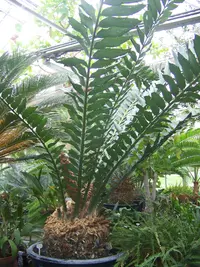
Use a wide, heavy pot or add gravel in a false bottom so the plant does not tip when the fronds extend and catch wind, especially on balconies or exposed patios.

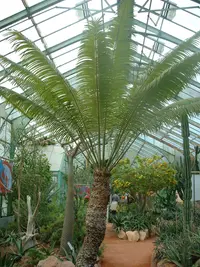
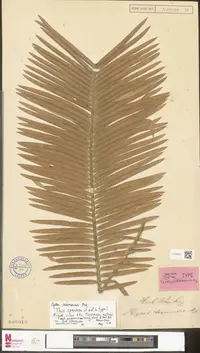
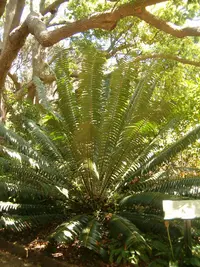
The Tongaland cycad, Encephalartos ferox, is a slow-growing, primitive cone-bearing plant related to conifers but often grown like a sculptural palm. It forms a stout trunk topped with stiff, glossy, dark green leaves that arch outward, giving a compact, architectural look.
In nature it occurs along coastal regions of Mozambique and northeastern South Africa, often in sandy, well-drained soils. It is considered moderately challenging, mainly due to its slow growth, sensitivity to overwatering, and need for good drainage.
Gardeners who learn how to care for Tongaland cycad usually focus on providing bright light, sharply draining soil, and steady but not excessive moisture.

Care Difficulty
Moderate Care

Light Preference
Partial Sun

Water Requirements
Moderate Water

Temperature Preference
Warm Climate

Hardiness Zone
9–11

Soil Texture
Sandy, Loamy, Rocky

Soil pH
Acidic (5.5–6.5), Slightly acidic (6.5–7.0)

Soil Drainage
Well-drained

Fertilization
Minimal (feed rarely)
Scan your plant to receive care tips personalized for your specific plant
Available on iOS and Android
This cycad prefers bright, direct to lightly filtered sun that mimics subtropical conditions.
This species prefers deep but infrequent watering with excellent drainage around the roots.
This cycad thrives in warm, frost-free climates with only brief exposure to cooler conditions.
This cycad handles typical home humidity but benefits from slightly raised levels.
Encephalartos ferox prefers very free-draining, mineral-rich soil that prevents waterlogging around the roots and caudex.
This species adapts well to container growing when the pot is stable and sharply drained.
Encephalartos ferox grows slowly and benefits from light, controlled feeding rather than heavy fertilization.
Pruning needs for Encephalartos ferox are minimal and focus on hygiene rather than shaping.
This cycad resents frequent disturbance, so repotting or transplanting should be infrequent and carefully planned.
Propagation of Encephalartos ferox is possible but slow and usually done by experienced growers.
This subtropical cycad needs thoughtful winter care in climates cooler than its native range, especially when grown as Tongaland cycad indoor care.

Plant Health Check
Not sure what's wrong with your plant? Check your plant's health inside the app.
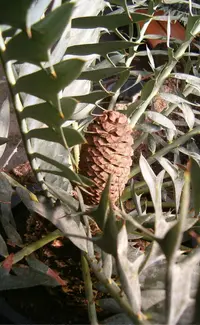
This species produces large, bright orange female seed cones that often sit partly buried in the leaf litter, an adaptation that helps protect developing seeds in its native coastal forest habitats of Mozambique and South Africa.
The leaflets have thick, glossy surfaces with sharply toothed, spine-tipped margins, which likely reduce herbivory by grazing animals in its lowland, subtropical environment.
In the wild, this cycad often grows in sandy coastal soils and develops a relatively shallow but wide-spreading root and caudex system that stabilizes the plant in loose, shifting substrates.

Genetic and fossil evidence shows that this species, like other cycads, belongs to an ancient plant lineage that originated long before flowering plants, and its general body plan has changed very little since the age of dinosaurs.
Yellowing fronds usually result from natural aging, cold damage, nutrient deficiency (especially nitrogen, magnesium, or iron), or root stress from poor drainage. Check roots, soil drainage, and fertilization before removing only fully yellow, older fronds.
Keep your plants happy and healthy with plant identification, disease detection, and easy care guidance.