Salinity acclimation
When moving plants between water sources with different salt levels, gradually blend the new water with the old over 5–7 days to prevent salt-shock to roots and leaves.

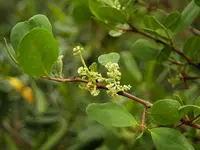
White mangrove, Laguncularia racemosa, is a coastal tree adapted to tidal shores, estuaries, and brackish lagoons. It forms dense stands that stabilize shorelines and provide wildlife habitat.
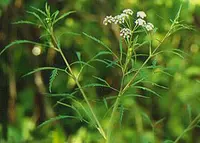
This species typically grows as a multi-stemmed shrub or small tree with leathery, spoon-shaped leaves and small clusters of white flowers followed by elongated propagules. Its thick leaves and specialized glands help it tolerate salt and changing water levels.
In cultivation, it suits outdoor coastal landscapes and specialized aquaria or ponds more than casual home settings. It prefers full sun, warm conditions, and consistently moist, well-drained, slightly salty substrates, so how to care for white mangrove depends strongly on replicating its natural shoreline environment.

Care Difficulty
Hard Care

Light Preference
Full Sun

Water Requirements
Aquatic

Temperature Preference
Tropical / Frost Sensitive

Hardiness Zone
9–11

Soil Texture
Sandy, Loamy, Organic-rich

Soil pH
Slightly acidic (6.5–7.0), Neutral (7.0)

Soil Drainage
Waterlogged tolerant

Fertilization
Minimal (feed rarely)
Scan your plant to receive care tips personalized for your specific plant
Available on iOS and Android
This coastal species needs strong, consistent light to grow dense foliage and stable roots.
This mangrove is adapted to saturated, often brackish conditions rather than intermittently dry soils.
This species prefers warm, frost-free climates with stable coastal temperatures.
This coastal species prefers very high humidity but adapts to a range of conditions.
Soil for Laguncularia racemosa should mimic loose, wet, coastal substrates while still allowing aeration around roots.
This species can be grown in containers if the setup supports heavy, waterlogged conditions without tipping or root suffocation.
Laguncularia racemosa usually needs minimal feeding when grown in natural, nutrient-rich, brackish conditions.
Laguncularia racemosa responds well to light structural pruning to maintain safe, healthy growth.
This species is more often transplanted in coastal landscapes than kept long-term in containers.
Laguncularia racemosa is typically propagated from seeds and sometimes from semi-hardwood cuttings in controlled conditions.
This coastal tree is frost sensitive and needs protection in regions with cool winters, especially when container grown.

Plant Health Check
Not sure what's wrong with your plant? Check your plant's health inside the app.
White mangrove leaves have microscopic salt glands on the upper surface that excrete excess salt, allowing the plant to survive in brackish and saline water where many other trees cannot grow.
Unlike red mangroves with stilt roots, white mangroves often develop short peg-like pneumatophores that stick up from the soil surface, helping the roots obtain oxygen in waterlogged, low-oxygen mud.
At the base of each leaf blade there are small nectar-producing glands that attract insects, which can enhance pollination and also support a rich community of other mangrove-associated organisms.

White mangrove is one of the few coastal tree species that can form mixed stands with both red and black mangroves, often occupying slightly higher, less frequently flooded ground and creating a subtle elevation-based zonation pattern in tropical and subtropical shorelines.
In favorable conditions, this species typically grows about 30–90 cm per year. Growth is faster in warm, frost-free climates with consistent moisture and brackish or mildly salty water, and slower in cool or nutrient-poor sites.
Keep your plants happy and healthy with plant identification, disease detection, and easy care guidance.