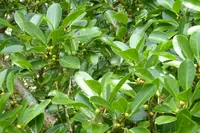
Indian Horse-chestnut Care (Aesculus indica)

Also known as: Pangad
Indian Horse-chestnut

About Indian Horse-chestnut

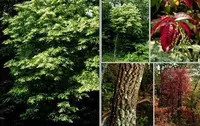
Indian horse-chestnut (Aesculus indica) is a large, deciduous tree grown mainly for its bold foliage and showy upright flower clusters. It develops a broad, rounded crown and palmate leaves that give strong shade in summer.

This species is native to the western Himalayas, where it grows on mountain slopes and along streams. In gardens and parks it is usually used as a specimen or avenue tree.

Growth is fairly fast when young, but the tree needs space, deep soil, and consistent moisture, so it is not suitable for small yards. Light, moisture, and soil quality all influence how to care for Indian Horse-chestnut and keep it healthy long term.

Main Plant Requirements

Care Difficulty

Moderate Care

Light Preference

Full Sun

Water Requirements

Regular Water

Temperature Preference

Cool Climate

Hardiness Zone

6–9

Soil Texture

Loamy, Clay, Organic-rich

Soil pH

Slightly acidic (6.5–7.0), Neutral (7.0)

Soil Drainage

Moist but well-drained

Fertilization

Minimal (feed rarely)

Get Personalized Care Plan

Scan your plant to receive care tips personalized for your specific plant

Available on iOS and Android

How to Care for the Indian Horse-chestnut

This large deciduous tree prefers bright, open conditions with protection from extreme afternoon heat in hot climates.

  • Provide 4–6 hours of direct morning sun plus bright light the rest of the day; light dappled shade suits young trees in hotter regions.
  • Indian Horse-chestnut tolerates partial shade, but dense shade reduces flowering and produces sparse, elongated shoots.
  • In hot, dry summers, avoid harsh west-facing exposure that can scorch leaves; in cooler climates, full sun all day is usually safe.

This tree prefers consistently moist, deep soil, especially while young and establishing.

  • Water when the top 3–5 cm of soil feels dry, then soak the root zone thoroughly rather than giving frequent light sprinklings.
  • During hot, dry periods, increase watering and check soil moisture more often; in cool or rainy seasons, reduce watering to prevent waterlogged conditions.
  • Yellowing leaves and soft twigs can indicate overwatering and poor drainage, while crisp leaf edges and early leaf drop suggest drought stress.

This hardy tree thrives in temperate climates with cool winters and warm, not extreme, summers.

  • Optimal growing temperatures are about 60–80°F (16–27°C) during the active season, with good growth in mild spring and early summer.
  • Mature trees tolerate winter lows down to about 5–10°F (-15 to -12°C); young trees benefit from protection from severe frost and drying winter winds.
  • In summer heat above 90°F (32°C), provide soil moisture and mulch to limit stress, as prolonged extreme heat can cause leaf scorch and earlier leaf drop.

This species is adaptable and humidity is rarely a limiting factor outdoors.

Aesculus indica prefers deep, moisture-retentive but free-draining soil to support its large root system and long-term growth.

  • Use a loamy soil rich in organic matter such as compost or well-rotted leaf mold to hold moisture yet stay friable.
  • Ensure drainage is moderate to fast; avoid compacted clay that stays waterlogged after rain.
  • Aim for slightly acidic to neutral pH, around 6.0–7.0, adjusting with lime or sulfur only if tests show extremes.
  • Improve aeration and structure on heavy sites by incorporating coarse sand or fine bark with organic matter through the top 30–40 cm.

This species is generally unsuitable for long-term container growing, except as a very short-term juvenile specimen.

Mature Indian Horse-chestnut trees usually need little fertilization when grown in decent garden soil.

  • In poor or very sandy soil, apply a balanced slow-release fertilizer (such as 10-10-10) at half label rate in early spring.
  • Alternatively, top-dress with 2–5 cm of well-rotted compost over the root zone once a year.
  • Avoid fertilizing in late summer or fall to prevent soft growth that is vulnerable to winter damage.
  • Do not feed during winter dormancy; excess nutrients can stress roots and encourage weak growth.

Aesculus indica benefits from light, structured pruning to maintain a safe, balanced crown.

  • Prune in late winter or very early spring before budbreak so wounds seal as growth starts.
  • Remove dead, diseased, crossing, or storm-damaged branches with clean, sharp bypass pruners or a pruning saw.
  • Thin crowded interior branches selectively to improve light penetration and air flow without over-opening the canopy.
  • Limit cuts on mature trees to structural corrections and safety issues to avoid undue stress and decay.

This species is mainly grown as a landscape tree, so focus on careful transplanting of young Aesculus indica rather than long-term container culture.

  • Transplant in late fall or early spring while the tree is dormant to reduce shock and water loss.
  • Move when roots fill the root ball, circle the container, or when growth slows despite good care.
  • Dig a wide planting hole, loosening surrounding soil; keep the root flare at soil level and backfill firmly, not tightly.
  • Water deeply after planting and maintain consistent moisture for the first 1–2 growing seasons to support root establishment.

Most Aesculus indica plants for landscape use are raised from seed rather than from cuttings.

  • Collect fresh, mature seeds in fall and sow soon after, as viability declines in dry storage.
  • Provide cold stratification at about 35–40°F for 2–3 months if sowing in late winter indoors.
  • Use a deep pot or nursery bed with moist, well-drained soil to allow development of the strong taproot.
  • Protect young seedlings from intense sun, drought, and root disturbance during the first 1–2 years.

Established trees are generally cold hardy and need minimal winter care under typical temperate conditions.

  • Young or newly planted trees benefit from 5–8 cm of organic mulch over the root zone, kept clear of the trunk.
  • In very cold or exposed sites, stake and use a breathable trunk wrap on young stems to limit frost cracks and sunscald.
  • Container-grown specimens, if any, should be moved to a sheltered, unheated but frost-moderated location.

Care Tips

Deep root training

During the first 3–4 years, apply water less often but in larger volumes to encourage deep root growth that will better anchor the tree and improve drought tolerance.

Single-leader selection

While the tree is young, choose one strong, upright stem as the central leader and remove competing uprights in late winter to create a stable, well-shaped canopy as it matures.

Wind and space planning

Site young trees away from buildings, overhead lines, and strong wind corridors, as the mature crown is wide and heavy and benefits from sheltered but open space around it.

Trunk protection measures

Install a breathable trunk guard on young trees in sunny or exposed sites to reduce bark scorch, mechanical damage from tools, and rodent gnawing in winter.

Litter and seed management

Plan for heavy seasonal leaf and conker drop by keeping the tree away from high-traffic patios or driveways, and collect fallen material regularly to reduce slip hazards and simplify caring for Indian Horse-chestnut in urban gardens.

Common Pests and Diseases

Leaf blotch

This disease causes irregular brown blotches with yellow margins on leaflets, often appearing after wet weather or stress. Symptoms include early browning and premature leaf drop that can make the canopy look scorched by late summer.

Solution

Collect and destroy fallen leaves in autumn to reduce overwintering spores, and avoid overhead watering to keep foliage dry. Maintain steady soil moisture and overall tree vigor; in high-value specimens, a certified arborist may apply timed foliar fungicide sprays in spring if leaf blotch is severe for several consecutive years.

Guignardia leaf blotch

This disease produces angular reddish-brown to dark purple lesions that follow leaf veins, sometimes coalescing to kill large portions of the leaf. Symptoms include distorted leaves and early defoliation, especially in humid climates or crowded plantings.

Solution

Rake and remove infected leaves every year to break the disease cycle and increase spacing or pruning to improve air movement around the canopy. In landscapes where Aesculus indica care focuses on appearance, targeted fungicide sprays at bud break and shortly after full leaf expansion can help protect new foliage when guided by a professional arborist.

Leafminer

These insects create pale winding or blotchy tunnels inside leaves as larvae feed between the upper and lower leaf surfaces. Symptoms include thin, papery mined areas that can merge and cause early browning, particularly on lower branches and young trees.

Solution

Prune and dispose of heavily mined leaves as soon as damage is noticed to remove larvae before they pupate. For recurring problems on important specimens, use pheromone traps or consult an arborist about timing a systemic insecticide to early larval activity, while avoiding treatments during peak pollinator activity.

Scale insects

These insects appear as small, immobile bumps on twigs and branches, feeding on sap and weakening growth. Symptoms include sticky honeydew on leaves and below the canopy, sometimes followed by sooty mold and reduced vigor.

Solution

Prune out and discard heavily infested twigs, and gently scrub reachable branches with a soft brush and soapy water to remove scales. Encourage natural predators, and where infestations are persistent, apply horticultural oil during the dormant season or at crawler emergence, following label timing carefully.

Powdery mildew

This disease shows as a white to gray powdery coating on leaves, especially on shaded inner branches and during warm, dry days with cool nights. Symptoms include distorted new growth and gradual reduction in photosynthesis if coatings become dense.

Solution

Thin nearby vegetation to increase light and airflow through the canopy, and avoid high-nitrogen fertilization that drives lush, susceptible growth. Remove heavily affected leaves where practical; in settings where growing Indian Horse-chestnut for ornamental value is a priority, a professional may apply selective fungicides preventively in seasons with repeated outbreaks.

Interesting Facts

Himalayan canopy giant

This species is native to the western Himalayas, where mature trees can exceed 20 m and form part of the upper forest canopy along cool river valleys and mountain slopes.

Bee-attracting flower spikes

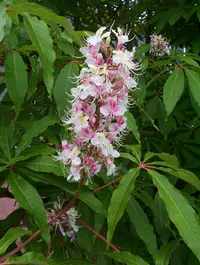
In late spring and early summer it produces tall upright clusters of white to pale pink flowers with yellow or red markings that are highly attractive to bees and other pollinating insects.

Large spiny seed capsules

Its fruits are round, green, and spiny capsules that typically contain 1–2 large, glossy brown seeds, commonly called conkers, which are dispersed when the capsules split and fall to the ground.

Botan icon

Did you know?

In parts of the northwestern Indian Himalayas, this tree is traditionally planted near settlements and along roads not only for shade but also because its abundant leaf litter and seed husks contribute organic matter that helps maintain soil structure on erosion-prone mountain slopes.

FAQs about Indian Horse-chestnut

This tree is moderately fast-growing when young, often adding 30–60 cm per year under good conditions. Growth slows with age. It typically needs 20–30 years to develop a substantial, mature crown.

Grow Healthy Plants with Botan Care

Keep your plants happy and healthy with plant identification, disease detection, and easy care guidance.

Botan plant care app — identify plants on mobile

Explore More Plants