Ficus reflexa Care

Ficus reflexa

About Ficus reflexa

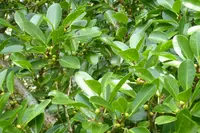
Ficus reflexa is an evergreen tree or shrub from the mulberry family, often grown as an ornamental foliage plant or pruned as a compact indoor specimen. It typically has small, glossy green leaves on dense branches, giving it a tidy, bushy appearance that suits containers and trained forms like bonsai. In nature, it occurs in parts of Madagascar and nearby regions, where it grows in warm, humid, and bright environments. This species is generally moderate in difficulty: it dislikes sudden changes, drafts, and prolonged dryness but adapts well once conditions are stable. Those who want to learn how to care for Ficus reflexa should focus on steady light, even moisture, and a free-draining, fertile substrate.

Main Plant Requirements

Care Difficulty

Moderate Care

Light Preference

Partial Shade

Water Requirements

Moderate Water

Temperature Preference

Tropical / Frost Sensitive

Hardiness Zone

10–12

Soil Texture

Sandy, Loamy, Organic-rich

Soil pH

Acidic (5.5–6.5), Slightly acidic (6.5–7.0)

Soil Drainage

Well-drained

Fertilization

Minimal (feed rarely)

Get Personalized Care Plan

Scan your plant to receive care tips personalized for your specific plant

Available on iOS and Android

How to Care for the Ficus reflexa

This species prefers bright, filtered light that mimics high, dappled canopy conditions.

  • Provide 4–6 hours of bright, indirect light daily; gentle morning sun with light afternoon shade suits Ficus reflexa well.
  • Tolerates light to medium shade, but growth becomes looser and leaves smaller if light is below roughly 3 hours of bright conditions per day.
  • Avoid harsh midday sun, which can scorch leaves and cause pale, crispy patches, especially in summer; increase light slightly in winter if days are very short.

Watering should aim for evenly moist but never waterlogged soil around the root zone.

  • Allow the top 3–5 cm of soil to dry before watering, using a finger test or moisture meter instead of a fixed schedule.
  • Use freely draining soil; water slowly until the root zone is moist, then let excess drain away to reduce root rot risk and fungal issues.
  • Reduce watering in cooler months when growth slows; dull, yellowing, mushy leaves suggest overwatering, while drooping, crisp edges indicate underwatering in Ficus reflexa.

Stable warm conditions support steady growth and healthy foliage.

  • Ideal temperatures are 65–80°F (18–27°C), where photosynthesis and root activity stay efficient and stress is minimal.
  • Short dips to 55°F (13°C) are usually tolerated, but growth slows; avoid exposure below 50°F (10°C) to prevent cold damage and leaf drop.
  • Protect from frost, cold drafts, and hot, reflected heat; above 90°F (32°C) provide shade, mulch, and extra humidity to reduce leaf scorch and stress.

This species prefers moderately humid air and reacts if conditions are too dry for long periods.

  • Aim for 40–60% humidity, as very dry heated rooms can cause leaf edges to crisp and drop.
  • Expect some tolerance to short dry spells, but prolonged low humidity may stunt new growth and increase mite problems.
  • Increase humidity with a nearby tray of water and pebbles or by grouping plants, rather than misting leaves heavily.

This plant grows best in a loose, airy mix that drains quickly but retains some moisture.

  • Use a peat- or coco-based potting mix with added perlite and fine bark to create a slightly chunky, loamy structure.
  • Ensure very fast drainage so water does not pool around the roots, which increases risk of rot in Ficus reflexa.
  • Target slightly acidic to neutral pH, around 6.0–7.0, which supports nutrient uptake and stable root growth.
  • Improve aeration by avoiding dense garden soil and by keeping at least one-third of the mix as coarse materials like perlite or bark.

This species adapts well to container growing when the pot supports its woody root system and eventual size.

  • Choose a pot with a wide base to prevent tipping as the woody stems become taller and more top-heavy.
  • Select a slightly deeper container than a typical houseplant pot to allow strong, anchoring roots to develop.
  • Use heavier materials like ceramic if growing outdoors in windy spots to stabilize the plant and reduce moisture swings.

This species benefits from light, consistent feeding during active growth but does not require heavy fertilization.

  • Use a balanced liquid fertilizer (around 10-10-10 or 20-20-20) diluted to 1/2 strength for Ficus reflexa in containers.
  • Apply every 4–6 weeks in spring and summer, skipping feedings if growth is weak or roots are stressed.
  • Stop feeding in late fall and winter, when growth slows, to avoid soft, weak foliage.
  • For outdoor plants, incorporate a thin layer of compost or a mild slow-release fertilizer in spring only.

Pruning helps maintain size, structure, and foliage density for this ficus species.

  • Carry out structural pruning in late winter or early spring, before strong new growth begins.
  • Remove dead, diseased, crossing, or inward-growing branches to improve air flow and light penetration.
  • Shorten overly long shoots to shape the canopy and encourage bushier side branching.
  • Use clean, sharp bypass pruners and make cuts just above a node, avoiding heavy cuts into the main trunk.

Ficus reflexa tolerates being slightly root-bound but benefits from occasional repotting or careful transplanting.

  • Check for roots circling the pot, pushing through drainage holes, or water running straight through as signs it needs a larger container.
  • Plan repotting or transplanting in spring, every 2–3 years for younger plants and less often for mature specimens.
  • Move to a pot 2–5 cm wider with free-draining, slightly rich mix; avoid burying the trunk deeper than before.
  • Handle the root ball gently, loosen only the outer roots, water thoroughly after planting, and keep shaded for several days to reduce stress.

This ficus is most often propagated from semi-hardwood cuttings taken during the warmer months.

  • In late spring to summer, take 8–12 cm semi-hardwood stem cuttings with 2–3 nodes from healthy, non-flowering shoots.
  • Remove lower leaves, optionally dip the cut end in rooting hormone, and insert into a sterile, free-draining mix such as perlite and peat.
  • Maintain warm temperatures around 70–80°F, high humidity, and bright, indirect light to support rooting.
  • Keep the medium just moist, ventilate briefly each day to limit rot, and pot on individually once new growth appears.

This species is frost-sensitive and needs protection in climates with cold winters.

  • Keep temperatures above 50°F; outdoor plants are best suited to frost-free or very mild regions.
  • Move container plants indoors or into a bright, unheated but frost-free space before the first freeze.
  • Water less frequently in winter, allowing the top of the mix to dry a bit deeper while avoiding complete dryness.
  • For in-ground plants in marginal climates, add a 5–8 cm mulch layer over the root zone, keeping it away from the trunk.

Care Tips

Regular leaf washing

Rinse or wipe the foliage with lukewarm water every 4–6 weeks to remove dust and improve light capture, while also allowing you to spot early signs of scale or mites on this fine-leaved species.

Branch wiring support

For young plants, use soft plant wire or raffia to gently guide flexible branches into a balanced canopy, checking every 4–6 weeks so the ties do not cut into the bark as stems thicken.

Controlled root pruning

In containers, lightly trim outer and bottom roots by 1–2 cm during repotting every 2–3 years to keep the plant compact and reduce the risk of it becoming root-bound and dropping leaves after stress.

Gradual light transitions

When moving the plant between locations or seasons, shift it 0.5–1 m at a time every 5–7 days to reduce leaf drop caused by sudden changes in light intensity and direction while growing Ficus reflexa.

Systematic pest scouting

Inspect the undersides of leaves and along stems every 2–3 weeks with a hand lens, focusing on leaf axils and midribs where scale and mealybugs often start, so you can treat small infestations before they spread.

Common Pests and Diseases

Scale insects

These insects attach tightly to stems and leaf undersides, sucking sap and causing yellowing, stunted growth, and sticky honeydew deposits that can lead to sooty mold. Infestations are common on older woody parts of the plant, especially in warm, dry indoor air.

Solution

Remove heavily infested stems and wipe remaining colonies with cotton pads dipped in isopropyl alcohol, repeating weekly until new growth is clean. Improve light and air movement, avoid excess nitrogen fertilizer, and use a horticultural oil or insecticidal soap spray directed to stems and leaf undersides if the population persists.

Mealybugs

These insects form white, cottony clusters in leaf axils, on young stems, and around roots in containers, where they suck sap and cause distorted new growth and leaf drop. Honeydew and black sooty mold often follow long-standing infestations.

Solution

Isolate affected plants, then physically remove visible clusters with cotton swabs in isopropyl alcohol and rinse foliage with a gentle shower of lukewarm water. For persistent problems, apply insecticidal soap or neem oil thoroughly to all plant surfaces every 7–10 days, and check the root ball for hidden mealybugs when repotting Ficus reflexa indoor care specimens.

Spider mites

These pests thrive on Ficus reflexa foliage in warm, dry conditions, causing pale stippling, dull leaves, fine webbing, and eventual leaf drop if ignored. Symptoms include a dusty appearance on the undersides of leaves and poor new growth.

Solution

Increase humidity around the plant, then hose or shower the foliage thoroughly, focusing on the undersides of leaves to wash off mites and webs. Follow with repeated applications of insecticidal soap or a light horticultural oil, applied every 5–7 days for several cycles, and avoid letting the plant sit in hot, stagnant air.

Sooty mold

This disease develops as a black, powdery film on leaves and stems growing on the sugary honeydew excreted by sap-sucking insects such as scale and mealybugs. Symptoms include dull, blackened foliage that can interfere with photosynthesis but rarely damage tissues directly.

Solution

Control the underlying insect pest first, then gently wipe or wash affected leaves with lukewarm water and a small amount of mild soap, rinsing well afterward. Improve light and airflow, and remove heavily coated leaves if washing does not restore normal leaf color and function.

Cercospora leaf spot

This disease causes small, dark brown to black spots with yellowish halos on older leaves, which can coalesce and lead to premature defoliation under warm, humid conditions. Symptoms include a gradual thinning of the canopy from the inside of the plant outward.

Solution

Remove and discard affected leaves and plant debris, and avoid overhead watering or wet foliage that prolongs leaf wetness. Improve spacing and ventilation, water at soil level, and in severe or recurring cases consider a labeled copper or chlorothalonil-based fungicide applied according to local guidelines and product directions.

Interesting Facts

Native island range

Ficus reflexa is naturally distributed across islands of the western Indian Ocean, including Madagascar, the Comoros, and the Mascarenes, where it grows in coastal and lowland forests.

Variable leaf forms

This species shows notable leaf shape and size variation between juvenile and adult plants, and even between sun- and shade-grown individuals, which can make wild plants look quite different from cultivated ones.

Specialized fig wasp partner

Like other fig species, Ficus reflexa depends on a specific fig wasp for pollination, forming an obligate mutualism where the tree and the insect each rely on the other to complete their life cycle.

Botan icon

Did you know?

In Madagascar and surrounding islands, some populations of Ficus reflexa act as important keystone resources for fruit-eating birds and bats during periods when few other native trees are in fruit, helping sustain local wildlife communities through seasonal food shortages.

FAQs about Ficus reflexa

Brown leaf edges usually come from inconsistent watering, low humidity, or excess fertilizer salts. Check soil moisture before watering, flush the pot occasionally to remove salts, and keep the plant away from hot or very dry air sources.

Grow Healthy Plants with Botan Care

Keep your plants happy and healthy with plant identification, disease detection, and easy care guidance.

Botan plant care app — identify plants on mobile

Explore More Plants