Barberton cycad Care (Encephalartos paucidentatus)

Barberton cycad

About Barberton cycad

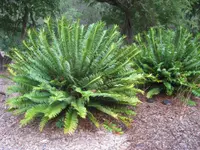
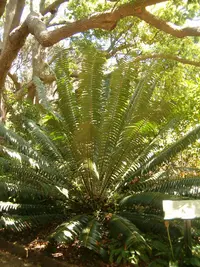
Barberton cycad (Encephalartos paucidentatus) is a slow-growing, long-lived cycad with a stout trunk and a crown of stiff, arching, glossy blue-green leaves. It resembles a palm in outline but is more closely related to ancient conifers.

This species is native to high-altitude grasslands and rocky slopes in the Barberton region of South Africa, where it experiences strong light, good air movement, and sharply drained soils. It is considered rare in nature and is often grown in collections and specialized gardens.

Growth is slow and it can be demanding in cooler or very wet climates, so planning how to care for Barberton cycad before purchase is important. It generally prefers bright light, low to moderate moisture, and a very well-drained, gritty soil mix.

Main Plant Requirements

Care Difficulty

Hard Care

Light Preference

Full Sun

Water Requirements

Low Water

Temperature Preference

Warm Climate

Hardiness Zone

9–11

Soil Texture

Sandy, Loamy, Rocky

Soil pH

Acidic (5.5–6.5), Slightly acidic (6.5–7.0)

Soil Drainage

Well-drained

Fertilization

Minimal (feed rarely)

Get Personalized Care Plan

Scan your plant to receive care tips personalized for your specific plant

Available on iOS and Android

How to Care for the Barberton cycad

This species prefers bright, open conditions that mimic its native rocky slopes.

  • Provide 6–8 hours of direct sun daily, ideally with strong morning sun and some protection from harsh late-afternoon summer sun in very hot climates.
  • Tolerates light or partial shade (around 3–4 hours direct sun) but growth slows and leaves may stretch or lean toward the brightest side when light is insufficient.
  • In cooler seasons, full sun is usually safe; in heatwaves, Barberton cycad benefits from brief shade or filtered light to prevent leaflet scorch.

Watering should support slow, drought-tolerant growth without allowing the roots to sit in saturated soil.

  • Allow the top 3–5 cm of soil to dry before watering again; soil should feel dry to the touch at the surface but still slightly cool and faintly moist deeper down.
  • Reduce watering in cool seasons when growth slows, increasing intervals until the soil dries more thoroughly, but avoid prolonged bone-dry conditions that cause leaflet tip browning or shriveling.
  • Ensure sharply drained, gritty soil so excess water runs off quickly; yellowing, soft leaf bases or a sour smell near the crown suggests overwatering and potential root or caudex rot in Encephalartos paucidentatus.

This cycad prefers warm, stable conditions with protection from hard frost and extreme heat.

  • Optimal growth occurs around 70–86°F (21–30°C), where the plant can photosynthesize efficiently and produce new fronds during the warmer months.
  • Tolerates brief dips to about 28–30°F (-2 to -1°C), but repeated or lower frosts can damage leaves; protect with coverings or site near thermal mass such as rocks in colder regions.
  • In hot climates, plants handle up to 100°F (38°C) if soil moisture is moderate and roots are mulched; prolonged heat above this range increases stress and raises water needs.

This cycad handles a fairly wide humidity range and rarely needs special humidity control.

  • Aim for 30–60% humidity, similar to most heated or cooled homes, for stable Barberton cycad growth.
  • Dry indoor air is usually tolerated; prolonged very dry air may slightly slow new frond expansion but rarely causes serious damage.
  • Early humidity stress signs include browning frond tips and slower emerging leaves; increase humidity with a nearby open tray of water and grouped plants rather than misting.

Encephalartos paucidentatus prefers very free‑draining, mineral-based soil that mimics rocky slopes.

  • Use a gritty mix: roughly 50–60% coarse sand or fine gravel, 20–30% pumice or perlite, and 10–20% composted bark or low‑peat compost.
  • Ensure water drains through in seconds, not minutes; roots are highly prone to rot in compact or waterlogged media.
  • Maintain slightly acidic to neutral pH around 6.0–7.0, which supports nutrient uptake without encouraging salt buildup around the roots.
  • Avoid heavy clay, fine silt, or peat‑heavy mixes; if existing soil is dense, lighten it with extra pumice, gravel, and bark to improve aeration.

This species can be grown in containers if the pot is stable and the mix is very free draining.

  • Choose a wide, heavy container or add top-dressing gravel to counterbalance the stiff, top-heavy crown in wind-exposed positions.
  • Use deep pots to allow the taproot and thick storage roots to extend downward without circling tightly near the base.
  • Select porous materials like unglazed clay only when frequent watering is possible, since they lose moisture faster than plastic but reduce waterlogging risk.

This slow-growing cycad benefits from modest, targeted feeding during the warm growing season.

  • Use a balanced slow-release fertilizer (around 10-10-10 NPK) or well-rotted compost applied to the soil surface, not into the crown.
  • Feed Barberton cycad lightly every 8–12 weeks from late spring to late summer, avoiding very hot, dry spells.
  • Apply fertilizers at 1/2 strength for container plants and water deeply afterward to prevent root burn.
  • Stop feeding in fall and winter when growth slows, as excess nutrients can cause weak, elongated tissue.

Encephalartos paucidentatus needs minimal pruning focused on hygiene rather than shaping.

  • Carry out pruning in late spring or early summer when plants are actively growing.
  • Remove only dead, yellowed, or diseased fronds at the base, leaving healthy foliage to support photosynthesis.
  • Use clean, sharp loppers or a pruning saw; disinfect blades between plants to limit disease spread.
  • Avoid cutting into the woody trunk, as this species does not respond well to structural reshaping.

Transplanting or shifting this cycad should be infrequent and planned, as mature specimens resent disturbance.

  • Look for roots circling the pot, pushing through drainage holes, or noticeably slowed growth as signals to move up 1 pot size.
  • Schedule transplanting for late spring to early summer, about every 4–6 years for container-grown plants.
  • Lift the plant gently, keeping the root ball as intact as possible; trim only dead or rotten roots with sterile tools.
  • Replant into a deep, sharply drained mix and keep shaded and slightly drier than usual for 1–2 weeks to limit transplant shock.

Propagation of Encephalartos paucidentatus is specialized and usually limited to experienced growers or conservation programs.

  • Use offsets (basal pups) when available, removing them with a clean saw during warm late spring or early summer.
  • Allow cut pup bases to dry and callus for several days before potting into a coarse, free-draining medium.
  • Provide bottom warmth around 75–80°F, bright but indirect light, and slightly dry conditions to encourage root formation.
  • Seed propagation is slow and requires fresh, viable seed, careful cleaning of the fleshy coat, and long, warm stratification for germination.

This cycad tolerates only light frost and benefits from protective measures in colder climates.

  • In-ground plants in mild regions handle brief drops near 25°F if soil drains well and stays relatively dry.
  • Apply a 5–8 cm dry mulch around the root zone in late fall, keeping material away from the crown to prevent rot.
  • Wrap the crown and emerging fronds with breathable frost cloth during hard freezes to limit tissue damage.
  • Move container plants indoors or into a cool, bright, frost-free space when temperatures approach freezing.

Care Tips

Protect central crown

Keep the crown free of debris and avoid overhead watering so new leaves emerge clean and dry, reducing rot risk at the sensitive growth point.

Stabilize heavy caudex

As the stem enlarges, backfill with a coarse mineral mix around the base and, if needed, anchor with rocks to prevent leaning or uprooting during strong winds.

Seasonal leaf inspection

At the end of each growing season, inspect every leaflet for scale insects or mealybugs and treat early with a systemic insecticide labeled for cycads to protect next year’s flush.

Controlled leaf removal

Remove only fully brown, dead fronds at the base with a clean, sharp tool, leaving any part-green leaves in place to continue feeding the caudex.

Cold event preparation

Before an expected frost, wrap the crown and upper caudex in breathable frost cloth or burlap and mulch the root zone 5–8 cm deep to protect the plant’s core tissues, which is especially helpful when caring for Barberton cycad in marginal climates.

Common Pests and Diseases

Cycad aulacaspis scale

This pest forms dense white crusts along the leaflets, petioles, and crown, sucking sap and causing yellowing, leaf decline, and eventual plant death if not controlled.

Solution

Isolate the plant, then thoroughly wash fronds and leaf bases with a strong stream of water and a soft brush to remove scale, followed by repeated applications of a horticultural oil or insecticidal soap directed into the crown and leaflet undersides every 7–10 days until no new scale appears; for severe infestations, a systemic insecticide labeled for cycad scale can be used according to label directions.

Mealybugs

These insects appear as white cottony clusters in leaf bases and roots, feeding on plant sap and leading to stunted growth, yellowing, and sooty mold from honeydew deposits.

Solution

Physically remove visible colonies with a cotton swab dipped in isopropyl alcohol, rinse foliage and crown with lukewarm water, and then apply insecticidal soap or a light horticultural oil to all plant surfaces and into hidden crevices, repeating every 7–14 days; heavily infested roots can be washed and treated with a systemic product suitable for cycads if cultural control is not enough.

Crown rot

This disease causes soft, dark, foul-smelling tissue in the central crown, often following prolonged wetness or damage, and can rapidly kill the growing point of the cycad.

Solution

Immediately remove and discard all soft, discolored crown tissue with sterile tools, allow the area to dry thoroughly with excellent airflow, dust the exposed surfaces with a fungicidal powder such as copper or sulfur, and adjust watering so the crown stays dry, especially in cool conditions; avoid overhead watering and keep the plant in a well-draining, gritty medium as part of Barberton cycad care instructions.

Cycad blue butterfly

These insects are small blue butterflies whose larvae feed on cycad leaflets, creating ragged edges, windowpane-like patches, and in heavy infestations near-complete defoliation of new flushes.

Solution

Inspect new flushes frequently and hand-remove or crush caterpillars, prune and dispose of heavily damaged fronds, and use Bacillus thuringiensis (Bt) or a selective caterpillar insecticide targeted at the larvae in the early stages of feeding, applying in the evening and repeating as needed while monitoring for beneficial insects.

Interesting Facts

High‑altitude cycad specialist

This species is native to the Barberton region of South Africa, where it grows on cool, misty, high‑altitude slopes rather than in typical warm lowland cycad habitats.

Massive blue‑green crown

Mature plants can develop an impressive crown of long, arching, blue‑green leaves that may exceed 2 m, giving the plant a very distinctive, almost palm‑like silhouette among African cycads.

Critically threatened wild populations

Wild populations are highly localized and severely reduced, mainly due to illegal collecting and habitat disturbance, so most plants in cultivation originate from legally propagated material.

Botan icon

Did you know?

In favorable conditions this species can form a massive, solitary trunk that reportedly exceeds 4 m in height, making it one of the largest and most imposing African cycads known in cultivation.

FAQs about Barberton cycad

Growth is slow to very slow. In suitable outdoor conditions, it may add only 2–5 cm of trunk per year. Leaf flushes are irregular, often triggered by warmth and good nutrition, so visible change can be infrequent.

Grow Healthy Plants with Botan Care

Keep your plants happy and healthy with plant identification, disease detection, and easy care guidance.

Botan plant care app — identify plants on mobile

Explore More Plants