Kwango Giant Cycad Care (Encephalartos laurentianus)

Kwango Giant Cycad

About Kwango Giant Cycad

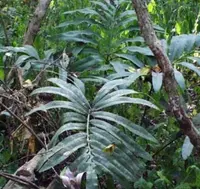
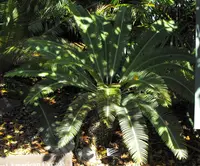
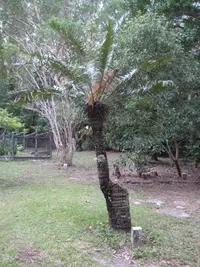
Encephalartos laurentianus, commonly called the Kwango giant cycad, is a large, ancient cone-bearing plant related to conifers but more similar in look to palms. It forms a massive trunk topped with long, arching, glossy green leaves that create a bold, architectural silhouette.

This species is native to river valleys of the Congo region in Central Africa, where it grows in warm, humid conditions. It is slow-growing, long-lived, and can become very large, so it suits spacious gardens in frost-free climates or specialized collections.

Due to its size, sensitivity to cold, and need for consistent moisture in well-drained soil, it is considered challenging for beginners. Enthusiasts who study how to care for Kwango Giant Cycad usually have the best results.

Main Plant Requirements

Care Difficulty

Hard Care

Light Preference

Full Sun

Water Requirements

Moderate Water

Temperature Preference

Tropical / Frost Sensitive

Hardiness Zone

10–11

Soil Texture

Sandy, Loamy, Rocky

Soil pH

Slightly acidic (6.5–7.0), Neutral (7.0)

Soil Drainage

Well-drained

Fertilization

Minimal (feed rarely)

Get Personalized Care Plan

Scan your plant to receive care tips personalized for your specific plant

Available on iOS and Android

How to Care for the Kwango Giant Cycad

Encephalartos laurentianus needs strong light and benefits from several hours of direct sun daily in suitable climates.

  • Provide 5–7 hours of direct morning sun with light afternoon shade; harsh late-afternoon sun in hot regions can scorch leaflets, especially on young Kwango Giant Cycad plants.
  • Allow bright, filtered light or high open shade in very hot areas; deep shade leads to elongated, weak fronds and slow cone production over time.
  • In cooler seasons, maximize sun exposure by avoiding overhead shading; in mild subtropical climates, year-round full sun is suitable once plants are well established.

This large cycad prefers deep, infrequent watering and very sharp drainage to prevent root problems.

  • Water thoroughly when the top 3–5 cm of soil are dry, allowing water to soak deeply around the root zone, then let the soil nearly dry before the next watering.
  • Use gritty, fast-draining soil or a raised mound; standing water or heavy clay that stays wet leads to root rot, yellowing fronds, and a sour soil smell.
  • In hot active-growth periods, expect more frequent watering; in cooler months, reduce frequency, watching for curling, crisp leaf tips as a sign of underwatering and blackened bases as a sign of overwatering.

This species is a heat-tolerant cycad that grows best in warm, frost-free conditions outdoors.

  • Aim for 70–90°F (21–32°C) for strong growth; consistent warmth supports new frond flushes and healthy cone development.
  • Protect from cold below 45°F (7°C); brief dips to about 40°F (4°C) may be tolerated, but repeated exposure increases risk of tissue damage and root decline.
  • Avoid frost entirely, since freezing temperatures can kill young growth; in extreme heat above 100°F (38°C), provide some afternoon shade and ensure soil does not dry to dust.

This cycad tolerates a wide humidity range but grows best with moderately dry air.

  • Aim for 30–60% humidity; avoid persistently above 70% to reduce fungal risk around the crown.
  • Kwango Giant Cycad handles short dry spells indoors if soil moisture is stable and roots are not waterlogged.
  • Low humidity stress appears as slightly browned leaflet tips; improve conditions with a nearby tray of water and pebbles, or a room humidifier placed at a distance.

Encephalartos laurentianus needs sharply drained, mineral-rich soil that does not stay wet.

  • Use a gritty mix such as 40% coarse sand, 30% pumice or perlite, and 30% loam or composted bark to balance drainage and nutrition.
  • Ensure the mix is loose and airy so the large taproot receives oxygen and excess irrigation water exits quickly.
  • Keep pH slightly acidic to neutral, around 6.0–7.2, avoiding strongly alkaline mixes that can lock up micronutrients.
  • Avoid clay-heavy, compacted, or peat-dominant substrates that hold water around the caudex and promote root or crown rot.

This species can be grown in containers for many years, though size and weight become limiting over time.

  • Select a wide, heavy container to counterbalance the tall, leaf-heavy crown and reduce tipping in wind.
  • Choose a deep pot that allows the taproot to grow downward without circling, which helps long-term stability and stress tolerance.
  • Use a rigid material such as thick plastic or clay that resists bulging and protects the root system as the plant gains mass.

This slow-growing cycad benefits from light, steady nutrition rather than heavy feeding.

  • Use a balanced slow-release NPK fertilizer (for example 10-10-10) or well-aged compost around the drip line, not against the trunk.
  • Feed mature Kwango Giant Cycad plants 1–2 times per growing season, once soil temperatures are consistently warm.
  • Apply at half the label rate for container plants to avoid salt buildup and root burn.
  • Stop feeding in late summer to allow growth to harden before winter and avoid soft, weak tissue.

Pruning Encephalartos laurentianus is minimal and mainly for safety and appearance, not shaping like a shrub.

  • Best timing is late winter or early spring, before strong new flushes of fronds emerge.
  • Remove only dead, yellowed, diseased, or storm-damaged fronds at the base using clean, sharp loppers or a pruning saw.
  • Avoid cutting green, healthy fronds, since they store energy and support overall vigor.
  • Cutting away old brown cones and debris improves airflow and reduces pest and fungal shelter.

This large cycad is usually grown in the ground; transplant only when clearly necessary to avoid long-term stress.

  • Look for roots circling a container, cracking pots, or very slow growth despite good care as signs it needs more space.
  • Plan any transplanting for warm, settled weather in late spring or early summer to encourage rapid root re-establishment.
  • Expect container plants to need a size upgrade only every several years, choosing a pot just 1–2 sizes larger with sharp drainage.
  • Lift with as much root ball as possible, keep roots shaded and moist, replant at the same depth, then water deeply and avoid heavy disturbance.

Propagation of this cycad is specialized and slow, usually handled by experienced growers or conservation collections.

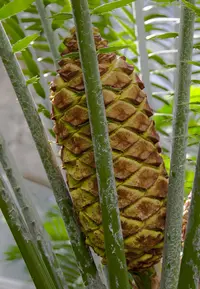
  • Seed propagation is the main method, using fresh, properly pollinated seed collected from mature cones.
  • Sow in late spring to early summer in a very well-drained, gritty mix at 75–85°F for several months of warm, even conditions.
  • Remove the fleshy seed coat, treat with a fungicide if available, and lay seeds horizontally, just barely covered.
  • Keep moisture moderate, not wet, as germination and early seedling growth can take many months to years.

This tropical cycad is not reliably hardy in cold climates and needs thoughtful winter management outside frost-free zones.

  • Avoid exposure to temperatures below about 40°F; extended cold or frost can damage fronds and growing tips.
  • In marginal climates, mulch 5–10 cm around the root zone, keeping mulch slightly away from the trunk to limit rot risk.
  • Move container plants indoors or into a heated greenhouse before first frost, giving bright light and low airflow drafts.

Care Tips

Early trunk staking

Install sturdy, adjustable stakes on the windward side while the plant is still young to keep the heavy emerging trunk vertical and prevent root plate rocking in storms.

Frond space management

Allow at least 1.5–2 m of clear horizontal space around the crown so the very long fronds can expand fully without rubbing on walls or other plants, which reduces breakage and fungal entry points.

Root zone mulching

Apply a 5–8 cm deep, wide ring of coarse, well‑aerated mulch such as pine bark around the root zone, keeping it 10–15 cm away from the caudex, to stabilize soil temperature and reduce surface compaction for this deep‑rooting cycad.

Salt and wind buffering

In coastal or exposed sites, establish a low windbreak of tough shrubs or a permeable fence upwind to reduce salt‑laden wind on the fronds, which limits leaflet scorching and mechanical damage.

Routine crown inspection

Inspect the crown several times per year and gently remove dead leaf bases and trapped debris with clean tools so water does not pool in the leaf bases, which helps when caring for Kwango Giant Cycad in humid or rainy climates.

Common Pests and Diseases

Scale insects

These insects suck sap from the stiff cycad leaflets and rachis, causing yellow spotting, reduced vigor, and sooty mold growth on the honeydew they excrete.

Solution

Prune and destroy heavily infested fronds, then wipe remaining scale with cotton pads dipped in 70% isopropyl alcohol or spray with a light horticultural oil, repeating every 7–10 days until new growth emerges clean; in large landscape specimens, systemic insecticides labeled for cycads can be used according to Encephalartos laurentianus care instructions and local regulations.

Cycad aulacaspis scale

This pest forms dense white crusts on both upper and lower leaf surfaces and can spread to the stem and roots, causing rapid decline and death if not controlled.

Solution

Isolate the plant, remove and dispose of heavily encrusted fronds, then thoroughly treat all aboveground parts and the soil surface with horticultural oil or insect growth regulator products labeled for cycad aulacaspis scale, repeating at 10–14 day intervals and monitoring closely for reinfestation for several months.

Mealybugs

These insects appear as cottony clusters in leaf bases and around cone tissue, where they feed on sap and promote sooty mold through honeydew production.

Solution

Flush leaf bases and crown crevices with a strong water stream, then spot-treat remaining colonies with alcohol-soaked cotton swabs or an insecticidal soap spray, repeating weekly until no new insects appear and keeping the plant under regular inspection during warm months.

Crown rot

This disease usually results from fungal or oomycete pathogens invading the central crown through injuries or prolonged waterlogging, leading to soft, foul-smelling tissue and collapse of the new flush.

Solution

Cut away all soft, discolored crown tissue with sterile tools, allow the area to dry, then dust exposed surfaces with a sulfur or copper-based fungicide; improve drainage, avoid watering into the crown, and keep irrigation focused on the root zone while monitoring for firm, healthy new growth.

Leaf spot

Symptoms include small brown to dark purple spots on leaflets that may enlarge and coalesce, often following extended warm, humid conditions or overhead irrigation.

Solution

Remove and discard affected fronds to reduce inoculum, increase spacing and airflow around the plant, avoid wetting foliage, and apply a copper or chlorothalonil-based fungicide labeled for ornamental cycads if new spots continue to appear on young leaves.

Interesting Facts

Massive cycad leaves

This species produces some of the longest leaves in the cycad group, often exceeding several meters in length and forming an umbrella-like crown over the trunk.

Riverbank specialist

In the wild it grows naturally along rocky riverbanks of the Kwango and Kasai river systems in central Africa, where roots anchor into crevices above seasonally fluctuating water levels.

Threatened wild populations

Its native populations are highly localized and considered threatened due to habitat disturbance and collection pressure, so most plants in cultivation come from legally propagated material under conservation controls.

Botan icon

Did you know?

Mature specimens can develop several very thick, towering trunks radiating from a single base, creating a massive clump that can visually dominate riverine forest patches and is considered among the largest cycad growth forms known.

FAQs about Kwango Giant Cycad

Growth is slow to moderate. Young plants may add only 2–5 cm of trunk per year, increasing somewhat in ideal warm conditions. Leaf flushes are periodic, so the plant can look unchanged for long periods.

Grow Healthy Plants with Botan Care

Keep your plants happy and healthy with plant identification, disease detection, and easy care guidance.


Botan plant care app — identify plants on mobile

Explore More Plants