Rotate Container
Turn the pot 90° every 4–6 weeks so the crown develops evenly and the leaflets harden off symmetrically, reducing leaning and wind breakage in outdoor placements.

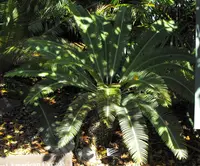
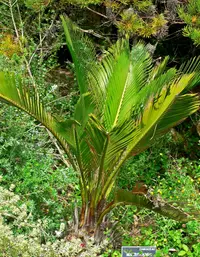
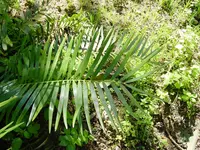
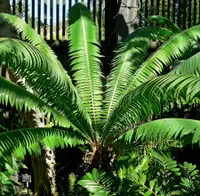
Dioon merolae is a slow-growing cycad, an ancient group of seed plants that resemble palms but are not related to them. It forms a stout trunk topped with a symmetrical crown of stiff, blue-green leaf fronds. Native to rocky slopes in southern Mexico, it is adapted to bright light, good drainage, and periods of drought. The plant grows slowly and can live for many years, which makes it a long-term commitment. Its tough leaves and slow pace mean it tolerates some neglect but also reacts poorly to overwatering or heavy, compacted soil. Understanding how to care for Cycad depends on respecting its need for sun, air around the roots, and infrequent watering.

Care Difficulty
Moderate Care

Light Preference
Full Sun

Water Requirements
Low Water

Temperature Preference
Warm Climate

Hardiness Zone
9–11

Soil Texture
Sandy, Loamy, Rocky

Soil pH
Slightly acidic (6.5–7.0), Neutral (7.0)

Soil Drainage
Well-drained

Fertilization
Minimal (feed rarely)
Scan your plant to receive care tips personalized for your specific plant
Available on iOS and Android
Dioon merolae prefers bright, direct sun but benefits from some protection during the hottest hours in warm climates.
This species prefers deep but infrequent watering, with time for the soil to partially dry between soakings.
This slow-growing cycad thrives in warm, frost-free climates with only brief exposure to cooler conditions.
Dioon merolae handles typical indoor humidity but benefits from slightly drier, well-ventilated air.
Dioon merolae prefers a mineral, sharply drained mix that mimics rocky, arid habitats.
This species adapts well to container culture when planted in a stable, heavy pot with fast drainage.
Dioon merolae benefits from light, targeted feeding rather than heavy fertilization, similar to many Cycad species.
Dioon merolae needs minimal pruning, focused mainly on health and safety of the crown.
Container-grown Dioon merolae is slow-growing and dislikes frequent root disturbance, so repot or transplant only when clearly needed.
Dioon merolae is usually propagated from seed and is considered slow and technically demanding for most home growers.
Dioon merolae prefers mild winters and benefits from protection in climates with freezing temperatures.

Plant Health Check
Not sure what's wrong with your plant? Check your plant's health inside the app.
This species is naturally restricted to mid-elevation cloud forests in Chiapas, Mexico, often on steep, rocky slopes with high humidity and frequent mist, which is unusual among many cycads that prefer drier habitats.
Seedlings and young plants remain almost stemless for many years, forming a visible above-ground trunk only after long-term growth, reflecting an extremely slow developmental rate typical of some montane cycads.
Young plants produce softer, more flexible bluish-green leaves, while mature specimens develop stiffer, more heavily armored fronds with pronounced spines along the leaflet margins.
Yellowing usually comes from root stress, nutrient deficiency, or prolonged cold. Check for poor drainage, compacted soil, or waterlogged roots. Use a well-drained gritty mix, avoid frequent fertilizing in winter, and protect from temperatures below roughly 45°F.
Keep your plants happy and healthy with plant identification, disease detection, and easy care guidance.