Water table method
Stand the pot in a shallow tray with 0.5–1 cm of rain or distilled water and top up only when the tray is almost dry to keep roots evenly moist without constantly flushing nutrients from the peat.

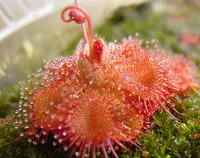
Drosera sessilifolia, commonly called tooth sundew, is a small carnivorous plant that forms low, compact rosettes close to the soil surface. Each leaf carries sparkling sticky glands that trap tiny insects, which supplement the plant’s nutrients in poor soils.
This species is native to parts of South America, often growing in seasonally wet, open habitats with high light and acidic, low-nutrient substrates. It stays relatively small, which suits container culture, but it is sensitive to water quality and drying out.
Because it relies on consistently moist, mineral-poor conditions, care for Tooth Sundew is easier for growers who already keep other carnivorous plants. It generally prefers bright light, pure water, and airy, nutrient-poor soil mixes.

Care Difficulty
Hard Care

Light Preference
Partial Sun

Water Requirements
Keep Soil Moist

Temperature Preference
Tropical / Frost Sensitive

Hardiness Zone
11–12

Soil Texture
Sandy, Peaty, Organic-rich

Soil pH
Strongly acidic (4.5–5.5)

Soil Drainage
Waterlogged tolerant

Fertilization
Minimal (feed rarely)
Scan your plant to receive care tips personalized for your specific plant
Available on iOS and Android
This compact sundew needs strong, consistent light to form healthy, dewy traps.
Moisture around the roots is critical for this small carnivorous species.
This species prefers warm, frost-free conditions with only slight seasonal variation.
This species prefers consistently high humidity to maintain sticky, functional traps.
This carnivorous species needs a very low-nutrient, acidic, moisture-retentive yet airy medium.
This species is well suited to container culture when moisture and drainage are carefully balanced.
Drosera sessilifolia is adapted to nutrient-poor soils and needs almost no conventional fertilization for healthy growth.
Pruning Drosera sessilifolia is minimal and focuses on hygiene rather than shaping.
Repotting Drosera sessilifolia aims to refresh the low-nutrient medium rather than give a larger pot.
Drosera sessilifolia is commonly propagated by seed and leaf cuttings under warm, bright conditions.
This tropical sundew has very low frost tolerance and needs warm, stable conditions through winter.

Plant Health Check
Not sure what's wrong with your plant? Check your plant's health inside the app.
This species forms very small, tight leaf rosettes, often only 1–2 cm across, adapted to open, sandy patches in its native South American habitats where low stature helps it tolerate strong sun and wind exposure.
The leaves often show a pink to purple tone due to dense red pigment in the sticky tentacles, which may help protect the plant from intense ultraviolet radiation while also visually attracting small insect prey.
In its native range, it copes with strongly seasonal water availability by relying on abundant, easily dispersed seeds that quickly colonize freshly exposed, wet sandy soils after rains.
Lack of flowers often comes from low light, insufficient insect prey, or stress from recent repotting. Provide bright conditions, stable warmth, and avoid fertilizing the soil. Consistent, appropriate care usually restores blooming over the next growing season.
Keep your plants happy and healthy with plant identification, disease detection, and easy care guidance.