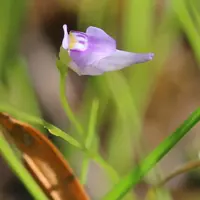
zigzag bladderwort Care (Utricularia subulata)

zigzag bladderwort

About zigzag bladderwort

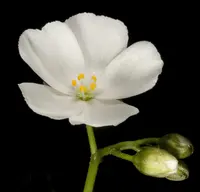
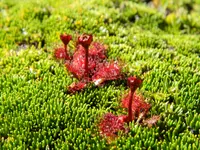
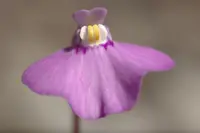
Zigzag bladderwort (Utricularia subulata) is a tiny, semi-aquatic carnivorous plant that naturally forms fine, moss-like mats. It produces delicate yellow flowers on thin, zigzagging stalks, which give the plant its common name.

This species occurs in nutrient-poor, wet habitats such as shallow pools, bogs, and waterlogged sand across parts of the Americas and other warm regions. It captures microscopic prey using underwater bladder traps, which supply nutrients in soils that are too poor for most plants.

The plant stays very small, which makes it interesting for terrariums and bog setups, but its need for constant moisture and low-nutrient conditions can challenge beginners learning how to care for zigzag bladderwort.

Main Plant Requirements

Care Difficulty

Hard Care

Light Preference

Partial Sun

Water Requirements

Aquatic

Temperature Preference

Tropical / Frost Sensitive

Hardiness Zone

Unknown

Soil Texture

Peaty, Organic-rich, Sandy

Soil pH

Strongly acidic (4.5–5.5)

Soil Drainage

Waterlogged tolerant

Fertilization

Minimal (feed rarely)

Get Personalized Care Plan

Scan your plant to receive care tips personalized for your specific plant

Available on iOS and Android

How to Care for the zigzag bladderwort

Utricularia subulata prefers bright, indirect light that supports steady growth without overheating the roots.

  • Provide 4–6 hours of bright, filtered light or light dappled shade; morning sun with afternoon shade works well, especially in warmer climates.
  • The plant tolerates partial shade, but flowering is usually better with slightly higher light; in deep shade it often becomes weak and produces fewer traps.
  • Avoid harsh midday sun, especially in summer, since prolonged exposure can scorch foliage and overheat shallow, wet substrates when caring for zigzag bladderwort.

This species is adapted to very wet, nutrient-poor habitats and depends on consistently high moisture.

  • Keep the substrate saturated or very waterlogged; standing water 1–3 cm above the surface is suitable, and the surface should never dry out fully.
  • Use low-mineral water (rain, distilled, or reverse osmosis) to avoid salt buildup, which can cause yellowing foliage and reduced growth in Utricularia subulata.
  • Watch for stress signs: drying edges or shrinking mats indicate insufficient water, while foul smell or black, slimy growth suggests stagnant water with poor oxygen exchange.

This carnivorous species prefers mild, frost-free conditions with stable temperatures through most of the year.

  • Aim for 65–80°F (18–27°C) for active growth; short periods up to 85°F (29°C) are tolerated if the substrate stays cool and saturated.
  • Protect from cold; growth slows below 60°F (16°C), and sustained exposure under 40°F (4°C) can damage or kill the plant, especially small containers.
  • Avoid frost and rapid swings; in regions with hot summers, provide shade and ample water to buffer heat, while in cooler seasons keep the root zone above freezing.

This carnivorous species prefers consistently high humidity for stable growth.

  • Aim for 70–90% humidity; growth slows and traps dry out below about 50%.
  • Zigzag bladderwort tolerates brief dips in humidity but prolonged dry air causes browning leaf tips and fewer active traps.
  • Increase humidity with a wide water tray under the pot, grouping plants, or using a humidifier, but keep foliage out of standing water.

This species needs a wet, nutrient-poor medium rather than conventional soil.

  • Use a fine, airy mix of 1:1 sphagnum peat and silica sand to mimic natural, low-nutrient bog conditions for Utricularia subulata.
  • Keep the mix constantly moist to waterlogged, using distilled or rainwater only, as minerals accumulate and damage the trap structures.
  • Maintain slightly acidic conditions around pH 4.5–6; avoid adding fertilizer, compost, bark, or manure-based products.
  • Ensure the mix stays loose by avoiding clay or silt, which compact, reduce aeration, and smother the delicate root-like stolons.

This species is very suitable for shallow container culture.

  • Choose a wide, shallow pot to allow lateral stolon spread while keeping the entire root zone evenly wet.
  • Use plastic or glazed ceramic containers, which slow evaporation and help maintain the constant saturation this species requires.
  • Stand the pot in a deep tray of distilled or rainwater so the lower medium stays submerged while the surface remains lightly oxygenated.

This carnivorous species relies mainly on captured prey and usually needs no added fertilizer in cultivation.

Utricularia subulata needs only minimal grooming rather than structured pruning.

  • Trim spent flower stalks at the base during or after blooming to keep growth tidy.
  • Gently pinch or cut away clearly dead or decaying leaves to limit mold and algae.
  • Use fine scissors or tweezers, working carefully to avoid disturbing delicate stolons and traps.

This small bladderwort prefers stable, undisturbed conditions, so repotting is infrequent and very gentle.

  • Repot every 2–3 years or when growth forms a dense mat, the medium compacts, or water drains poorly.
  • Choose late spring or early summer, when Utricularia subulata is actively growing and recovers fastest.
  • Move the entire mat with surrounding medium into a slightly wider, shallow pot without teasing roots apart.
  • Keep the new pot evenly wet with low-mineral water and avoid strong light for a few days to reduce stress.

Propagation of Utricularia subulata is usually done by division or by encouraging stolon spread rather than by seed.

  • Divide mats in spring or early summer, when growth is strong and recovery is quicker.
  • Lift a small section of the mat with attached medium and place it onto fresh, wet, low-nutrient substrate.
  • Maintain high humidity, bright indirect light, and constant moisture to support new growth from stolons.
  • Seed culture is possible in controlled, very clean conditions but is slower and less predictable for home growers.

This species is frost sensitive and needs mild, stable conditions over winter, especially in containers.

  • Keep temperatures above 50°F; move outdoor containers indoors to a cool bright windowsill or under lights.
  • Maintain the water tray but avoid chilling by using room-temperature, low-mineral water.
  • Do not let the medium freeze; there is no need for mulching in typical indoor setups.

Care Tips

Use Rainwater Trays

Set the pot or propagation container in a shallow tray of rainwater or reverse-osmosis water to maintain a constantly moist, low-mineral environment without disturbing the fine roots during frequent top-watering.

Encourage Dense Mats

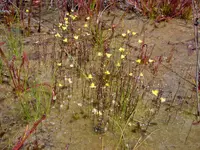
Periodically thin and replant small plugs from crowded patches into adjacent bare spots in the pot or bog setup to encourage an even, dense flowering carpet rather than a patchy colony.

Control Self-Seeding

If the plant is in a mixed carnivorous collection, remove seed pods as they dry and surface-skim the medium every few months to prevent this species from spreading aggressively into neighboring pots.

Subtle Air Movement

Provide very gentle, indirect air movement over indoor trays to reduce fungal growth on the moss and foliage without allowing the surface of the medium to dry out.

Monitor Mineral Buildup

Every few months, top-flush the pot with a larger volume of pure water and allow brief drainage from the tray to reduce any accumulated minerals, which is especially important when growing zigzag bladderwort in small, enclosed containers.

Common Pests and Diseases

Aphids

This pest is occasionally found colonizing fresh flower stalks and young leaf-like structures in nutrient-rich setups, especially in indoor trays or greenhouses. Symptoms include distorted new growth and sticky honeydew on surrounding surfaces.

Solution

Rinse affected areas gently under a stream of clean, low-mineral water and remove heavily infested stalks with clean scissors. For persistent colonies, use a dilute, non-scented insecticidal soap applied carefully to flower stalks only, avoiding saturation of the water and media, and repeat after 5–7 days if needed.

Fungus gnats

These insects thrive in constantly wet, organic media and are attracted to the shallow water trays often used for this species. Symptoms include clouds of small black flies around pots and, in severe cases, damage to delicate stolons and seedlings from larvae feeding in the substrate.

Solution

Allow the water level in trays to drop slightly between top-ups so the upper media surface is not permanently submerged, and remove any decaying plant material. Yellow sticky traps can reduce adults, and a biological control such as Bacillus thuringiensis israelensis (BTI) in the watering water helps control larvae without harming the plant.

Algal overgrowth

This disease-like condition occurs when algae cover the water surface and substrate in bright, nutrient-enriched conditions. Symptoms include green biofilm or mats that smother the fine leaf structures and compete with the plant for light and nutrients.

Solution

Reduce direct high-intensity light on the water surface, limit fertilizer or tap-water exposure, and physically remove algal mats with tweezers or a small siphon. Refresh part of the water, rinse the container, and if needed repot small sections of the colony into fresh, low-nutrient medium using only distilled, rain, or reverse-osmosis water for ongoing care.

Filamentous cyanobacteria

This disease-like problem appears as slimy, threadlike green, blue-green, or brown strands in shallow trays, especially in warm, stagnant water with excess nutrients. Symptoms include rapid spread over the substrate and trapping bladders, reducing photosynthesis and gas exchange.

Solution

Manually remove as much biomass as possible using tweezers or a pipette, then increase water changes and improve water circulation in larger setups without creating strong currents. Reduce nutrient input, use only very pure water, shade the water surface slightly if light is intense, and consider restarting a small, clean culture if the invasion is severe.

Leaf spot fungus

This disease is occasionally seen in crowded, poorly ventilated trays where water constantly splashes on foliage. Symptoms include small brown or dark spots on leaf-like structures that may merge into irregular patches, leading to localized dieback of the affected carpet.

Solution

Improve air movement around the trays, reduce overhead splashing, and thin very dense growth so surfaces can dry slightly between misting or flooding. Remove and discard affected clumps, and if the issue persists, briefly lower water levels and apply a mild, carnivorous-plant-safe fungicide as a spot treatment, avoiding heavy dosing of the entire tray.

Interesting Facts

Microscopic suction traps

This species captures tiny aquatic animals using bladder-like traps only about 0.2–1 mm wide, which actively suck in prey when trigger hairs are touched.

Hidden floating leaves

In nutrient-poor wetlands, it forms very fine, threadlike stolons and leaves that float in the water film around soil particles, making the plant almost invisible without magnification.

Chameleon flowering behavior

It produces both showy yellow surface flowers and tiny, self-pollinating cleistogamous flowers hidden near the soil or moss, allowing reproduction even when pollinators are scarce.

Botan icon

Did you know?

This species has an exceptionally wide natural distribution for a carnivorous plant, occurring in suitable wet habitats across parts of North, Central, and South America, the Caribbean, Africa, and Asia, which suggests a strong capacity for long-distance dispersal by waterbirds or water currents.

FAQs about zigzag bladderwort

Lack of flowers usually comes from insufficient light, unstable water levels, or nutrient-rich conditions that reduce carnivorous activity. Providing consistently bright conditions, low-mineral water, and lean, acidic substrate often restores flowering over time.

Grow Healthy Plants with Botan Care

Keep your plants happy and healthy with plant identification, disease detection, and easy care guidance.

Botan plant care app — identify plants on mobile

Explore More Plants