Early root training
In the first 2–3 years, lightly prune circling or kinked roots at each repot or transplant to encourage a deep, wide root system that stabilizes this fast-growing tree in wind.


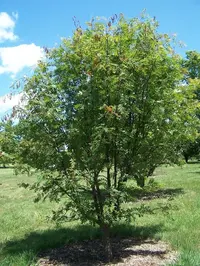
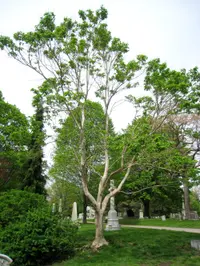
Monkeysoap, Enterolobium cyclocarpum, is a large, fast-growing tropical tree best known for its wide, spreading canopy and distinctive ear-shaped seed pods. In the landscape it often develops a broad, umbrella-like crown with a thick trunk, so it is usually grown outdoors in warm climates. This species is native to Central America and northern South America, where it grows in seasonally dry forests and open pastures. Its rapid growth, strong roots, and eventual size make it unsuitable for small gardens or containers. It prefers full sun, warmth, and well-drained soil, and it tolerates short dry periods once established, which influences how to care for monkeysoap in cultivation.

Care Difficulty
Moderate Care

Light Preference
Full Sun

Water Requirements
Moderate Water

Temperature Preference
Tropical / Frost Sensitive

Hardiness Zone
10–12

Soil Texture
Sandy, Loamy, Organic-rich

Soil pH
Slightly acidic (6.5–7.0), Neutral (7.0)

Soil Drainage
Well-drained

Fertilization
Minimal (feed rarely)
Scan your plant to receive care tips personalized for your specific plant
Available on iOS and Android
This large tropical tree needs abundant direct sun to develop a strong canopy and dense foliage.
This species prefers deep, infrequent watering that encourages a robust root system once established.
This tropical tree thrives in warm climates and is sensitive to cold and frost.
Humidity is not critical for Enterolobium cyclocarpum, which handles a wide range of indoor and outdoor conditions.
Enterolobium cyclocarpum prefers deep, well-draining, moderately fertile soil that allows strong root development.
This species is only suitable for short-term or juvenile container growing due to its eventual large size and vigorous root system.
This large tropical tree grows well in reasonably fertile soil but benefits from moderate feeding in containers or poor ground.
Pruning Enterolobium cyclocarpum is mainly structural and hygienic, aimed at maintaining a safe, strong canopy.
This fast-growing tree is usually moved from containers to the ground while still young to avoid severe root disturbance.
Propagation of this species is most commonly done from seed, which allows production of many young trees at once.
This tropical tree is not frost hardy and needs protection in regions with cold winters, especially when young or container-grown.

Plant Health Check
Not sure what's wrong with your plant? Check your plant's health inside the app.
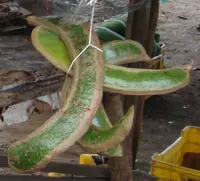
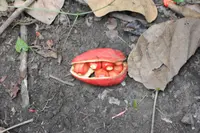
The species produces thick, woody seed pods that curl into a shape resembling a human ear, which inspired several of its common names such as ear pod tree and elephant ear tree.
As a member of the legume family, it hosts symbiotic bacteria in its roots that fix atmospheric nitrogen, enriching soils beneath its very wide, spreading canopy in tropical dry forests.
In its native Central American dry forests, the tree provides food and shade for many animals, including bats, monkeys, and livestock, making it an important structural and ecological keystone species.

In parts of Mesoamerica, large, mature individuals are traditionally used as living shade trees over cattle pastures and rural gathering areas, where a single tree’s canopy can cover a substantial outdoor workspace or meeting place.
This species is very fast-growing under warm, moist, open conditions, often adding 1–2 m in height per year when young. Growth slows as the canopy broadens and roots occupy available soil volume.
Keep your plants happy and healthy with plant identification, disease detection, and easy care guidance.