Trunk Sun Protection
On young or recently thinned trees, wrap the south and west sides of the trunk with breathable tree wrap from late fall to early spring to prevent bark scorch and sunscald as the dark bark absorbs heat.

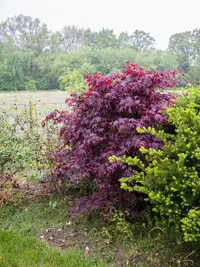
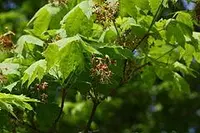
Acer palmatum var. amoenum 'Bloodgood' is a deciduous ornamental tree known for its deep red to burgundy foliage and elegant, layered branching. It stays relatively compact, which suits small gardens and urban yards.
This cultivar originates from Japanese maple species native to Japan, Korea, and parts of China, but is widely grown in temperate landscapes. It is valued for reliable color, good cold tolerance, and a naturally tidy shape.
The tree prefers light, well-drained soil, moderate moisture, and protection from harsh, drying winds. These stable traits make it easier to understand how to care for Japanese Maple, even for less experienced gardeners.

Care Difficulty
Moderate Care

Light Preference
Partial Shade

Water Requirements
Moderate Water

Temperature Preference
Cold Hardy

Hardiness Zone
5–8

Soil Texture
Loamy, Sandy, Organic-rich

Soil pH
Acidic (5.5–6.5), Slightly acidic (6.5–7.0)

Soil Drainage
Moist but well-drained

Fertilization
Minimal (feed rarely)
Scan your plant to receive care tips personalized for your specific plant
Available on iOS and Android
Acer palmatum var. amoenum 'Bloodgood' prefers bright, gentle light that protects its foliage from scorching.
This maple prefers evenly moist, cool soil that never stays waterlogged.
This tree is cold hardy yet benefits from moderate temperatures during the growing season.
This maple prefers moderate outdoor humidity but generally adapts well in most temperate gardens.
This tree performs best in slightly acidic, moist, well‑aerated soil with reliable drainage.
This maple can be grown successfully in containers for many years when provided with stable, well‑drained root conditions.
This cultivar benefits from modest, targeted feeding rather than heavy fertilization.
Pruning Acer palmatum var. amoenum 'Bloodgood' is mainly about light shaping and removing problem wood.
This maple is usually grown in the ground, with transplanting done infrequently and with care.
Propagation of this cultivar is specialized and usually carried out by nurseries rather than home gardeners.
Mature trees are fairly cold hardy but benefit from some root-zone attention in harsher climates.

Plant Health Check
Not sure what's wrong with your plant? Check your plant's health inside the app.
This cultivar maintains a deep burgundy to crimson leaf color through most of the growing season, unlike many Japanese maples that shift to greenish tones in summer.
Compared with many other red Japanese maples, it shows relatively good tolerance to full sun in cooler climates, which has contributed to its popularity in landscape design.
Bloodgood has been extensively used in breeding programs as a parent plant for newer red-leaf Japanese maple cultivars because of its reliable color, vigor, and relatively upright form.

The Bloodgood Japanese maple became one of the most widely planted red-leaf Japanese maples in the mid-20th century after being selected and popularized by Bloodgood Nursery in New York, and it is still a reference standard cultivar mentioned in many modern Acer palmatum var. amoenum 'Bloodgood' plant care resources.
Browning leaf edges usually result from leaf scorch caused by hot sun, low humidity, drought stress, or dry, windy conditions. Compacted or very salty soil and excess fertilizer can worsen damage. Improve moisture consistency and shield from harsh exposure.
Keep your plants happy and healthy with plant identification, disease detection, and easy care guidance.