Trunk wind training
Expose young plants to gentle, consistent air movement or lightly flex the main stem by hand a few times per week to encourage thicker, more wind‑resistant trunks for long‑term orchard stability.

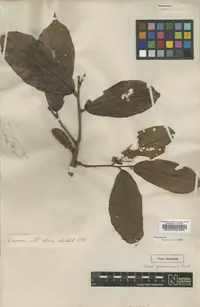
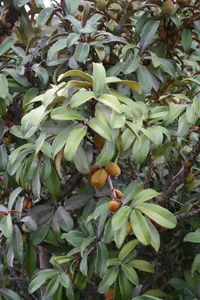
Theobroma velutinum is a small tropical tree in the cacao family, valued mainly as a wild forest species rather than a common cultivated crop. It typically has a slender trunk, dense leafy canopy, and velvety-textured young shoots and leaves, which give the species its name.
This species is native to lowland rainforests of northern South America, where it grows in warm, humid, shaded environments. It is considered challenging outside tropical climates, as it dislikes cold, dry air, and irregular moisture. Gardeners who care for Theobroma velutinum usually focus on providing stable warmth, high humidity, and rich, well-drained soil.

Care Difficulty
Hard Care

Light Preference
Partial Shade

Water Requirements
Keep Soil Moist

Temperature Preference
Tropical / Frost Sensitive

Hardiness Zone
11–12

Soil Texture
Loamy, Organic-rich

Soil pH
Acidic (5.5–6.5)

Soil Drainage
Moist but well-drained

Fertilization
Minimal (feed rarely)
Scan your plant to receive care tips personalized for your specific plant
Available on iOS and Android
This species prefers bright, filtered tropical light rather than direct, open sun.
This plant prefers consistently moist but not waterlogged soil.
This is a warm-climate tree with low tolerance to cold.
This species needs high, stable humidity to grow well in cultivation.
Theobroma velutinum prefers deep, moisture-retentive but well-drained, organic-rich soil.
This species can be grown in large containers for some years, provided root space and stability are managed carefully.
Nutrient-rich but well-drained soil supports healthy growth of Theobroma velutinum, and light feeding is usually sufficient.
Light structural pruning helps keep Theobroma velutinum manageable and healthy, especially in cultivation or containers.
This species is usually field-grown, so management focuses more on careful transplanting of young Theobroma velutinum than frequent repotting.
New plants of Theobroma velutinum are typically raised from seed, with vegetative methods used more rarely in home settings.
This is a tropical tree with low cold tolerance, so winter care is important in climates cooler than its native range.

Plant Health Check
Not sure what's wrong with your plant? Check your plant's health inside the app.
This species is native to the western Amazon basin, where it grows as an understory tree in warm, humid lowland rainforest rather than on upland or seasonally dry sites.
The leaves are covered in fine hairs that give them a noticeably velvety texture, a feature reflected in the species name velutinum, which refers to a velvet-like surface.
It belongs to the same genus as cultivated cacao (Theobroma cacao) and forms part of the wild genetic diversity studied by researchers interested in Theobroma velutinum care instructions and cacao evolution.
This small rainforest tree grows moderately, not rapidly. In suitable warmth and moisture, young plants may add 20–40 cm per year, slowing as they mature. Nutrient-rich soil and consistent care are key for growing Theobroma velutinum.
Keep your plants happy and healthy with plant identification, disease detection, and easy care guidance.