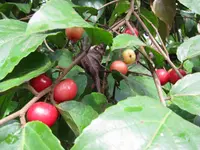
Cola cordifolia Care

Cola cordifolia

About Cola cordifolia

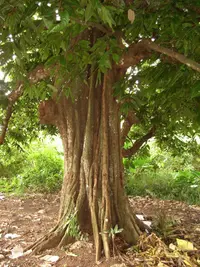
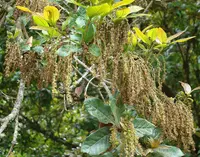
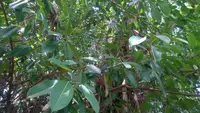
Cola cordifolia is a woody shrub or small tree from tropical West and Central Africa, related to the kola nut group. It typically forms a rounded canopy with leathery, heart-shaped leaves, giving it a dense, leafy appearance suitable for larger garden spaces in warm climates.

In its native range, it grows in lowland forests and moist habitats, which reflects its preference for warm temperatures, consistent moisture, and well-drained, humus-rich soil. For those interested in how to care for Cola cordifolia, the main challenges are providing enough warmth, humidity, and space for its tree-like growth.

Outdoors in frost-free regions, it can become a substantial landscape plant, while in cooler areas it is better suited to conservatories or protected greenhouse conditions.

Main Plant Requirements

Care Difficulty

Moderate Care

Light Preference

Partial Shade

Water Requirements

Moderate Water

Temperature Preference

Warm Climate

Hardiness Zone

Unknown

Soil Texture

Loamy, Sandy, Organic-rich

Soil pH

Acidic (5.5–6.5), Slightly acidic (6.5–7.0)

Soil Drainage

Well-drained

Fertilization

Minimal (feed rarely)

Get Personalized Care Plan

Scan your plant to receive care tips personalized for your specific plant

Available on iOS and Android

How to Care for the Cola cordifolia

This species prefers bright, gentle sun with protection from harsh midday exposure.

  • Provide 3–5 hours of direct morning sun with light shade or dappled light from late morning to afternoon to prevent leaf scorch.
  • Tolerates partial shade, but growth and flowering decline if light stays very low; thin surrounding vegetation if canopies become too dense.
  • In hot summers, shield from intense sun between 11 a.m. and 3 p.m., especially young Cola cordifolia plants, to reduce leaf burn and moisture stress.

Watering should keep the root zone evenly moist but never saturated.

  • Before watering, let the top 3–5 cm of soil dry; probe with a finger or trowel rather than following a fixed calendar.
  • In warm growing seasons, water deeply so moisture reaches 15–20 cm, then allow excess to drain; in cooler months, reduce frequency as growth slows.
  • Watch for yellowing, soft leaves or a sour soil smell as signs of overwatering, and for drooping, dry, crisp leaves as signs of underwatering in Cola cordifolia.

This plant prefers warm, frost-free conditions for reliable growth.

  • Optimal growth occurs around 70–85°F (21–29°C), with steady warmth supporting leaf and stem development.
  • Avoid temperatures below 50°F (10°C); brief drops to 45°F (7°C) may be tolerated, but repeated chills stunt growth and can damage young tissues.
  • Protect from frost, as freezing quickly injures foliage and young bark, and provide shade plus ample soil moisture during heat above 95°F (35°C) to limit stress.

This species prefers moderately humid air and shows stress if kept very dry for long periods.

  • Aim for 50–70% humidity, as prolonged levels below 40% can slow growth and cause marginal leaf browning.
  • Dry indoor air may lead to curled leaf edges and fine leaf-tip dieback, especially near heaters or vents.
  • Increase humidity with a nearby humidifier, grouped plants, or a pebble tray, but keep foliage dry to limit fungal issues.

Use loose, well-drained, organic-rich soil that stays evenly moist but never waterlogged.

  • Choose a loamy mix with high organic matter and visible coarse particles to support both moisture retention and air spaces around roots.
  • Aim for slightly acidic to neutral pH around 6.0–7.0, avoiding strongly alkaline substrates that can limit nutrient uptake and cause pale foliage.
  • Combine roughly 2 parts compost or peat-based mix with 1 part coarse sand or fine gravel and 1 part perlite or bark for balanced drainage and structure.
  • Avoid compacted clay, peat-only media, or mixes that stay soggy, which increase risk of root rot in Cola cordifolia.

This species can be grown in containers if given adequate root volume and stable moisture conditions.

  • Select a deep, heavy container that resists tipping as stems elongate and canopy weight increases.
  • Use a pot with multiple drainage holes so excess water exits quickly rather than pooling at the base layer.
  • Elevate the container slightly on feet or bricks outdoors to keep drainage holes free and prevent waterlogging from standing surface water.

This species grows slowly and needs only light, occasional feeding in cultivation.

  • Use a balanced, dilute liquid fertilizer (for example 10-10-10 at 1/4 strength) during active growth in spring–summer.
  • Apply every 4–6 weeks if growth is in a container or poor soil; skip feeding in rich ground.
  • Reduce or stop feeding in fall–winter when growth slows or temperatures drop.
  • Organic compost or a mild slow-release fertilizer can be worked lightly into the topsoil once per year.

Pruning is mainly used to keep Cola cordifolia healthy and structurally sound.

  • Carry out light pruning at the end of the dry season or late winter before strong new growth starts.
  • Remove dead, diseased, rubbing, or inward-growing branches with sharp, clean bypass pruners or a pruning saw.
  • Thin crowded interior shoots to improve airflow and light penetration, keeping a balanced, open crown.
  • Avoid heavy structural cuts in a single season; spread larger reductions over 2–3 years to limit stress.

This species is usually field-grown, so focus on careful transplanting of young plants rather than frequent repotting.

  • Transplant during the warm, moist season when night temperatures stay above 60°F to encourage root recovery.
  • Look for circling roots at drainage holes, obvious root binding, or stalled growth as cues a container plant needs more space.
  • Move up only 1 container size, handle the root ball gently, and loosen tightly circling roots without tearing.
  • Water thoroughly after planting, shade lightly for 1–2 weeks, and keep soil evenly moist to reduce transplant shock.

Propagation of Cola cordifolia is usually done from seed, with vegetative methods used less often.

  • Sow fresh, viable seeds in late spring–early summer in a warm medium kept at 75–85°F.
  • Use a free-draining mix, plant seeds about 2–3 cm deep, and maintain consistent, gentle moisture, not waterlogging.
  • Provide bright, indirect light and stable warmth; germination may be slow and uneven over several weeks.
  • For advanced growers, semi-hardwood cuttings under high humidity and rooting hormone can sometimes root in warm conditions.

This tropical tree is not frost hardy and needs protection in regions with cool or cold winters.

  • In ground, grow only in frost-free climates; light, brief chills can still damage young growth.
  • Apply 5–8 cm of organic mulch around the root zone, keeping it away from the trunk, to buffer soil temperature.
  • For container plants, move indoors or into a heated greenhouse before temperatures drop below 50°F.
  • Provide bright, indirect light indoors and reduce watering in winter, keeping the root zone just slightly moist.

Care Tips

Early structural pruning

In the first 2–3 years, remove competing leaders and overly steep branches to form a single strong trunk and 3–5 well-spaced scaffold branches that will support the mature canopy.

Mulch root zone

Apply a 5–8 cm layer of coarse organic mulch in a wide ring around the base, keeping it 5–10 cm away from the trunk, to stabilize soil moisture and protect the shallow feeder roots.

Wind protection planning

In exposed sites, establish temporary windbreaks or plant on the leeward side of buildings or larger trees to prevent branch breakage and leaf scorch while the young tree develops a thicker trunk.

Targeted fruit thinning

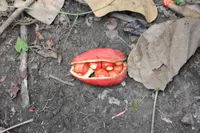
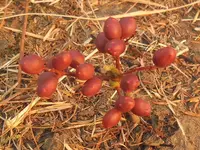
If the tree sets heavily, remove some developing fruits so that no cluster is overcrowded, which reduces limb stress and helps remaining fruits size up more uniformly.

Trunk and collar protection

Install a light-colored, ventilated trunk guard on young trees and avoid piling soil or mulch against the root collar to reduce sunscald, mechanical damage, and collar rot when growing Cola cordifolia.

Common Pests and Diseases

Mirid capsid bugs

These insects pierce young shoots, buds, and tender leaves, causing distortion, tip dieback, and small corky or dark spots on the surface. Symptoms include stunted new growth and malformed leaves on young Cola cordifolia plants or regenerating shoots.

Solution

Prune out and destroy heavily damaged shoot tips, then monitor flushes of new growth closely. For active infestations, shake or tap branches to dislodge bugs, encourage natural predators, and, if needed, apply a targeted contact insecticide such as pyrethroid or insecticidal soap to young shoots in the late afternoon, repeating as label directions indicate.

Leaf spot fungi

This disease causes circular to irregular brown or purplish spots on older leaves, sometimes with a yellow halo and premature leaf drop in humid conditions. Symptoms include a gradual thinning of the canopy from the inside as affected leaves fall early.

Solution

Remove and dispose of spotted fallen leaves and severely affected foliage to reduce fungal spores, then improve air circulation around the plant by light thinning of crowded interior branches. In very humid climates or during prolonged wet seasons, a copper-based or chlorothalonil fungicide can be applied preventively to foliage following local label guidance, avoiding spray during intense sun.

Stem canker

This disease produces sunken, dark lesions on stems or branches, sometimes with cracking bark and dieback beyond the affected area. Symptoms include wilting or death of individual branches while the rest of the plant remains green.

Solution

Cut out affected branches well below the visible canker into healthy tissue, disinfecting tools between cuts with 70% alcohol or a 10% bleach solution. Reduce stress by avoiding wounding the bark, maintaining consistent soil moisture, and, in high-risk areas, using a protective fungicidal paint or paste only on large pruning wounds according to product directions.

Scale insects

These pests appear as small, fixed bumps on stems, twigs, and leaf midribs and feed by sucking sap, leading to yellowing leaves, reduced vigor, and sticky honeydew on lower foliage. This pest can promote sooty mold growth on the honeydew, giving leaves a blackened surface.

Solution

Gently scrape or wipe scales off stems and midribs with a soft cloth or brush dipped in diluted alcohol or soapy water, repeating weekly until new crawlers are no longer seen. For larger or persistent populations, apply horticultural oil thoroughly to stems and leaf undersides during a mild, dry period to smother immature stages, monitoring plant response closely as part of general Cola cordifolia care.

Interesting Facts

Moist forest specialist

Cola cordifolia is naturally restricted to lowland and submontane evergreen forests in West and Central Africa, where it grows as an understory tree that prefers consistently moist, shaded habitats along streams and in valley bottoms.

Butterfly host tree

The leaves of Cola cordifolia serve as a larval food plant for several African butterfly species, including some in the Charaxinae subfamily, which depend on this tree for successful development.

Distinctive leaf architecture

This species has large, thin, heart-based leaves with prominent, parallel secondary veins that curve toward the tip, a venation pattern that helps distinguish it from other cola species in the same forests.

FAQs about Cola cordifolia

Brown leaf edges usually come from underwatering, hot dry wind, or fertilizer burn. Browning patches with soft tissue suggest root problems or overwatering. Check soil moisture, flush excess salts, trim damaged parts, and adjust watering rhythm.

Grow Healthy Plants with Botan Care

Keep your plants happy and healthy with plant identification, disease detection, and easy care guidance.

Botan plant care app — identify plants on mobile

Explore More Plants