Windfirm Training
In the first 5–8 years, allow some exposure to steady wind and avoid staking unless absolutely necessary so the trunk and root system develop strength and the tree becomes naturally windfirm.

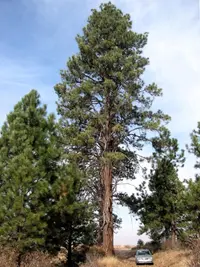
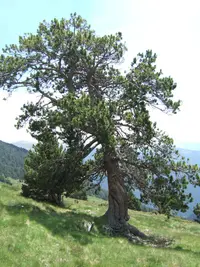
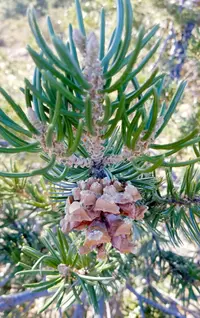
Ponderosa pine, Pinus ponderosa, is a long-lived coniferous tree known for its tall, straight trunk and distinctive orange-brown, puzzle-like bark. Mature trees often develop an open, airy crown with long, flexible needles in bundles, giving a light, textured appearance.
This species is native to western North America, where it dominates many dry mountain slopes and plateaus. It adapts well to cold winters, dry summers, and nutrient-poor soils.
For gardeners, it is a hardy, relatively low-maintenance tree once established, but it needs space, sun, and well-drained soil to thrive. Understanding how to care for Ponderosa Pine mainly involves matching its preference for full light and moderate, not excessive, moisture.

Care Difficulty
Moderate Care

Light Preference
Full Sun

Water Requirements
Low Water

Temperature Preference
Cold Hardy

Hardiness Zone
3–7

Soil Texture
Sandy, Loamy, Rocky

Soil pH
Acidic (5.5–6.5), Slightly acidic (6.5–7.0)

Soil Drainage
Well-drained

Fertilization
Minimal (feed rarely)
Scan your plant to receive care tips personalized for your specific plant
Available on iOS and Android
This species thrives in open, bright sites with long daily sun exposure.
This pine prefers deep, infrequent watering that mimics natural rainfall patterns.
This hardy pine tolerates a wide temperature range but grows best in moderate seasonal conditions.
This species is adapted to dry climates, so indoor humidity control is usually unnecessary.
Pinus ponderosa prefers deep, loose, well-drained mineral soils that never stay waterlogged.
This species can be grown in containers only for early life stages or bonsai-style culture, not as a long-term full-size tree.
This species typically needs minimal feeding in the ground, but light fertilization can support young or container-grown Ponderosa Pine.
Pruning Pinus ponderosa focuses on safety and health rather than cosmetic shaping.
Transplanting young Pinus ponderosa is more common than long-term container culture.
Pinus ponderosa is primarily propagated from seed rather than cuttings.
Mature Pinus ponderosa is very cold hardy and typically needs little winter care in the ground.

Plant Health Check
Not sure what's wrong with your plant? Check your plant's health inside the app.
Mature trees develop very thick, orange-brown bark that breaks into large, puzzle-shaped plates with deep dark furrows, a key adaptation that helps the trunk resist damage from low- to moderate-intensity wildfires.
This species typically carries its long needles in bundles of 3, which helps distinguish it in the field from many other native North American pines that have 2-needle bundles.
Botanists recognize several geographic varieties, including Rocky Mountain, Pacific, and Columbia forms, which differ in traits such as needle length, cone size, and growth habit, reflecting adaptation to local climates across its wide range.

The bark of old Ponderosa pines is often reported to have a sweet, vanilla- or butterscotch-like scent on warm days, a characteristic used by many field botanists and foresters as an extra clue for identifying this species in the wild.
Growth is moderate once established. Young trees often add 30–60 cm of height per year, slowing as they mature. Poor soil, drought stress, or root damage can reduce growth. Consistent conditions support steady development when you grow Pinus ponderosa.
Keep your plants happy and healthy with plant identification, disease detection, and easy care guidance.