Ponderosa Pine Identification (Pinus ponderosa)

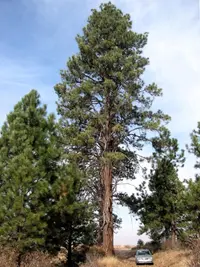
To recognize Ponderosa Pine, check for long needles in bundles of three, usually 5 to 10 inches (13 to 25 cm) long, and large, egg-shaped cones with stiff outward-pointing prickles.

Mature trees also show thick orange-brown bark broken into broad plates on a tall, straight trunk.

Pinus ponderosa Identification

Check Your Plant with Botan

Check your plant ID by uploading a clear photo to Botan.

Clear images work best. Avoid photos taken too close or too far away

Use these quick visual clues to assess Pinus ponderosa.

  • Needles are long, stiff, and usually grouped in bundles of three.
  • Each needle is about 5-10 inches (13-25 cm) long and hangs slightly outward from the twig.
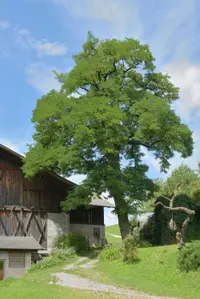
  • The crown is broad and open, often irregular rather than narrowly conical.
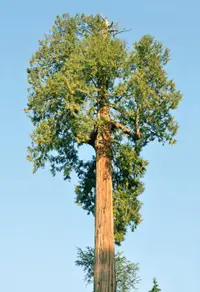
  • Mature trunks show thick, puzzle-like bark broken into large orange-brown to yellowish plates.
  • Cones are oval to egg-shaped, about 3-6 inches (8-15 cm) long, with hard scales bearing short prickles.

Check both the three-needle bundles and plated bark, since together they are especially useful in the field.

Pinus ponderosa shows clear age-related changes in bark, crown shape, and cone production.

  • Seedling: Early plants have a slender upright stem with soft juvenile needles, giving a sparse, tufted look rather than the open crown of older trees.
  • Young plant: Saplings form regular whorled branches and a narrow conical crown; bark stays dark and furrowed, lacking the broad orange plated bark of maturity.
  • Mature plant: Older trees develop a tall straight trunk, often 60-100 feet (18-30 m), with widely spaced limbs, an irregular open crown, and thick puzzle-like bark plates.
  • Fruiting stage: Cone-bearing trees show hanging oval cones, typically 3-6 inches (8-15 cm) long, adding a coarse textured look absent on nonbearing younger plants.

Ponderosa Pine stays needled year-round, so there is no bare winter phase. Seasonal clues are subtler but still useful. In spring to early summer, new candle growth appears at branch tips, followed by soft, lighter green needle bundles. Pollen cones may show briefly, and seed cones become more noticeable as they enlarge through summer, then persist into fall and winter as woody cones.

Several western pines can be mistaken for Ponderosa Pine.

Jeffrey pine(Pinus jeffreyi)

Often confused because both are tall, open-grown pines with long needles in bundles of three and plated bark. Jeffrey pine usually has larger cones, about 5 to 9 inches (13 to 23 cm), with prickles that point inward less sharply.

lodgepole pine(Pinus contorta var. latifolia)

Young trees can look similar at a distance. Lodgepole pine usually has needles in bundles of two, not mostly three, and its cones are smaller, commonly 1 to 2 inches (3 to 5 cm) long.

Pinus ponderosa is native to western North America, from southern British Columbia through the western United States and into northern Mexico, with major inland populations in the Rocky Mountains, Sierra Nevada, Cascades, and Black Hills. It typically grows in open conifer forests, dry mountain slopes, plateaus, and foothills, often at about 3,000 to 8,500 feet (900 to 2,600 m). Finding a large pine in these inland, drier landscapes helps separate it from pines of wetter coastal forests or lowland swamps.

Scan. Check. Confirm.

Use Botan to identify or verify a plant from a photo when you want a quicker, more confident match.

FAQ

Needle bundles of three are a key clue, usually 5 to 10 inches (13 to 25 cm) long. Mature bark is also distinctive: thick, broken into broad orange-brown plates with dark furrows, useful for Ponderosa Pine identification.

More Plant Identification Guides

From Plant ID to Plant Info

Identify a plant from a photo with Botan, then get plant details, care information, and common problems for that species.

Botan app identifying a plant from a photo
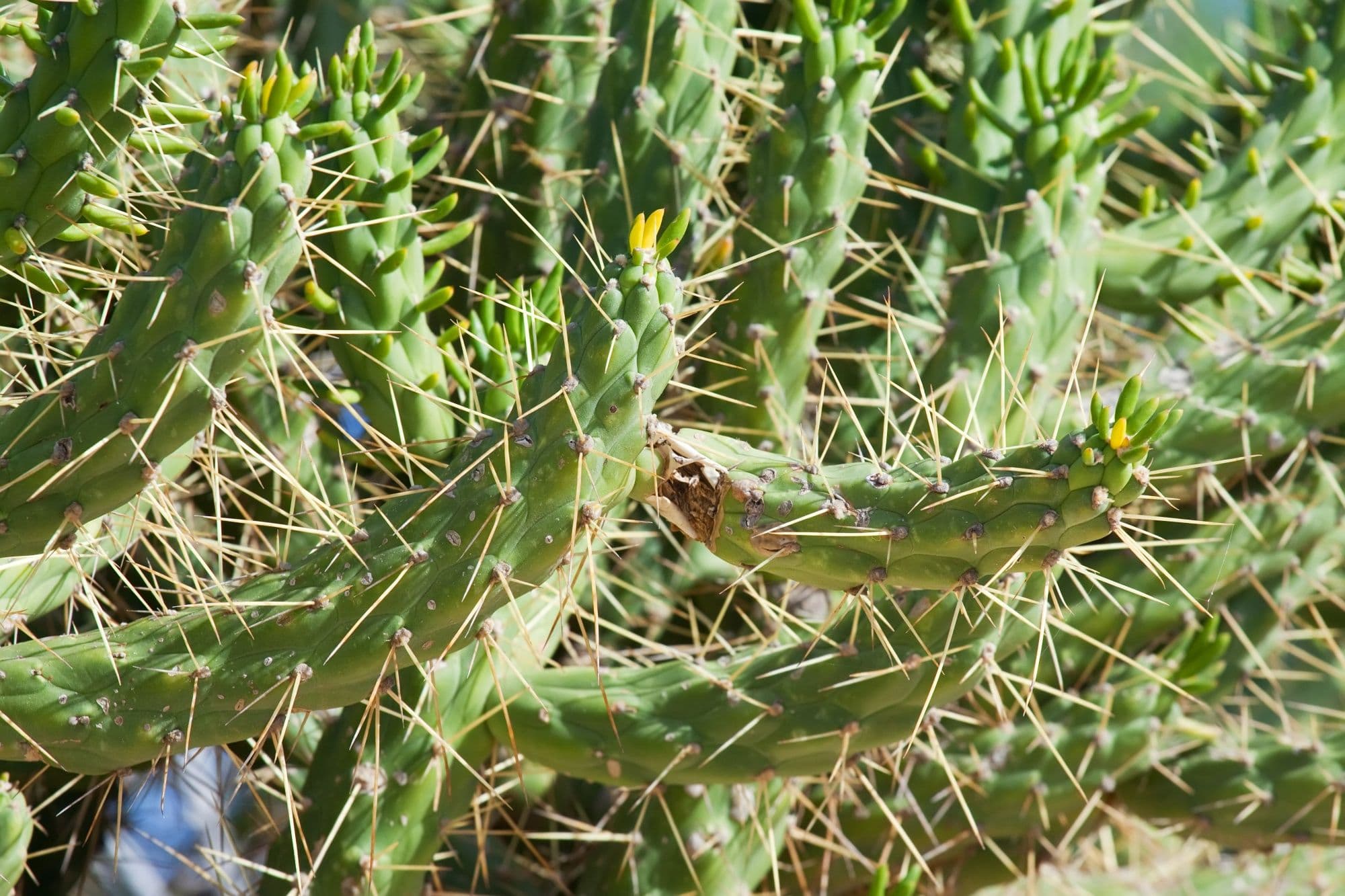
Thorny Plants: A Comprehensive Guide

10 min read · 25 Aug 2026

Thorny Plants: A Comprehensive Guide

Many plants defend themselves with sharp thorns. This guide explores over 20 examples among flowers, shrubs, trees, and vines. You'll learn what each plant looks like, why it grows thorns, and how to quickly identify them.

Plant Recommendations
Thorny Plants: A Comprehensive Guide
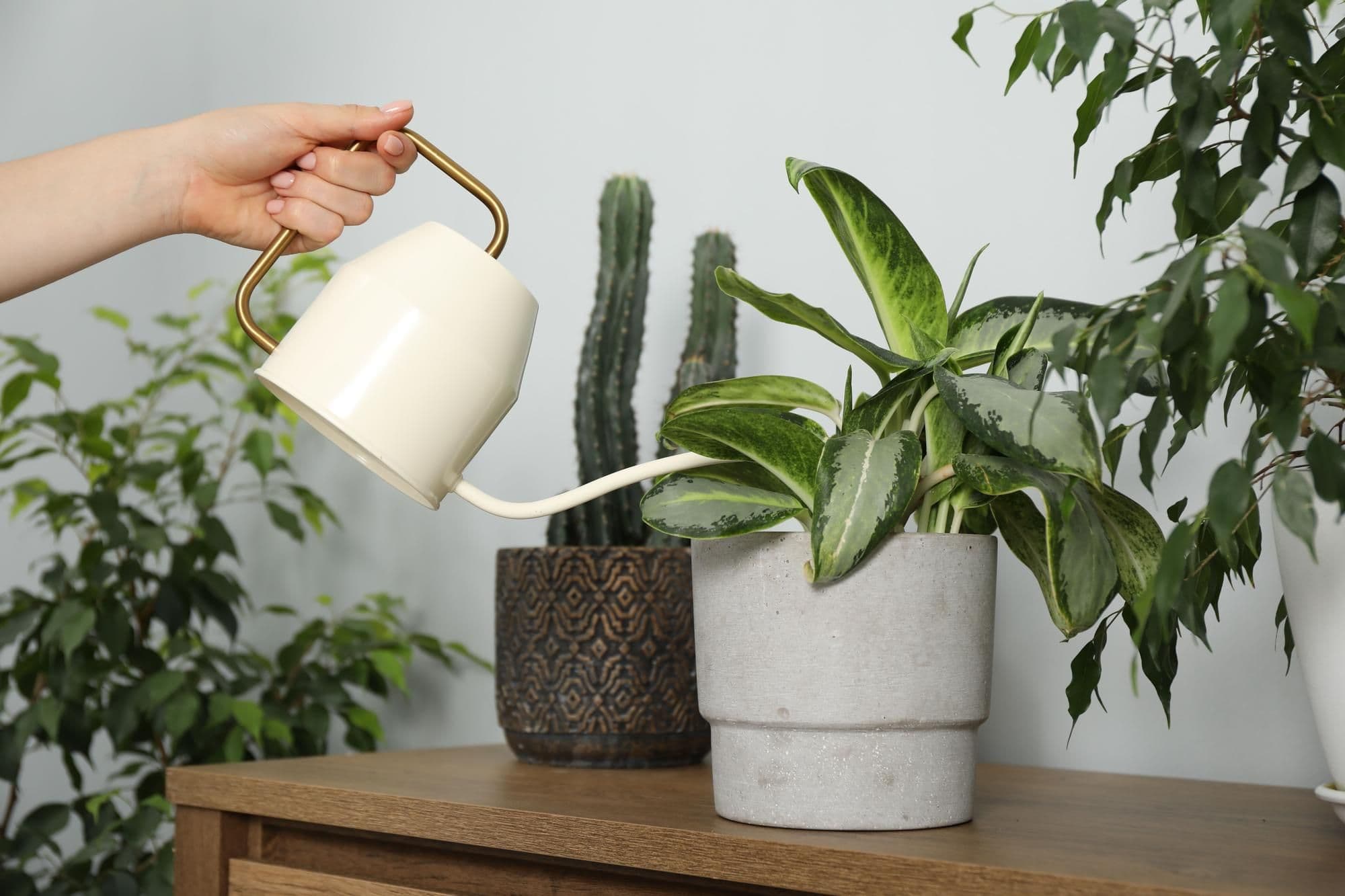
How to Water Houseplants: Watering Guide

7 min read · 24 Aug 2026

How to Water Houseplants: Watering Guide

Learn how often to water indoor plants, key factors for proper watering, and how to adjust the care routine by plant type, season, pot size, light, and indoor conditions.

Plant Care
How to Water Houseplants: Watering Guide
Plant Pot Sizes: How to Choose the Right Plant Container

7 min read · 20 Aug 2026

Plant Pot Sizes: How to Choose the Right Plant Container

Plant pot sizes can be confusing because the number on the label only tells you part of the required information. A container may look spacious but actually be too shallow. So, how to choose pot size for plant species?

Beginner Guides
Plant Pot Sizes: How to Choose the Right Plant Container