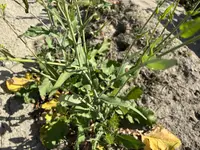
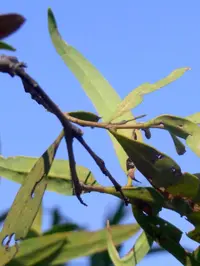
Arizona desert-thorn Care (Lycium exsertum)

Arizona desert-thorn

About Arizona desert-thorn

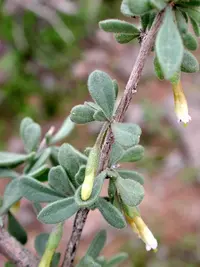
Arizona desert-thorn (Lycium exsertum) is a hardy, woody shrub native to arid regions of the southwestern United States and northern Mexico. It is adapted to hot, sunny, low-rainfall environments. The plant typically forms a dense, thorny framework with small gray-green leaves and tubular flowers that are followed by small berries. This compact structure helps it conserve water and tolerate drought. It suits low-maintenance, xeric landscapes but requires full sun and sharply drained, often alkaline soils. Those who want to care for Arizona desert-thorn should understand that it thrives under dry conditions and does poorly in consistently wet or heavy soils.

Main Plant Requirements

Care Difficulty

Easy Care

Light Preference

Full Sun

Water Requirements

Low Water

Temperature Preference

Warm Climate

Hardiness Zone

8–11

Soil Texture

Sandy, Loamy, Rocky

Soil pH

Neutral (7.0), Slightly alkaline (7.0–7.5)

Soil Drainage

Well-drained

Fertilization

Minimal (feed rarely)

Get Personalized Care Plan

Scan your plant to receive care tips personalized for your specific plant

Available on iOS and Android

How to Care for the Arizona desert-thorn

Lycium exsertum thrives in strong, direct sun typical of arid regions.

  • Provide 6–10 hours of direct sun daily, with full exposure ideal for dense growth and flowering.
  • Plant where it receives morning to mid-afternoon sun; light afternoon shade is acceptable in very hot sites above 100°F (38°C).
  • In partial shade it survives but becomes more open and flowers less; monitor for weak, elongated stems as a sign of insufficient light year-round.

This desert shrub is highly drought-tolerant and prefers infrequent, deep watering.

  • Allow the top 5–8 cm of soil to dry fully before watering; in native-style landscapes this often means waiting until foliage shows slight dullness or minor leaf curl.
  • Use fast-draining, sandy or gravelly soil so water does not pool; avoid heavy clay unless amended with coarse material.
  • Reduce or stop supplemental watering in cool or rainy seasons; yellowing, soft leaves suggest overwatering, while extensive tip dieback indicates prolonged drought stress.

This species is adapted to hot, arid climates and tolerates a wide temperature range.

  • Optimal growth occurs around 70–90°F (21–32°C), especially during the active spring and early summer growing period.
  • Mature plants typically tolerate down to about 10–15°F (-12 to -9°C); brief dips slightly below may be survived if soil is well drained.
  • It handles summer heat above 100°F (38°C) when established, but young plants benefit from some afternoon shade during extreme heatwaves and dry winds.

Humidity is rarely a concern for Lycium exsertum, which is adapted to very dry air.

Lycium exsertum thrives in lean, mineral soils that drain quickly and do not stay wet.

  • Use a sandy or gravelly mix with minimal organic matter to mimic desert conditions.
  • Combine roughly 60–70% coarse sand or grit with 30–40% cactus mix for structure and aeration.
  • Aim for slightly alkaline to neutral pH around 7.0–8.0; avoid strongly acidic mixes.
  • Do not use dense clay or peat-heavy media that hold water and reduce root oxygen.

This species can be grown in containers if the pot and substrate prevent prolonged moisture around the roots.

  • Choose a deep, heavy pot that resists tipping as the shrub becomes woody and branching.
  • Use a very fast-draining, gritty mix so water exits within minutes rather than lingering in the root zone.
  • Leave a 2–3 cm gap below the rim to allow thorough top watering without overflow and salt streaking.

This desert-adapted shrub needs minimal feeding, but light nutrient support can help container-grown Arizona desert-thorn.

  • Use a low-strength balanced fertilizer (such as 10-10-10) or dilute liquid feed at 1/4–1/2 label rate for potted plants.
  • Apply once every 6–8 weeks during spring and early summer, skipping feeding during extreme heat.
  • Avoid high-nitrogen products, which encourage weak, lush growth unsuited to dry conditions.
  • Do not fertilize during fall and winter dormancy to prevent soft, frost-prone shoots.

Lycium exsertum responds well to light, structural pruning that maintains an open, airy form.

  • Carry out main pruning in late winter or very early spring before new growth starts.
  • Remove dead, diseased, crossing, or overly crowded branches to improve light penetration and airflow.
  • Shorten excessively long shoots to shape the shrub and keep berries accessible for observation or harvest.
  • Use clean, sharp bypass pruners and make cuts just above outward-facing buds or branch junctions.

This species is usually grown in the ground; transplant carefully to avoid disturbing its drought-adapted roots.

  • Transplant young plants in late winter to early spring, when soil is workable and before vigorous growth starts.
  • Look for signs such as roots circling the container, slow growth despite adequate light, or water running straight through.
  • Move up only 1 pot size and use a gritty, fast-draining mix to limit waterlogging and root rot risk.
  • Water thoroughly after planting, then allow soil to dry between waterings to help roots anchor and reduce transplant shock.

Lycium exsertum is most often propagated from seed or semi-hardwood cuttings taken in warm seasons.

  • Collect ripe berries, clean seeds, and sow in a fast-draining sandy mix; keep lightly moist and warm for germination.
  • Take semi-hardwood cuttings in late spring to summer, 10–15 cm long, from healthy, non-flowering shoots.
  • Strip lower leaves, dip bases in rooting hormone, and insert into a sterile, sharply drained medium.
  • Provide bright indirect light, gentle warmth, and moderate humidity until new growth indicates rooting.

This desert shrub is cold hardy in suitable climates and generally needs little winter attention once established.

  • Tolerates light to moderate frosts when planted in well-drained soil; avoid sites with standing winter water.
  • In marginally cold areas, apply a 5–8 cm layer of dry mulch around, but not against, the main stems.
  • For container plants in colder zones, move pots to an unheated, bright, frost-free spot and water sparingly.

Care Tips

Establish deep roots

In the first 1–2 growing seasons, give the shrub one slow, deep soak every 10–14 days in dry weather to encourage a deep root system that improves long-term drought resilience.

Shape for access

Lightly thin and shape branches in late winter to keep the plant open enough for easy access to fruits and to reduce dense interior growth where pests can shelter.

Encourage wildlife pollination

If fruit set is low, avoid broad-spectrum insecticides during flowering and plant other nectar plants nearby to support native bees that improve pollination and yield.

Protect from browsing

In areas with rabbits or deer, install low wire fencing or individual plant cages for young shrubs until the framework is woody enough to tolerate occasional browsing.

Monitor salt buildup

In regions with hard or saline irrigation water, leach the planting area once or twice a year by applying extra water over several hours so it drains through, which helps prevent salt accumulation that can scorch leaf tips when growing Arizona desert-thorn.

Common Pests and Diseases

Spider mites

This pest often appears in hot, very dry conditions and feeds on tender foliage and young stems. Symptoms include fine webbing on branch junctions, tiny yellow stippling on leaves, and gradual thinning of foliage.

Solution

Rinse affected branches with a strong stream of water to knock mites off, focusing on inner branches where air is still. If populations persist, use a horticultural oil or insecticidal soap labeled for spider mites in early morning, and reduce plant stress by avoiding overhead irrigation that raises heat and humidity in the canopy.

Leafhopper damage

These insects suck sap from young shoots and leaves, causing pale speckling, slight leaf curling, and sometimes distorted new growth. In dry, open desert-edge sites, they can build up quickly on new flushes of foliage.

Solution

Prune out heavily affected shoot tips and discard them, then encourage natural predators by avoiding broad-spectrum insecticides nearby. If needed, apply an insecticidal soap or a light horticultural oil to new growth during cool parts of the day, repeating according to label until fresh growth appears clean; this is often enough for Lycium exsertum care in residential landscapes.

Powdery mildew

This disease can appear during warm days with cooler, slightly humid nights, especially where air movement is poor. Symptoms include white, powdery patches on leaves and young stems, sometimes leading to leaf yellowing and early drop.

Solution

Improve airflow by thinning dense interior branches and avoiding overhead watering in the evening. Remove and dispose of heavily infected leaves or shoots, then, if needed, apply a sulfur or potassium bicarbonate fungicide labeled for powdery mildew, targeting the outer canopy where new growth is most affected.

Botryosphaeria canker

This disease causes sunken, discolored cankers on woody stems, often following mechanical injury or water stress. Symptoms include dieback of individual twigs or branches, with bark that may crack and peel around affected areas.

Solution

Prune out affected branches several inches below visible symptoms, sterilizing pruning tools between cuts with 70% alcohol or a 10% bleach solution. Reduce plant stress by maintaining appropriate deep, infrequent watering and avoiding trunk or stem injury, which helps the shrub compartmentalize wounds and resist new infections.

Desert scale insects

This pest appears as small, fixed bumps on stems and older wood, sometimes with a gray, tan, or brown crusty appearance. Symptoms include sticky honeydew on nearby surfaces, sooty mold growth, and gradual decline in vigor on heavily infested plants.

Solution

Scrape small, localized colonies off stems by hand or with a soft brush, then wash stems with water to remove honeydew and mold. For larger infestations, apply a dormant or lightweight horticultural oil thoroughly to stems during cooler hours to suffocate scale, repeating as labeled and monitoring for improved new growth over the next season.

Interesting Facts

Desert pollinator hub

Arizona desert-thorn produces small, tubular purple flowers that are an important nectar source for native bees and other desert pollinators during dry periods when few other shrubs are blooming.

Specialist bird food

Its orange-red berries are a key late-season food for desert birds such as thrashers and towhees, which both eat the fruit and help disperse the seeds across arid washes and slopes.

Native Sonoran shrub

This thorny shrub is native to the Sonoran Desert of Arizona and northern Mexico, where it naturally grows on rocky slopes, desert grasslands, and dry washes rather than in riparian or lush habitats.

Botan icon

Did you know?

Arizona desert-thorn often forms part of the protective nesting structure for smaller desert birds, which use its dense, thorny branches as a physical barrier against predators while nesting inside or beneath the shrub canopy.

FAQs about Arizona desert-thorn

Sparse flowering usually comes from too little sun, excess irrigation, or heavy nitrogen fertilizer. This shrub needs strong light, lean, well-drained soil, and some seasonal drought stress to initiate abundant blooms. Avoid pruning off new flowering wood.

Grow Healthy Plants with Botan Care

Keep your plants happy and healthy with plant identification, disease detection, and easy care guidance.

Botan plant care app — identify plants on mobile

Explore More Plants