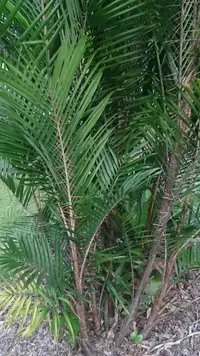
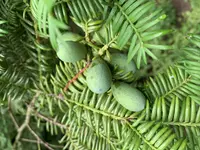
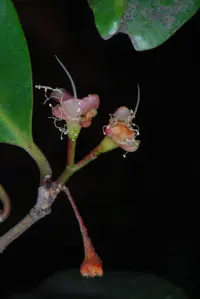
borojó Care (Alibertia patinoi)

borojó

About borojó

Borojó, Alibertia patinoi, is a tropical fruit tree native to humid lowland rainforests of Colombia, Panama, and nearby regions. It belongs to the Rubiaceae family, the same family as coffee.

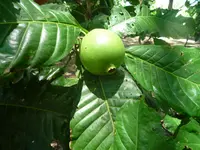
The plant usually grows as a small to medium tree with a dense, rounded canopy and glossy, dark green leaves. Its brown, round fruits contain a soft, pulpy flesh used locally for drinks and preserves.

Alibertia patinoi prefers warm, consistently moist conditions and rich, well-drained soil, which can make it challenging in cooler or very dry climates. Understanding how to care for borojó starts with providing stable warmth, high humidity, and protection from strong, drying winds.

Main Plant Requirements

Care Difficulty

Hard Care

Light Preference

Partial Shade

Water Requirements

Keep Soil Moist

Temperature Preference

Tropical / Frost Sensitive

Hardiness Zone

11–12

Soil Texture

Loamy, Organic-rich

Soil pH

Acidic (5.5–6.5)

Soil Drainage

Moist but well-drained

Fertilization

Minimal (feed rarely)

Get Personalized Care Plan

Scan your plant to receive care tips personalized for your specific plant

Available on iOS and Android

How to Care for the borojó

Alibertia patinoi prefers bright, stable light similar to its native lowland tropical forest edges.

  • Provide 4–6 hours of gentle morning sun with bright, filtered light the rest of the day, avoiding harsh midday and late-afternoon sun to prevent leaf scorch.
  • Plant borojó where it receives partial shade, such as dappled light under taller trees, especially in hotter, low-latitude climates.
  • Watch foliage: pale, sparse growth indicates insufficient light, while brown, crisp patches on the upper leaves signal excessive direct sun, particularly in dry seasons.

This species prefers consistently moist, well-drained soil without long periods of drought or saturation.

  • Allow the top 3–5 cm of soil to dry slightly before deep watering, so moisture reaches the full root zone without waterlogging.
  • Use soil with good drainage and organic matter; standing water or heavy clay around roots increases risk of rot and yellowing leaves.
  • In hotter, dry months, expect faster drying and more frequent checks, while in cooler or rainy seasons reduce watering if soil stays damp for several days.

This lowland tropical fruit tree thrives in warm, frost-free conditions year-round.

  • Aim for 70–86°F (21–30°C) for active growth, with best flowering and fruiting toward the warmer end of this range.
  • Protect from cold below 55°F (13°C) and especially from any frost; leaf drop and stem damage occur quickly near 32°F (0°C).
  • In hot spells above 95°F (35°C), provide extra shade and soil moisture to prevent heat stress, leaf scorch, and flower or fruit drop.

This species prefers consistently moist air and reacts quickly to very dry conditions.

  • Aim for 60–80% humidity to mimic the native rainforest environment for borojó.
  • Crisping leaf edges, stalled growth, and flower or fruit drop indicate humidity stress.
  • Use clustered plants, a nearby humidifier, or a pebble tray under (not touching) the pot to raise local humidity levels.

This plant grows best in deep, loose, organic-rich soil that stays evenly moist yet drains freely.

  • Use a loamy, well-structured mix with high organic matter, such as 50–60% composted bark or leaf mold, 20–30% coarse sand, and 10–20% perlite.
  • Ensure rapid drainage but moisture retention by avoiding heavy clay and peat-only mixes that compact and exclude air.
  • Target slightly acidic to neutral pH around 5.5–7.0, which supports nutrient availability for Alibertia patinoi roots.
  • Improve aeration by incorporating coarse materials (bark chips, pumice, or perlite) and avoiding fine, silty soils that become waterlogged after rain or irrigation.

This species can be grown in containers, especially in cooler climates or where outdoor space is limited.

  • Select a tall, heavy pot to stabilize the developing woody framework and prevent tipping in wind or when fruiting.
  • Choose a container material that moderates moisture, such as thick-walled plastic or glazed clay, to reduce rapid drying of the root zone.
  • Maintain a deep, well-aerated root space by filling the pot with a loose, chunky mix rather than dense garden soil that compacts over time.

Alibertia patinoi benefits from moderate feeding in containers or managed orchards, but established in-ground trees on fertile soil need minimal inputs.

  • Use a balanced NPK fertilizer (such as 10-10-10) or well-aged compost at the start of the warm growing season.
  • Feed container plants every 6–8 weeks during active growth, using half-strength liquid fertilizer or labeled-rate slow-release granules.
  • Reduce or stop feeding in cool months or when growth slows, as borojó enters a semi-rest period.
  • Water before and after fertilizing to limit root burn and keep nutrients moving into the root zone.

Alibertia patinoi responds well to light structural pruning aimed at maintaining a strong, open canopy.

  • Carry out main pruning at the end of the dry or cool season, just before vigorous new growth begins.
  • Remove dead, diseased, crossing, or inward-growing branches to improve airflow and light penetration.
  • Shorten or thin crowded shoots to maintain a balanced framework and support good fruiting wood.
  • Use clean, sharp bypass pruners or a pruning saw, making smooth cuts just outside the branch collar.

This species is usually grown in the ground, so care focuses on transplanting young trees rather than frequent repotting.

  • Transplant in late spring or early summer once soils are warm and the risk of cold snaps has passed.
  • Look for roots circling the pot, water stress, or slowed growth as signs container seedlings need a larger space.
  • Move up only 1–2 pot sizes or into a prepared planting hole with well-drained, organically enriched soil.
  • Handle the root ball gently, loosening only tightly circling roots, then water deeply and shade lightly for several days to reduce stress.

Alibertia patinoi is most often propagated by seed, with cuttings used where clonal traits are important.

  • Collect fully mature fruits, clean the seeds, and sow them in a sterile, well-drained mix at 75–85°F.
  • Provide bright, indirect light and consistent moisture; germination can be slow and irregular.
  • Take semi-hardwood cuttings in warm weather, using a rooting hormone to improve strike rate.
  • Place cuttings in high humidity with bottom warmth, and keep the rooting medium just moist, not waterlogged.

This tropical species has low frost tolerance and needs protection in regions with cool or freezing winters.

  • In frost-prone areas, grow in containers and move indoors or into a heated greenhouse before temperatures drop below 40°F.
  • For in-ground plants in marginal climates, apply a 5–8 cm mulch layer around the root zone, keeping it away from the trunk.
  • Use breathable frost cloth or similar material to insulate young stems during brief cold events.

Care Tips

Windbreak planning

In open or coastal sites, install a permeable windbreak such as shade cloth or a hedge on the windward side to reduce branch breakage and flower drop on young plants.

Structural staking

For the first 2–3 years, use 1–2 sturdy stakes and soft, wide ties to keep the main stem upright and reduce rocking that can damage new roots, loosening the ties as the trunk thickens.

Mulch management

Maintain a 5–8 cm layer of organic mulch in a wide ring around the root zone, keeping it 5–8 cm away from the stem to conserve moisture, moderate soil temperature, and reduce weed competition.

Targeted fruit thinning

If branches are heavily loaded with developing fruits, selectively remove some small fruits by hand along the branch so the remaining fruits size up better and the limbs are not stressed or broken.

Preventive pest scouting

During warm, humid periods, inspect the undersides of leaves and young shoots weekly for scale insects or mites and wash off early infestations with a strong but gentle water spray before resorting to controls, which is a key part of caring for borojó in productive plantings.

Common Pests and Diseases

Fruit borer

This pest feeds on developing borojó fruits, tunneling into the pulp and causing premature fruit drop and internal rot. Symptoms include small entry holes, frass (insect droppings), and damaged, misshapen fruits.

Solution

Remove and destroy all infested fruits to break the life cycle, and keep the area under the tree free of fallen fruit. For larger plantings, use fine mesh bags over young fruits and apply targeted Bacillus thuringiensis (Bt) sprays to young larvae, following label directions and avoiding applications during peak pollinator activity.

Fruit fly

These insects lay eggs in ripening fruits, leading to maggot-infested, soft, and decomposing borojó fruit. Symptoms include tiny sting marks on the skin, rapid softening, and liquefied, foul-smelling pulp.

Solution

Collect and destroy all infested or fallen fruits promptly to reduce breeding sites, and avoid leaving ripe fruit on the tree for long periods. In outdoor production, use baited traps and fruit fly lures placed around the canopy, and consider fruit bagging once fruits reach near-full size to prevent new oviposition.

Leaf spot

This disease causes small, water-soaked lesions on leaves that expand into brown or tan spots, sometimes with a darker margin. Symptoms include premature yellowing and leaf drop in humid, poorly ventilated conditions.

Solution

Prune to open the canopy and improve airflow, and avoid overhead watering that keeps foliage wet for long periods. Remove and discard heavily spotted leaves and, in severe cases, apply a copper-based fungicide or biofungicide labeled for leaf spots on tropical fruit trees, rotating products to limit resistance.

Anthracnose

This disease produces dark, sunken lesions on young shoots, leaves, flowers, and sometimes fruit, especially under high humidity and frequent rainfall. Symptoms include dieback of tender shoots and blemished fruit that may crack or rot at the lesions.

Solution

Prune out and destroy infected twigs and fruit mummies, and thin dense growth to reduce leaf wetness duration. During wet seasons in production plantings, use preventive fungicide sprays based on copper or strobilurin actives according to label instructions, and avoid overhead irrigation that repeatedly wets young tissue.

Scale insects

These insects attach to stems and leaf veins, sucking sap and weakening the plant, particularly on container or shaded specimens. Symptoms include small, dome-shaped or flat bumps, sticky honeydew, and sooty mold growth on leaves and nearby surfaces.

Solution

Physically remove light infestations by gently scraping scales with a soft brush or cloth and pruning heavily infested twigs. For persistent populations, wash plant surfaces with a mild soap solution, then apply horticultural oil thoroughly to all stems and leaf undersides, repeating at 7–14 day intervals while monitoring for beneficial insects and avoiding oil use during very hot weather; this type of approach is central to effective Alibertia patinoi plant care.

Interesting Facts

Amazon understory specialist

This species naturally grows in the shaded understory of lowland rainforests in Colombia and neighboring regions, where it tolerates high humidity and diffused light under taller canopy trees.

Large nutrient-dense fruit

Its globose brown fruits are unusually large for a Rubiaceae shrub, with a thick, vitamin- and mineral-rich pulp that local communities value as a traditional food source and for making drinks and preserves.

Wildlife food resource

In its native range, the soft, aromatic ripe fruits are eaten by mammals such as rodents and possibly primates, which helps disperse the seeds through the forest.

Botan icon

Did you know?

The pulp of this species is so dense and sticky when fully ripe that it has been traditionally processed by diluting and straining it into beverages rather than eaten plain, a preparation method that reflects its long-standing culinary importance in parts of Pacific Colombia.

FAQs about borojó

This species grows moderately, not rapidly. Under warm, humid, frost-free conditions and good nutrition, seedlings may take 3–5 years to begin fruiting. Growth and fruiting slow if temperatures drop, soil stays dry, or nutrients are limited.

Grow Healthy Plants with Botan Care

Keep your plants happy and healthy with plant identification, disease detection, and easy care guidance.

Botan plant care app — identify plants on mobile

Explore More Plants