Wind-hardening young plants
For the first 2–3 years, gradually expose young trees to stronger wind by reducing shelter each season so that trunks and roots thicken and anchor more securely, especially in open or coastal sites.

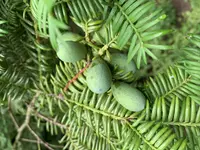
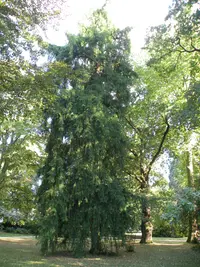
Japanese nutmeg-yew, Torreya nucifera, is an evergreen conifer native to Japan and parts of South Korea. It grows as a slow to medium-speed tree or large shrub with dense, flat sprays of sharp, dark green needles. Mature plants form a rounded to columnar shape that suits structured gardens and shaded borders. The seeds are large and nut-like, which gives the species its common name.
This species prefers cool, humid climates, sheltered sites, and well-drained, slightly acidic soil. It tolerates pruning but resents extreme heat and drying winds. Gardeners who learn how to care for Japanese Nutmeg-yew usually find it long-lived and reliable, but it is not ideal for very hot or dry regions.

Care Difficulty
Moderate Care

Light Preference
Partial Shade

Water Requirements
Moderate Water

Temperature Preference
Cold Hardy

Hardiness Zone
6–9

Soil Texture
Loamy, Sandy, Organic-rich

Soil pH
Acidic (5.5–6.5), Slightly acidic (6.5–7.0)

Soil Drainage
Moist but well-drained

Fertilization
Minimal (feed rarely)
Scan your plant to receive care tips personalized for your specific plant
Available on iOS and Android
This slow-growing conifer prefers bright, gentle light rather than intense, all-day sun.
This species prefers evenly moist but not saturated soil, with slow, steady soil drying between waterings.
This hardy conifer tolerates cool climates but grows best in moderate, stable temperatures.
This species prefers cool, moderately moist air but usually adapts well to typical home humidity.
Torreya nucifera grows best in deep, moist, well‑drained, slightly acidic soil.
This species can be grown in containers when young or kept dwarf with pruning, but it needs careful pot management for root health.
This species grows slowly and often needs only modest feeding in cultivation.
Pruning Torreya nucifera is mainly corrective and shaping rather than heavy renovation.
This conifer is usually grown in the ground and dislikes frequent disturbance.
Reproducing this species is possible but slow and technically demanding.
Established Torreya nucifera plants are generally cold hardy and need limited winter attention.

Plant Health Check
Not sure what's wrong with your plant? Check your plant's health inside the app.
Unlike the highly poisonous true yews in the genus Taxus, this conifer produces a fleshy, yellow aril around each seed that is traditionally eaten in parts of Japan after careful preparation, although the hard seed itself is not consumed.
Its dense, fine-grained wood has been historically valued in Japan for temple architecture, Buddhist statues, and high-quality craftwork because it is durable, workable, and resistant to decay.
This species is considered a relict of older warm-temperate laurel forests in East Asia, and today it survives mainly in scattered natural populations on shaded mountain slopes in Japan and parts of Korea.

Japanese Buddhist temples sometimes preserve very old Torreya nucifera trees as cultural and religious landmarks, and some individual trees are believed, based on historical records, to be many centuries old.
This species grows slowly, usually adding 10–20 cm of height per year in suitable conditions. Growth is faster in deep, well-prepared soil with consistent moisture and good drainage, and much slower in compacted or dry sites.
Keep your plants happy and healthy with plant identification, disease detection, and easy care guidance.