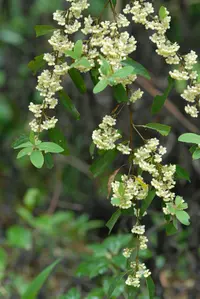
Missouri gooseberry Care (Ribes missouriense)

Missouri gooseberry

About Missouri gooseberry

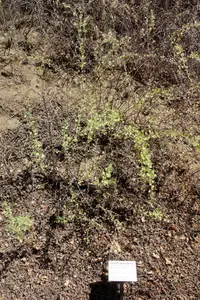
Missouri gooseberry, Ribes missouriense, is a deciduous shrub grown for its tart, edible berries and spiny, arching stems. It typically forms a loose, rounded thicket. Native to central North America, it is commonly found in open woods, thickets, and prairie edges, often on well-drained, rocky, or sandy soils.

This species is cold-hardy and adapted to a wide range of climates, which makes it relatively straightforward to establish in suitable conditions. Once rooted, it tolerates some drought but fruits best with steady moisture and good light. Gardeners who want to care for Missouri gooseberry should provide sun to light shade and moderately fertile, well-drained soil for reliable growth and cropping.

Main Plant Requirements

Care Difficulty

Moderate Care

Light Preference

Full Sun

Water Requirements

Moderate Water

Temperature Preference

Cold Hardy

Hardiness Zone

3–7

Soil Texture

Loamy, Sandy, Organic-rich

Soil pH

Acidic (5.5–6.5), Slightly acidic (6.5–7.0)

Soil Drainage

Moist but well-drained

Fertilization

Minimal (feed rarely)

Get Personalized Care Plan

Scan your plant to receive care tips personalized for your specific plant

Available on iOS and Android

How to Care for the Missouri gooseberry

This shrub prefers cool, bright conditions with direct sun in most climates.

  • Provide 6–8 hours of sun daily; full sun is ideal in cool or northern regions, while hot southern areas benefit from light afternoon shade.
  • Tolerates partial shade (about 3–4 hours sun), but Missouri gooseberry will flower and fruit less and can grow more open and sparse.
  • Avoid intense reflected heat from walls or pavement; in summer, prioritize morning sun with dappled or filtered afternoon light to reduce leaf scorch.

This species prefers evenly moist, well-drained soil that never stays soggy for long periods.

  • In active growth, water when the top 3–5 cm of soil feels dry, then soak the root zone deeply so moisture reaches 15–20 cm down.
  • Use soil with good drainage; waterlogged ground causes yellowing leaves, soft stems, and root rot, while underwatered plants wilt and show crisp browning at leaf edges.
  • Reduce watering in late fall and winter, letting soil dry a bit deeper between rains, but do not allow prolonged bone-dry conditions around established shrubs.

This cold-hardy shrub is adapted to regions with cold winters and moderate summers.

  • Optimal growing temperatures in leaf are about 60–75°F (16–24°C), with good performance in typical spring and fall conditions.
  • Dormant plants tolerate winter lows to about -30°F (-34°C) when established, provided roots are in the ground and soil is not waterlogged.
  • In hot weather above 85°F (29°C), growth can slow; provide mulch to cool the root zone and light afternoon shade to reduce heat stress.

This species is adapted to outdoor conditions and does not have demanding humidity requirements.

This shrub prefers moderately moist, structured soil that stays aerated and drains steadily.

  • Use a loamy, slightly sandy soil rich in organic matter to support root development and moisture balance.
  • Aim for slightly acidic to neutral pH around 6.0–7.0, adding garden lime only if a soil test shows strong acidity.
  • Incorporate compost plus coarse material like sharp sand or fine gravel to improve drainage and prevent waterlogging.
  • Avoid heavy, compacted clay or sites where water stands after rain, as Ribes missouriense roots are prone to rot in saturation.

This species can be grown in containers, though it performs best long term in the ground.

  • Choose a deep, wide, heavy container to accommodate the shrub’s spreading root system and prevent tipping in wind.
  • Use a free-draining mix of garden loam, compost, and coarse grit so water clears quickly after irrigation or rain.
  • Position the pot where runoff can escape freely, and elevate it slightly on pot feet to prevent the drainage holes from sealing against the ground.

Ribes missouriense is a resilient shrub that benefits from modest, targeted feeding rather than heavy fertilization.

  • Apply a balanced slow-release fertilizer (around 10-10-10) or compost in early spring as new growth begins.
  • Feed once more in mid-summer if growth or fruiting seems weak, avoiding over-application in fertile soils.
  • Use fertilizers at half the label strength for shrubs to limit salt buildup and root burn.
  • Stop feeding in late summer so stems can harden before winter dormancy.

Ribes missouriense responds well to light, structured pruning that maintains airflow and fruiting wood.

  • Prune in late winter or very early spring while the shrub is still dormant and leafless.
  • Remove dead, diseased, or crossing branches first, then thin crowded interior shoots to improve light penetration.
  • Shorten or remove oldest stems at the base to renew growth and support better flowering and fruit set.
  • Use sharp, clean bypass pruners and make smooth cuts just above outward-facing buds or branch junctions.

This species is usually grown in the ground, so focus on careful transplanting rather than frequent repotting.

  • Transplant in early spring or fall when temperatures are mild and soil is workable.
  • Shift container plants only when roots circle the pot, growth slows, or watering frequency increases sharply.
  • Move into a hole or pot just 1–2 in wider than the root ball, using well-drained, slightly loamy soil.
  • Water thoroughly after planting, firm soil gently, and shade from intense sun for 3–5 days to reduce transplant stress.

Ribes missouriense is commonly propagated by hardwood cuttings, layering, or seeds collected from ripe fruit.

  • Take hardwood cuttings in late fall or winter, 10–15 cm long, and insert into a well-drained, sandy mix.
  • Maintain cool, slightly moist conditions and good air circulation to support steady callus and root formation.
  • For layering, pin a low, flexible stem to the soil in spring, cover a section with soil, and sever once rooted.
  • Sow cleaned seeds outdoors in fall or cold-stratify indoors for 2–3 months before spring sowing.

This shrub is naturally cold hardy and usually needs minimal winter care in most temperate climates.

  • Ribes missouriense tolerates freezing temperatures once established, entering full dormancy in winter.
  • Apply a 5–8 cm layer of mulch around the root zone, keeping it slightly away from the stems.
  • Container-grown plants in colder zones can be sunk into the ground or moved into an unheated, sheltered area.

Care Tips

Encourage lateral shoots

After the first year, lightly tip-prune vigorous upright canes in late winter to encourage more lateral branches, which increases flowering wood and improves harvest density when growing Missouri gooseberry.

Use low support

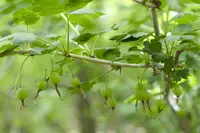
Install a simple low wire or two sturdy stakes with garden twine along the row to keep spiny branches off the ground, which improves airflow, reduces fruit rot, and makes harvesting safer and faster.

Targeted mulch ring

Maintain a 5–8 cm ring of organic mulch around but not touching the crown to suppress weeds, protect shallow roots from cultivation damage, and stabilize soil moisture without encouraging stem rot.

Sanitation for disease

In autumn, remove and dispose of fallen leaves and mummified fruits from around plants to reduce overwintering spores of leaf spots and powdery mildew, lowering disease pressure the following season.

Selective cane renewal

Each late winter, remove at ground level the oldest, darkest, or most heavily fruited canes and leave younger canes, which maintains a rotating framework of productive wood and helps keep the shrub open and manageable when caring for Missouri gooseberry.

Common Pests and Diseases

Powdery mildew

This disease causes a white, powdery coating on leaves, young stems, and fruit, often leading to distorted growth and reduced yields. Symptoms include poor vigor and premature leaf drop in humid, shaded conditions.

Solution

Prune to open the shrub canopy for better airflow, remove and discard heavily infected shoots and fallen leaves, and avoid overhead watering. For ongoing problems, apply a sulfur or potassium bicarbonate fungicide labeled for gooseberries in early spring and repeat as directed, especially in climates favorable to powdery mildew when growing Missouri gooseberry outdoors.

Leaf spot

This disease produces small brown or purple spots on leaves that can merge into larger blotches, often followed by yellowing and early leaf drop. Symptoms include a thinned canopy and reduced fruit quality in mid to late season.

Solution

Rake and destroy fallen leaves, and prune out dense interior branches to reduce moisture retention. In areas with a history of leaf spot, apply a copper-based or other labeled fungicide at bud break and repeat during wet periods, following label directions carefully.

Currant fruit fly

These insects are small flies whose maggots tunnel into developing berries, causing them to soften, discolor, and drop early. Symptoms include apparently healthy fruit that becomes watery and unpalatable when cut open.

Solution

Collect and destroy all infested or dropped berries to break the life cycle, and cultivate shallowly under plants in fall to expose pupae to predators and cold. Where pressure is high, use fine mesh or row covers before flowering to exclude adult flies and consider a targeted spinosad spray timed to adult flight according to local extension guidance.

Currant borer

This pest is a clearwing moth whose larvae tunnel inside stems, causing wilting, poor shoot growth, and dieback of canes. Symptoms include hollow stems with frass (sawdust-like material) and sudden death of individual shoots.

Solution

In late winter or very early spring, prune out and destroy infested canes by cutting below the lowest tunnel or discolored tissue. Maintain plant vigor with proper spacing, fertilization, and irrigation, and remove older, weak canes regularly to reduce attractive sites for egg laying.

Aphids

These insects cluster on young shoots and leaf undersides, sucking sap and causing curling, yellowing, and sticky honeydew that can lead to sooty mold. This pest can also distort flower clusters and reduce fruit set when populations are high.

Solution

Dislodge colonies with a strong stream of water, and encourage natural predators such as lady beetles by avoiding broad-spectrum insecticides. For persistent infestations, treat with insecticidal soap or a light horticultural oil, thoroughly covering shoot tips and leaf undersides and repeating as needed according to label instructions.

Interesting Facts

Native Midwestern shrub

Missouri gooseberry is native to central North America, especially the Midwest and Great Plains, where it occurs in prairies, open woodlands, and savannas, often on rocky or calcareous soils.

Distinctive spine clusters

The stems bear nodes with 1–3 sharp spines that can reach about 1 cm long, a trait that helps distinguish it from some related currant species that lack such prominent armature.

Early nectar source

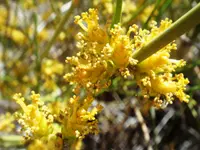
Its pale greenish-yellow, tubular flowers open in mid-spring before full leaf-out, providing an important early-season nectar and pollen source for native bees and early-emerging pollinators.

Botan icon

Did you know?

Missouri gooseberry is a documented alternate host for certain white pine blister rust fungi in North America, and this ecological role historically led to eradication campaigns against some Ribes species near white pine forests in an effort to protect timber resources.

FAQs about Missouri gooseberry

The berries are edible when fully ripe and are commonly used in pies, jellies, and preserves. They are quite tart raw. Always remove any debris and rinse fruit thoroughly before eating or processing.

Grow Healthy Plants with Botan Care

Keep your plants happy and healthy with plant identification, disease detection, and easy care guidance.

Botan plant care app — identify plants on mobile

Explore More Plants