Formative scaffold pruning
During the first 3–5 years, remove or shorten competing leaders and narrow crotch branches in late winter so the tree develops a single strong trunk and wide branch angles that better resist storm damage.

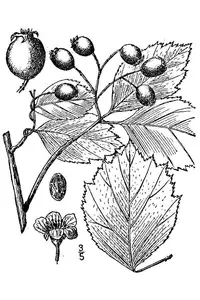
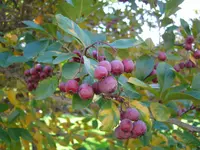
Black hawthorn (Crataegus douglasii) is a hardy deciduous shrub or small tree known for its dense branching, white spring flowers, and dark, berry-like fruits. It usually forms a broad, rounded crown with thorny branches that provide strong structure and wildlife shelter.
This species is native to western North America, often found along streams, moist slopes, and open woodlands. It adapts well to many garden conditions, which makes it relatively straightforward to care for black hawthorn in temperate climates.
Black hawthorn prefers full sun to light shade, moderately moist soil, and good drainage. Its resilience to cold, wind, and variable soil types makes it suitable for low-maintenance hedges, shelterbelts, and habitat plantings.

Care Difficulty
Easy Care

Light Preference
Full Sun

Water Requirements
Moderate Water

Temperature Preference
Cold Hardy

Hardiness Zone
3–9

Soil Texture
Sandy, Loamy, Clay

Soil pH
Slightly acidic (6.5–7.0), Neutral (7.0)

Soil Drainage
Moist but well-drained

Fertilization
Minimal (feed rarely)
Scan your plant to receive care tips personalized for your specific plant
Available on iOS and Android
This species prefers full sun but tolerates some shade in hotter regions.
Crataegus douglasii prefers evenly moist, well-drained soil once established.
This hardy species is well adapted to cool to temperate outdoor climates.
Crataegus douglasii tolerates a wide humidity range and usually needs no special humidity control outdoors.
Crataegus douglasii prefers moderately moist, structured soil that stays aerated yet does not dry out too fast.
This species can be grown in large outdoor containers, but it remains a demanding, space-hungry shrub or small tree.
Crataegus douglasii typically grows well in average soil, so fertilizer is helpful but not essential in established landscapes.
Crataegus douglasii responds well to light, targeted pruning that maintains structure and flowering.
This species is usually grown in the ground, so focus on correct transplanting rather than frequent repotting.
Crataegus douglasii is usually propagated by seed, although this process is slow and requires specific conditions.
This hawthorn is cold hardy in much of North America and usually needs minimal winter care in the ground.

Plant Health Check
Not sure what's wrong with your plant? Check your plant's health inside the app.
This species naturally occurs along streams, wet meadows, and lake margins in western North America and is unusually tolerant of seasonally waterlogged, fine-textured soils compared with many other hawthorns.
Its small black pomes are an important late-summer and autumn food for birds such as grouse, thrushes, and waxwings, helping disperse the seeds through their droppings.
Indigenous peoples of the Pacific Northwest have traditionally used the dark fruits to produce purple to black dyes for materials such as basketry and textiles, reflecting the high pigment levels in the skin.

This species often forms dense, thorny thickets that function as natural shelter belts, providing protected nesting and roosting sites for small birds and mammals in riparian and meadow-edge habitats.
This species is not well suited to long-term indoor use. It grows into a thorny shrub or small tree needing strong light, space, and outdoor airflow. Black hawthorn indoor care is generally limited to very short-term display only.
Keep your plants happy and healthy with plant identification, disease detection, and easy care guidance.