Wind and Stem Support
In exposed sites, install sturdy stakes or a low framework and loosely tie petioles with soft ties so the heavy leaves do not snap in strong wind or under their own weight.

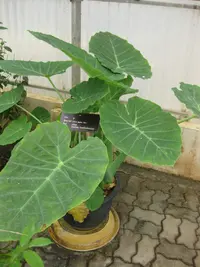
Giant elephant ear (Leucocasia gigantea) is a fast-growing tropical aroid valued for its huge, upright leaves and bold, architectural presence. It forms clumping stands with tall, thick stems and dramatic foliage that can dominate a planting bed or large container.
This species is native to parts of Southeast Asia, where it grows in warm, humid, and often seasonally wet habitats. It prefers bright, filtered light, steady moisture, and rich, well-drained soil.
Its rapid growth and strong roots make it relatively straightforward to manage when basic needs are met, though size and water demand can challenge small spaces. Understanding how to care for giant elephant ear helps keep the plant vigorous and prevents stress-related decline.

Care Difficulty
Moderate Care

Light Preference
Partial Shade

Water Requirements
Keep Soil Moist

Temperature Preference
Tropical / Frost Sensitive

Hardiness Zone
9–11

Soil Texture
Loamy, Silty, Organic-rich

Soil pH
Acidic (5.5–6.5), Slightly acidic (6.5–7.0)

Soil Drainage
Moist but well-drained

Fertilization
Moderate (every 2–4 weeks)
Scan your plant to receive care tips personalized for your specific plant
Available on iOS and Android
This plant benefits from bright, indirect light with some gentle direct sun.
Leucocasia gigantea prefers consistently moist but not stagnant soil.
This species thrives in warm, frost-free conditions with stable temperatures.
This species prefers consistently humid air to support its large, thin leaves.
Leucocasia gigantea grows best in rich, airy, evenly moist soil.
This species is suitable for container growing if the pot supports its size and moisture needs.
This fast-growing giant elephant ear benefits from consistent, moderate feeding during the warm growing season.
Pruning Leucocasia gigantea focuses on removing old foliage rather than shaping the plant.
Large plants are often grown in the ground, but containers or young specimens need thoughtful repotting or transplanting.
This plant is most reliably propagated by division of its clumping base and offsets rather than from seed.
Leucocasia gigantea has low frost tolerance and needs clear winter management in most temperate climates.

Plant Health Check
Not sure what's wrong with your plant? Check your plant's health inside the app.
This species can form enormous, upward-facing leaves on very short petioles when grown in shallow water, creating a low, bowl-like canopy rather than the tall, arching form seen in many other aroid relatives.
In parts of Southeast Asia, the soft inner stem tissue of this species has been traditionally cooked and eaten, although the raw plant contains calcium oxalate crystals that can irritate skin and mouth if not properly prepared.
Compared with many tropical aroids, it tolerates slightly cooler temperatures and can maintain growth in mild subtropical climates, which contributes to its increasing popularity in temperate ornamental gardens.

In ideal tropical conditions, individual leaves of this species can reach sizes comparable to a small person in height and width, making it one of the largest foliage producers among cultivated aroids.
Yellowing leaves often result from natural aging, cold stress, or water imbalance. Check for soggy soil, compacted mix, or a pot without drainage. Remove oldest yellow leaves and adjust watering frequency and temperature exposure.
Keep your plants happy and healthy with plant identification, disease detection, and easy care guidance.