Strong wind management
In exposed sites, install a temporary windbreak or plant the tree near existing taller vegetation to reduce wind stress on young branches and encourage a straighter, sturdier trunk.

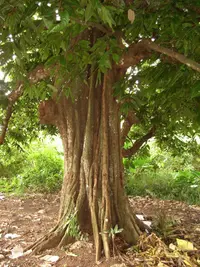
Polynesian chestnut (Inocarpus fagifer) is a tropical evergreen tree valued for its dense canopy and edible seeds in its native Pacific and Southeast Asian range. It typically grows with a rounded crown, thick glossy leaves, and clusters of pods that contain large chestnut-like nuts.
In cultivation it is usually grown outdoors in warm climates, sometimes as a shade or food tree, and less often as a large container specimen when young. The species prefers consistent warmth, moisture, and well-drained soil, which influences how to care for Polynesian Chestnut and makes it better suited to experienced growers in cooler regions.

Care Difficulty
Moderate Care

Light Preference
Full Sun

Water Requirements
Regular Water

Temperature Preference
Tropical / Frost Sensitive

Hardiness Zone
11–12

Soil Texture
Sandy, Loamy, Organic-rich

Soil pH
Slightly acidic (6.5–7.0), Neutral (7.0)

Soil Drainage
Moist but well-drained

Fertilization
Minimal (feed rarely)
Scan your plant to receive care tips personalized for your specific plant
Available on iOS and Android
This tropical tree needs strong light to grow and fruit well, whether in coastal gardens or lowland sites.
This species prefers consistently moist, well‑drained soil and reacts clearly to both drought and waterlogging.
This lowland tropical tree requires warm, frost‑free conditions to thrive and set fruit.
This species benefits from moderate to high humidity but tolerates typical indoor levels reasonably well.
Inocarpus fagifer prefers deep, well-drained, moderately fertile substrates that retain some moisture without staying saturated.
This tree can be grown in large containers when space or climate limits in-ground planting.
Inocarpus fagifer benefits from light, consistent nutrition rather than heavy feeding.
Pruning helps maintain structure and safety for mature Inocarpus fagifer trees.
This large tree is usually grown in-ground, so focus on correct transplanting of young plants.
Inocarpus fagifer is most reliably propagated from seed under warm, moist conditions.
This tropical species has low frost tolerance and needs protection in climates with cool winters.

Plant Health Check
Not sure what's wrong with your plant? Check your plant's health inside the app.
The seeds of this tree, commonly called Tahitian chestnut or Polynesian chestnut, have been a traditional staple food across parts of Melanesia and Polynesia, where they are usually cooked to remove natural bitterness before eating.
Archaeobotanical and ethnobotanical research indicates that Austronesian and later Polynesian voyagers intentionally transported and planted this species on many islands as a canoe crop, helping secure a reliable, long‑lived food source near villages and coastal settlements.
This species commonly grows in lowland coastal forests, swampy ground, and along riverbanks, showing good tolerance to periodic flooding and mildly brackish conditions that would stress many other tropical trees.

In some Pacific island agroforestry systems, large old trees of this species form the backbone of multi‑story home gardens, providing shade, long‑term food production, and stable soil structure that supports underplantings of taro, bananas, and other crops for decades.
Growth is moderately fast in warm, humid climates with ample space. Young trees can add 30–60 cm per year, slowing as they mature. Nutrient-rich soil and consistent moisture support stronger growth and trunk development.
Keep your plants happy and healthy with plant identification, disease detection, and easy care guidance.

-200x133.webp)