Wind exposure management
Site the plant where it receives strong but not constant prevailing winds, or use a low, slatted windbreak, since steady airflow keeps foliage dry and reduces fungal risk while overly severe gusts can desiccate new growth.

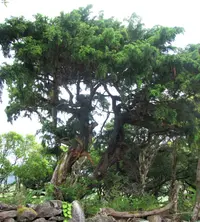
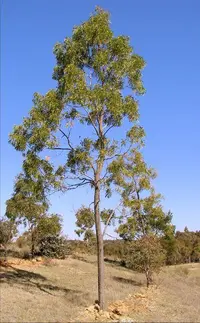
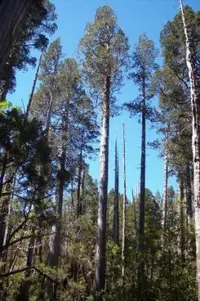
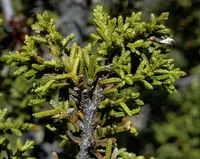
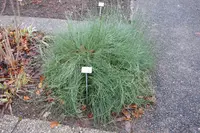
Azores juniper, Juniperus brevifolia, is a small coniferous tree or large shrub native to the Azores islands in the North Atlantic. It is often compact and dense, with fine, scale-like foliage and small, berry-like cones. In the wild it grows on windy slopes and coastal areas, where it tolerates poor, rocky soils and strong exposure. This natural toughness makes it interesting for gardens that need hardy, low-maintenance structure. It responds best to sunny positions, well-drained soil, and moderate moisture. Understanding these native conditions helps guide how to care for Azores Juniper in cultivation.

Care Difficulty
Moderate Care

Light Preference
Full Sun

Water Requirements
Low Water

Temperature Preference
Warm Climate

Hardiness Zone
9–11

Soil Texture
Sandy, Loamy, Rocky

Soil pH
Slightly acidic (6.5–7.0), Neutral (7.0)

Soil Drainage
Well-drained

Fertilization
Minimal (feed rarely)
Scan your plant to receive care tips personalized for your specific plant
Available on iOS and Android
This sun-loving conifer grows best in open, bright sites with mostly direct exposure.
This species prefers relatively dry conditions and is sensitive to excess moisture around the roots.
This juniper prefers mild, ocean-influenced climates but adapts to a range of outdoor temperatures.
Humidity is rarely a limiting factor for Juniperus brevifolia, which prefers drier air similar to outdoor conditions.
Juniperus brevifolia prefers mineral, sharply drained soil that never stays waterlogged.
This species can be grown successfully in containers if given stable, well-drained conditions.
Juniperus brevifolia is naturally adapted to low-nutrient soils, so fertilizer should be light and infrequent.
Juniperus brevifolia responds well to light, careful pruning to maintain structure and plant health.
This species is usually grown in the ground, so focus on careful transplanting rather than frequent repotting.
Juniperus brevifolia is most often propagated from semi-hardwood cuttings, which root slowly but reliably with the right conditions.
Juniperus brevifolia is moderately cold hardy and usually needs only minimal winter care in mild to cool climates.

Plant Health Check
Not sure what's wrong with your plant? Check your plant's health inside the app.
This juniper is one of the few remaining native conifers of the Azores laurel forests, where it grows on windy volcanic ridges and cloud‑shrouded slopes exposed to constant ocean influence.
Populations show strong tolerance to sea salt spray and frequent fog immersion, allowing the species to form low, wind‑shaped stands close to Atlantic cliffs where many other trees cannot survive.
Its dense, small leaves and persistent canopy help trap moisture and organic debris on bare volcanic rock, gradually creating soil that supports other native Azores plants and invertebrates.

Pollen and macrofossil evidence indicate that this species was once far more widespread across the Azores islands, and its current highly fragmented distribution is a legacy of extensive deforestation and land-use change since human settlement.
Growth is generally slow. In garden settings it often adds only 5–15 cm per year, depending on age, site exposure, and soil quality. Expect a compact, steady increase in size rather than rapid elongation of branches.
Keep your plants happy and healthy with plant identification, disease detection, and easy care guidance.