Balsam Fir Care (Abies balsamea)

Also known as: Canadian Fir, Balm of Gilead, balm-of-gilead, balsam
Balsam Fir

About Balsam Fir

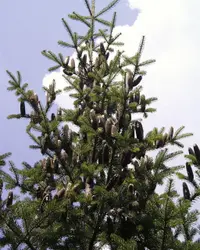
Balsam fir, Abies balsamea, is an evergreen conifer native to cool forests of northeastern North America. It is commonly used as a Christmas tree and for windbreaks.

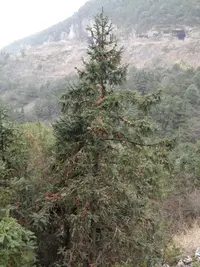
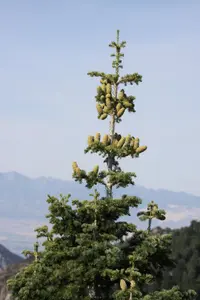
The tree has a narrow, pyramidal shape with flat, aromatic needles and smooth gray bark that becomes rougher with age. Its cones stand upright on the branches and disintegrate in place.

This species prefers cool climates, evenly moist, acidic soil, and full sun to light shade. In suitable regions it is fairly low-maintenance, so learning how to care for Balsam Fir mainly involves matching its natural cool, moist forest conditions.

Main Plant Requirements

Care Difficulty

Moderate Care

Light Preference

Full Sun

Water Requirements

Moderate Water

Temperature Preference

Cold Hardy

Hardiness Zone

3–5

Soil Texture

Loamy, Silty, Organic-rich

Soil pH

Strongly acidic (4.5–5.5), Acidic (5.5–6.5)

Soil Drainage

Moist but well-drained

Fertilization

Minimal (feed rarely)

Get Personalized Care Plan

Scan your plant to receive care tips personalized for your specific plant

Available on iOS and Android

How to Care for the Balsam Fir

This cold-climate conifer prefers cool conditions with consistent light rather than intense heat.

  • Plant Balsam Fir in full sun to light shade, aiming for 4–8 hours of direct sun, with morning sun and light afternoon shade ideal in warmer regions.
  • In hotter areas, protect young trees from strong afternoon sun with partial shade or high, filtered light to prevent needle scorch and heat stress.
  • Ensure older trees are not suddenly exposed by removing nearby shade trees too quickly, as abrupt full-sun exposure can cause browning on previously shaded branches.

This species prefers evenly moist, cool soil and reacts poorly to both drought and standing water.

  • In the ground, allow the top 3–5 cm of soil to dry slightly, then water deeply so moisture reaches 20–30 cm, using local rainfall as the main source whenever possible.
  • During hot, dry periods, watch for slight needle dulling or drooping as a cue to water, and maintain mulch 5–8 cm deep to reduce evaporation.
  • Avoid heavy, poorly drained sites; yellowing needles, soft new growth, or sour-smelling soil indicate overwatering or root stress in Abies balsamea.

This cold-hardy conifer is adapted to long, cold winters and cool summers.

  • Optimal growing temperatures are about 55–70°F (13–21°C) during the growing season, with cool nights supporting dense, healthy foliage.
  • Mature trees tolerate winter lows down to about -40°F (-40°C), but newly planted specimens benefit from wind protection and snow cover their first 1–2 winters.
  • Heat is more limiting than cold; extended periods above 85°F (29°C), especially with warm nights, can stress trees, so ensure good soil moisture and mulch in hotter regions.

This conifer tolerates a wide humidity range but grows best in moderate outdoor moisture levels.

  • Aim for ambient outdoor humidity around 40–60% when possible, avoiding persistently hot, very dry microclimates near walls or pavement.
  • Dry air stress shows as browning needle tips and increased needle drop on exposed sides of the Balsam Fir.
  • Increase local humidity slightly by maintaining organic mulch over the root zone and avoiding heat-reflective hard surfaces around the tree.

Abies balsamea prefers cool, moist, well-drained, slightly acidic soils with high organic content.

  • Use a loamy mix with plenty of organic matter, such as composted bark or leaf mold, to mimic forest soil structure.
  • Ensure drainage by avoiding compacted clay; on heavy sites, create raised beds or amend with coarse sand and fine pine bark.
  • Target a slightly acidic pH around 5.0–6.0; avoid liming unless soil tests show strong acidity below this range.
  • Do not plant where water stands after rain, since chronic saturation reduces root oxygen and increases root rot risk.

This species can be grown in containers for several years, mainly as a temporary or decorative planting.

  • Choose a deep, heavy container that resists tipping, as the tree becomes top-heavy with height and wind exposure.
  • Use a bark-based, fast-draining potting mix that stays evenly moist but never waterlogged to protect fine feeder roots.
  • Position the container where winter roots are insulated from extreme freeze–thaw cycles, such as against a north wall or clustered with other pots.

This species needs modest feeding in cultivation, especially in poorer soils or containers.

  • Use a balanced slow-release fertilizer (for example 10-10-10) or well-aged compost spread thinly over the root zone in early spring.
  • Apply once in spring and, if growth is weak, again in mid-summer during active growth.
  • Reduce or skip feeding in fall and winter when Abies balsamea is dormant.
  • Use fertilizer at about half the label rate to avoid salt buildup and root burn.

Pruning Abies balsamea is usually light and focused on health and structure rather than size control.

  • Prune in late winter to very early spring before new growth starts, when structure is easy to see.
  • Remove only dead, diseased, broken, or rubbing branches, cutting back to the branch collar with clean bypass pruners or a pruning saw.
  • Limit shaping cuts to small tips; heavy cutting into old wood reduces natural form and can leave bare patches.
  • Avoid cutting the central leader, which maintains the classic conical shape and strong vertical growth.

This fir is normally grown in the ground; transplanting young trees carefully is more important than frequent repotting.

  • Move container-grown plants or field-grown saplings in early spring or early fall when temperatures are mild.
  • Look for signs like roots circling the pot, frequent wilting, or very slow growth as indicators that a container plant needs a larger root space.
  • Transplant with a wide, intact root ball, plant at the same soil level, and water thoroughly to settle soil and remove air pockets.
  • Apply a 5–8 cm mulch layer around, but not touching, the trunk to reduce moisture loss and root stress after transplanting.

Abies balsamea is propagated mainly by seed; vegetative methods are slower and more specialized.

  • Collect mature cones in late summer to early fall, then extract and dry seeds for short-term storage.
  • Sow seeds in fall outdoors or provide 60–90 days of cold, moist stratification at about 34–41°F before spring sowing.
  • Use a free-draining, slightly acidic medium, keeping it evenly moist and in bright, indirect light until germination.
  • Semi-ripe cuttings taken in late summer require rooting hormone, high humidity, and patience, and success rates can be low for home growers.

Mature Abies balsamea is very cold hardy and usually needs minimal winter care in the ground.

  • Young or newly planted trees benefit from a 5–8 cm mulch layer over the root zone to buffer freeze–thaw cycles.
  • Ensure soil drains well; waterlogged, frozen roots are more damaging than low air temperatures.
  • Container-grown trees should be moved into a sheltered, unheated but frost-moderated location or the pot heavily insulated.

Care Tips

Shelter From Wind

Site young trees where they are shielded from prevailing winter winds by buildings, fences, or taller evergreens to reduce desiccation and needle browning.

Mulch Root Zone

Maintain a 5–8 cm layer of untreated bark or wood-chip mulch over the root zone, keeping it a few cm away from the trunk, to stabilize soil moisture and protect shallow roots from temperature swings.

Avoid Soil Compaction

Keep foot traffic, heavy equipment, and frequent mowing away from the drip line so the fine feeder roots are not damaged by compacted soil, which reduces oxygen and water penetration.

Monitor Sap And Resin

Check the trunk and major branches a few times per year for unusual resin flow or cracks, which can signal canker disease or mechanical injury that should be pruned out cleanly in dry weather.

Plan For Mature Size

When growing Balsam Fir, position young plants at least 4–6 m away from buildings, overhead lines, and other trees to allow proper crown development and reduce future stress from heavy pruning.

Common Pests and Diseases

Balsam twig aphid

This pest feeds on new needles and shoots, causing curling, twisting, and a white, waxy residue on young growth. Symptoms include distorted needles, reduced vigor, and honeydew that can lead to sooty mold on branches.

Solution

Monitor new growth in early spring and prune out heavily infested tips before aphids spread. For small trees or Balsam Fir indoor care specimens, spray infested areas with a strong stream of water and, if needed, apply a horticultural oil or insecticidal soap just as buds begin to swell, repeating according to label directions if new aphids appear.

Balsam woolly adelgid

This pest is a tiny, sap-sucking insect that forms white, woolly tufts on bark, nodes, and around buds. Symptoms include swollen, roughened bark, thinning crowns, and branch dieback over time.

Solution

Inspect trunks and major branches regularly for cottony patches and remove and destroy small, heavily infested branches. Improve tree vigor with proper watering and mulching, and for valuable landscape trees consult a certified arborist about targeted systemic insecticide treatments applied at the correct time of year.

needle cast

This disease is caused mainly by fungi that infect needles, leading to yellowing or browning and premature needle drop, often starting on inner or lower branches. Symptoms include thin, bare sections of branches with discolored needles that may show fine black lines or dots under close inspection.

Solution

Rake and remove fallen needles, prune out badly affected lower branches, and avoid overhead watering to keep foliage drier. Improve air circulation around the tree and, where infection is recurring or severe, apply a labeled fungicide in spring as new needles emerge and again according to label intervals.

needle rust

This disease produces pale spots or bands on needles that later develop orange to yellow pustules, sometimes releasing powdery spores. Symptoms include scattered discolored needles and a patchy appearance on affected branches.

Solution

Remove and destroy infected needles and small twigs where practical and keep the area under the tree clean of fallen debris. Reduce crowding around the tree, avoid wetting foliage, and in areas with a history of rust use a preventive fungicide in early spring to protect new needles.

spruce spider mite

These insects are tiny arachnids that feed on needles, causing fine stippling, dulling, and bronzing, often with delicate webbing in heavy infestations. Symptoms include off-color foliage, premature needle drop, and overall loss of density, especially during cool spring or fall weather.

Solution

Check for mites by tapping branches over white paper and looking for moving specks, then spray foliage with a firm stream of water to dislodge them. If populations remain high, use a horticultural oil or a miticide specifically labeled for conifers, applied thoroughly to the undersides of needles during the cooler parts of the day.

Interesting Facts

Iconic Christmas fragrance

The needles and bark contain high levels of aromatic resins that produce the classic “Christmas tree” scent, which stays noticeable even after the cut tree dries. This strong fragrance comes from volatile organic compounds such as terpenes produced in resin canals.

Cold-climate specialist

This species is naturally dominant in cold boreal and northern hardwood forests, where it tolerates long winters, deep snow, and short growing seasons. Its conical crown and flexible branches help shed heavy snow and reduce breakage.

Key wildlife habitat

Dense balsam fir stands provide critical winter cover for animals such as snowshoe hares, moose, and many birds, which use the thick, low branches as shelter from wind and predators. The cones and seeds also serve as a food source for small mammals and seed-eating birds.

Botan icon

Did you know?

Balsam fir resin, historically called Canadian balsam, has been used as a natural optical adhesive in microscopy because it hardens into a clear, refractive solid that closely matches the optical properties of glass.

FAQs about Balsam Fir

This species is generally slow to moderate growing, adding about 30–60 cm per year under good conditions. Growth is faster in cool, moist climates with deep, well-drained soil and slower in hot, dry, or compacted sites.

Grow Healthy Plants with Botan Care

Keep your plants happy and healthy with plant identification, disease detection, and easy care guidance.

Botan plant care app — identify plants on mobile

Explore More Plants