
Balsam Fir Identification (Abies balsamea)

To recognize Balsam Fir, look for flat, soft needles about 1/2 to 1 inch (1.3 to 2.5 cm) long, usually arranged in two side-facing rows, each with two pale white bands underneath.

It also has smooth gray bark with resin blisters and a narrow, spire-like crown with dense, regular branching.

Abies balsamea Identification

Identify Your Plant with Botan

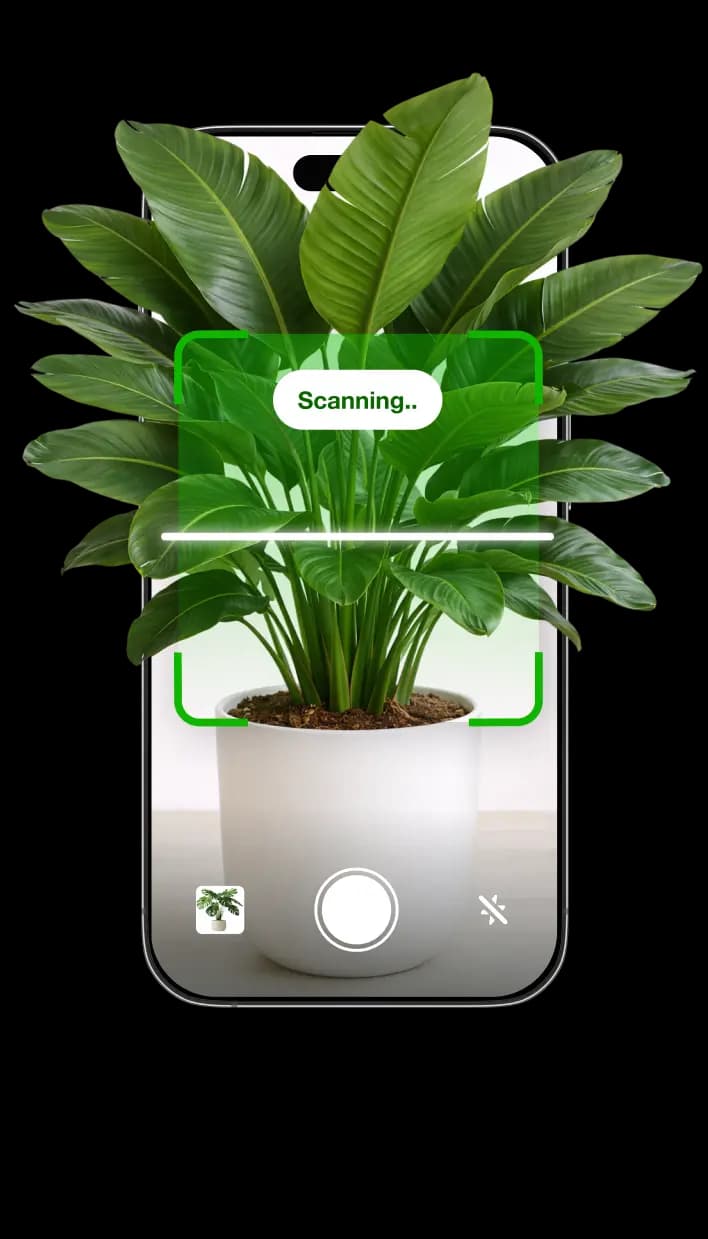
Check your plant ID by uploading a clear photo to Botan.

Clear images work best. Avoid photos taken too close or too far away

Check the overall form, needles, and cones of Abies balsamea.

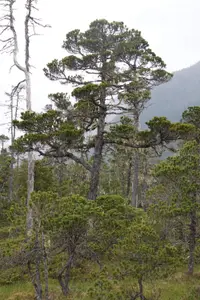
  • Tall, narrow, spire-like tree with a straight central trunk and dense, symmetrical branching.
  • Needles are flat, soft, and usually 3/4-1 inch (2-2.5 cm) long, set singly along the twig.
  • Leaves often spread in two side rows, making many branchlets look flattened.
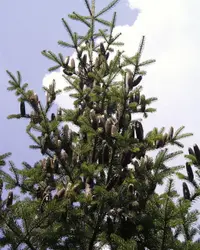
  • Cones stand upright on upper branches, about 2-4 inches (5-10 cm) long, not hanging down.

Look closely at needle arrangement and cone position, since both are easy to see and very useful here.

Abies balsamea shows clear age-related changes in form, bark, and cone-bearing structures.

  • Seedling: Seedlings carry a single upright stem with soft, flat needles and little branching, so the plant appears sparse and narrow compared with later stages.
  • Young plant: Young plants develop a sharply conical outline, dense horizontal branching, and smooth gray bark with resin blisters; they often stand 3-10 feet (0.9-3 m) tall.
  • Mature plant: Mature trees keep the spirelike crown, but the trunk thickens, lower branches may thin, and bark becomes rougher and broken into irregular scaly plates.
  • Fruiting stage: Cone-bearing plants show upright purple to dark cones near upper branches, later turning brown; cones are about 2-4 inches (5-10 cm) long and stand above the needles.

Several named selections of Balsam Fir are identifiable by growth habit or needle color.

  • Abies balsamea 'Nana': A dwarf, flattened globe or broad cushion, often only 1-3 feet tall (30-90 cm), instead of a narrow upright tree.
  • Abies balsamea 'Hudsonia': A very low, dense mound, usually under 2 feet tall (60 cm), with short needles packed tightly along the shoots.
  • Abies balsamea 'Piccolo': An extremely small bun-shaped dwarf with very short annual growth and a tighter, finer texture than the typical form.
  • Abies balsamea 'Verkade's Prostrate': A prostrate form with trailing, ground-hugging branches rather than an erect central leader.

Abies balsamea stays green year-round, so seasonal needle color is not a strong clue. The clearest change is in spring to early summer, when upright seed cones become visible near the upper branches; they are purple to dark green at first, then turn brown as they mature. In winter, resinous buds stand out more clearly against the dense evergreen crown.

Several conifers are regularly mistaken for Balsam fir.

Fraser fir(Abies fraseri)

Often confused because both have flat, dark green needles with two pale bands beneath. Fraser fir usually has resin blisters on young bark too, but its cone bracts stick out clearly, unlike the mostly hidden bracts of Abies balsamea.

eastern hemlock(Tsuga canadensis)

Can look similar from a distance because of short, flattened needles and a soft outline. Hemlock has tiny hanging cones about 1 inch (2.5 cm) long and needles on short stalks, while fir cones are upright and needles attach directly.

Abies balsamea is native to northeastern and north-central North America, from Newfoundland and Labrador west to Alberta, and south through the Great Lakes and northern Appalachians. It is most often found in cool boreal forests, mixed conifer woods, and peatland edges. In the Appalachians, it is mainly a high-elevation tree. Finding a fir in these cold, northern or montane habitats helps narrow identification.

Scan. Check. Confirm.

Use Botan to compare a photo and help verify the plant before you label it or move on to care.

FAQ

This conifer does not make true fruit. It produces upright seed cones, typically 2 to 4 inches (5 to 10 cm) long, resinous when young, then maturing to brown and breaking apart on the tree.

More Plant Identification Guides

Find the Plant. Get the Details.

Identify it from a photo with Botan, then review plant details, care information, and common problems for the matched species.

Botan app identifying a plant from a photo
15 Best Scary Halloween Plants and Fungi for a Spooky Garden

8 min read · 9 Oct 2026

15 Best Scary Halloween Plants and Fungi for a Spooky Garden

Want a garden that looks eerie in October? Here are 15 Halloween plants and fungi, from carnivorous traps to bleeding mushrooms. For each species, we cover its appearance, care requirements, and potential uses in your landscape.

Plant Recommendations
15 Best Scary Halloween Plants and Fungi for a Spooky Garden
Rice Water for Plants – Which Plants Love It and How to Make It

8 min read · 14 Jul 2026

Rice Water for Plants – Which Plants Love It and How to Make It

Rice water can be an ideal DIY solution for orchids, roses, or fruiting plants. It supports growth, leaf count, and height. We’ll share how to make and apply it correctly for your plant.

Plant Care
Rice Water for Plants – Which Plants Love It and How to Make It
How to Clean Plant Leaves: A Simple Care Guide

6 min read · 4 Aug 2026

How to Clean Plant Leaves: A Simple Care Guide

Dusty leaves look dull and don't absorb light well. Below, you'll find simple ways to clean them, which tools are truly effective, how often you should do it, and what causes damage.

Beginner Guides
How to Clean Plant Leaves: A Simple Care Guide