

moringa tree Identification (Moringa oleifera)

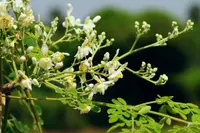
Recognize moringa tree by its large compound leaves, each divided into many small oval leaflets, and by its open, upright form with a soft-wooded trunk and sparse branching.

Also check the flowers: they hang in loose clusters and have five narrow, unequal white to cream petals.

Moringa oleifera Identification

Scan to Confirm moringa tree

Upload a clear image to check whether your plant ID is correct.

Clear images work best. Avoid photos taken too close or too far away

Use these quick checks for Moringa oleifera.

  • Leaves are feathery and usually 8–24 inches (20–60 cm) long, with many small oval leaflets on side branches.
  • Leaflets are rounded to spoon-shaped, smooth-edged, and arranged in pairs with a single terminal leaflet at the tip.
  • Flowers are small, white to cream, with five narrow petals and a slightly drooping, loose cluster arrangement.
  • Pods are long, slender, and three-angled, often 8–18 inches (20–45 cm) long, hanging straight down from the branches.

The hanging, angled pods and finely divided leaves are especially useful visual clues.

Moringa oleifera shows clear visual shifts from soft seedlings to pod-bearing, sparsely crowned trees.

  • Seedling: Seedlings have a thin green stem and a few delicate compound leaves, each with many small rounded leaflets on long, soft stalks.
  • Young plant: Young plants grow fast into upright, lightly branched saplings, often 3-10 feet (0.9-3 m) tall, with larger twice- or thrice-divided leaves and a pale trunk.
  • Flowering stage: Flowering branches carry loose clusters of small creamy white flowers that hang outward, making the crown look more open than on nonflowering plants.
  • Fruiting stage: Fruiting plants are marked by long, narrow, pendulous pods, often 8-18 inches (20-45 cm) long, standing out clearly beyond the fine-textured foliage.

In areas with a dry or cool season, Moringa oleifera may become partly or fully deciduous, leaving bare, pale branches for a time. Flowers are often most visible in spring to early summer. Long, narrow seed pods then hang clearly from the canopy and can persist after some leaf drop.

A few small trees can be mistaken for Moringa oleifera at a glance.

chinaberry(Melia azedarach)

Both can have airy, divided leaves. Chinaberry leaflets are larger, pointed, and sharply toothed, while moringa leaflets are smaller, oval, and smooth-edged. Chinaberry also makes round berries, not long pods.

jacaranda(Jacaranda mimosifolia)

Young trees share a fine, feathery canopy. Jacaranda leaves are more fernlike, with many tiny paired leaflets on a flatter leaf; moringa leaflets are broader and more rounded. Jacaranda bears trumpet-shaped purple flowers instead of pale clustered blooms.

Moringa oleifera is native to the Himalayan foothills of northwestern India and nearby Pakistan. That range is useful because truly wild plants are tied to South Asia, even though the species is now widely planted elsewhere. In its native range, it occurs in seasonally dry tropical scrub, open woodland, and disturbed ground, often on lower slopes and plains. Habitat context helps separate it from rainforest or wetland trees.

Check Your Plant ID

Use Botan to identify or confirm it from a photo, so you can move forward with more confidence.

FAQ

Yes. Moringa oleifera identification can rely on its soft, tripinnate leaves with many small oval leaflets, a fast-growing trunk, and long, hanging three-sided seed pods when present. Flowers help, but they are not required.

More Plant Identification Guides

Identify Your Plant and Learn More

Upload a photo to identify it with Botan, then see care information, safety notes, and common problems for that species.

Botan app identifying a plant from a photo
Rice Water for Plants – Which Plants Love It and How to Make It

8 min read · 14 Jul 2026

Rice Water for Plants – Which Plants Love It and How to Make It

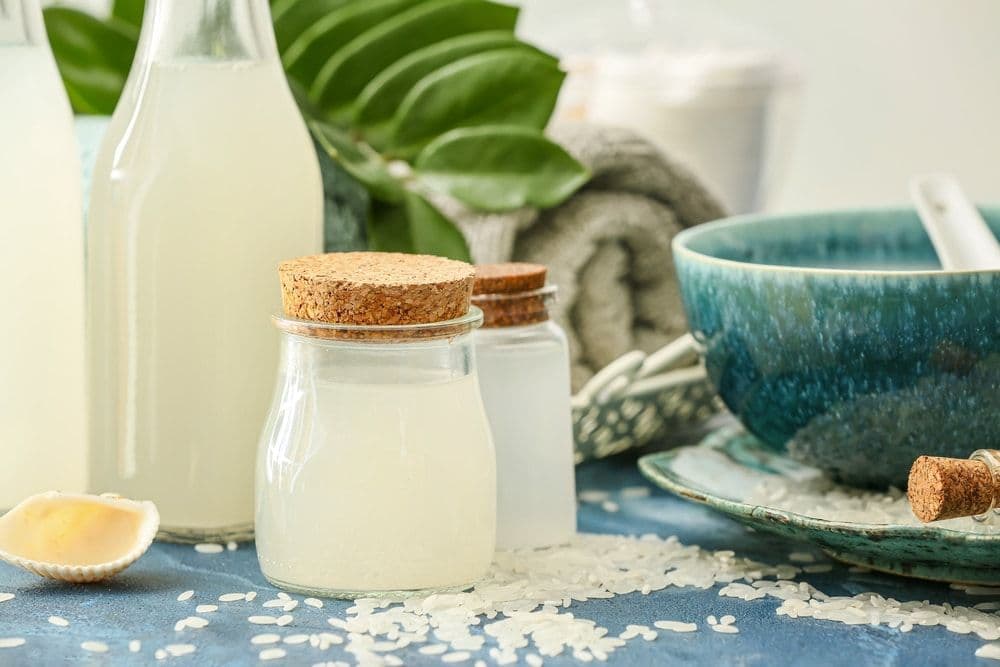
Rice water can be an ideal DIY solution for orchids, roses, or fruiting plants. It supports growth, leaf count, and height. We’ll share how to make and apply it correctly for your plant.

Plant Care
Rice Water for Plants – Which Plants Love It and How to Make It
10 Easy Garden Flowers to Grow

8 min read · 10 Sept 2026

10 Easy Garden Flowers to Grow

Discover 10 garden flowers that require minimal care. Learn which characteristics make plants easy to grow and follow tips on how to create a beautiful corner from beginner-friendly blooms on your property.

Beginner Guides
10 Easy Garden Flowers to Grow
Planting Grass Seed in Summer – What Works and What Fails

7 min read · 6 Aug 2026

Planting Grass Seed in Summer – What Works and What Fails

Summer seeding succeeds when the grass type suits the season, and the soil stays moist. Find out how to prepare the seedbed and choose a safe window for planting.

Plant Care
Planting Grass Seed in Summer – What Works and What Fails