Wind training
Expose young plants to moderate, steady wind or gently flex the main stem by hand a few times a week to build thicker, sturdier trunks that tolerate storms better.

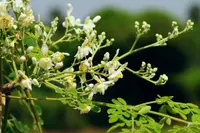
Moringa oleifera, commonly called moringa or drumstick tree, is a fast-growing, deciduous tree valued for its edible leaves, pods, and flowers. It typically forms an open, airy canopy with soft, feathery leaflets and long, slender seed pods that hang from flexible branches.
This species is native to the Himalayan foothills of India but is now widely grown in tropical and subtropical regions worldwide. It adapts well to poor, dry soils, which makes it relatively easy to establish in warm climates.
To care for moringa tree, provide plenty of sun, warmth, and well-drained soil, as it dislikes prolonged cold, waterlogging, or heavy shade.

Care Difficulty
Moderate Care

Light Preference
Full Sun

Water Requirements
Low Water

Temperature Preference
Tropical / Frost Sensitive

Hardiness Zone
10–12

Soil Texture
Sandy, Loamy, Rocky

Soil pH
Slightly acidic (6.5–7.0), Slightly alkaline (7.0–7.5)

Soil Drainage
Well-drained

Fertilization
Minimal (feed rarely)
Scan your plant to receive care tips personalized for your specific plant
Available on iOS and Android
This fast-growing tree thrives in strong, direct sunlight for most of the day.
This drought-tolerant species prefers deep, infrequent watering in sharply drained soil.
This subtropical tree prefers consistently warm conditions and does poorly in cold climates.
Humidity is usually not critical for Moringa oleifera, which thrives in relatively dry air.
Soil for Moringa oleifera should be light, very free-draining, and never waterlogged.
This species can adapt well to container growing when root space and drainage are managed carefully.
Moderate feeding supports fast growth and leaf production in moringa tree without causing weak, overly lush tissue.
Thoughtful pruning helps Moringa oleifera stay compact, productive, and safe to manage in gardens or containers.
Container-grown or young Moringa oleifera often benefits from timely transplanting to prevent root binding and stress.
New Moringa oleifera plants are most commonly started from seed but can also come from woody cuttings in warm climates.
This tropical species is frost-sensitive and needs protection in climates with cold winters or frequent freezes.

Plant Health Check
Not sure what's wrong with your plant? Check your plant's health inside the app.
Seeds of this species contain water-soluble proteins that act as natural flocculants, helping suspended particles clump together and settle, so crushed seeds are used in some regions to clarify turbid water.
Almost every above-ground part of the plant is edible, including young leaves, immature seed pods, flowers, and even the roots in moderation, which has made it an important multi-purpose food tree in many tropical areas.
This tree is native to the seasonally dry foothills of the Himalayas and has a deep taproot and small, subdivided leaflets that reduce water loss, allowing it to stay productive under hot, drought-prone conditions when many other crops fail.

In some semi-arid regions, this fast-growing tree can reach harvestable height for leaves or young pods within its first growing season, which is one reason it has been widely promoted in agroforestry systems aimed at improving food security and soil protection.
In warm climates with full sun and regular water, this species can grow 2–4.5 m in its first year. Growth slows as it matures but remains relatively fast compared with many other trees.
Keep your plants happy and healthy with plant identification, disease detection, and easy care guidance.