Rice Water for Plants – Which Plants Love It and How to Make It
Rice water can be an ideal DIY solution for orchids, roses, or fruiting plants. It supports growth, leaf count, and height. We’ll share how to make and apply it correctly for your plant.

On this page
- Is Rice Water Good for Plants? Key Benefits
- How to Make Rice Water for Plants – 3 Methods
- Method 1: Washed Rice Water (Easiest)
- Method 2: Boiled Rice Water (Most Concentrated)
- Method 3: Fermented Rice Water (Most Effective)
- What Plants Like Rice Water
- Plants That Don't Like Rice Water
- 3 Ways to Give Rice Water to Plants
- Rice Water, Regular Water, or Fertilizer — What's Best?
Rice water for plants seems to be a perfect solution: it contains starch, vitamins, and minerals, and acts just like a fertilizer — but without any chemical ingredients.
Still, you should know how to apply it correctly. You can get custom tips for your specific plant in seconds on the Botan app. Even so, it’s useful to know general rice water basics, pros, and cons — and we'll cover all the essentials below

Is Rice Water Good for Plants? Key Benefits
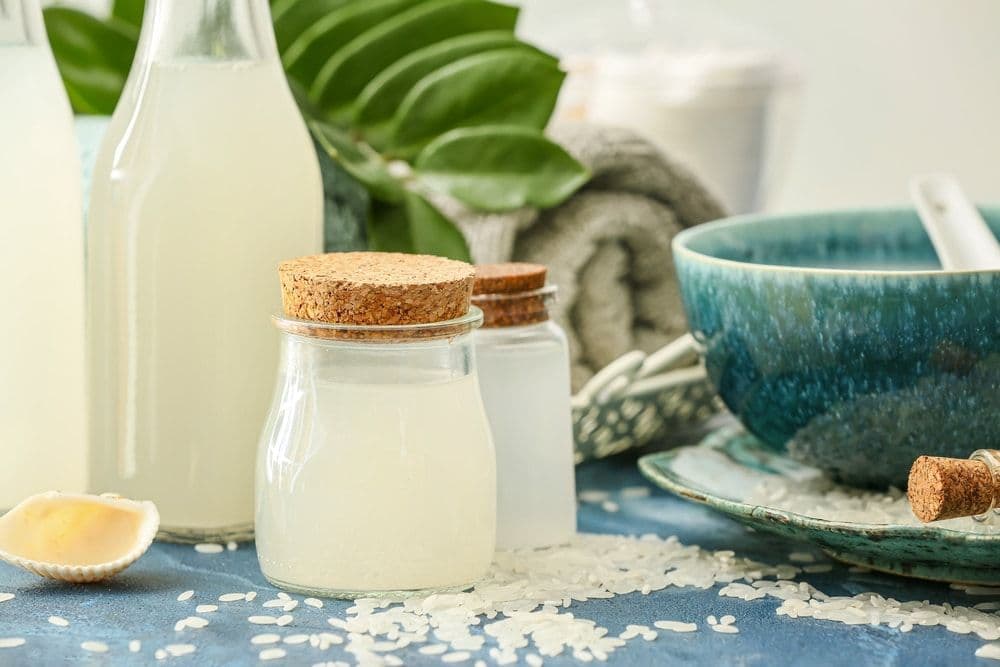
Rice water is literally the liquid leftover after you cook rice. This cloudy, starchy liquid is waste for humans, but it can be a superfood for plants.
More importantly, the question “Is rice water good for plants?” is no longer just a matter of interest to gardeners. It’s a scientific matter. Recent studies answer the question positively, pointing out the following benefits:
- Fermented rice solution increases nutrient levels by 7–56%.
- It supercharges healthy, growth-promoting bacteria by up to 83%.
- The roots get stronger and longer due to IAA — a natural plant hormone.
- The number of leaves produced increases, too.
- Overall plant growth (fresh and dry weight, and height) is significantly increased.
Simply put, it shows effectiveness comparable to that of a chemical fertilizer — it significantly increases plant height, leaf count, and overall mass.

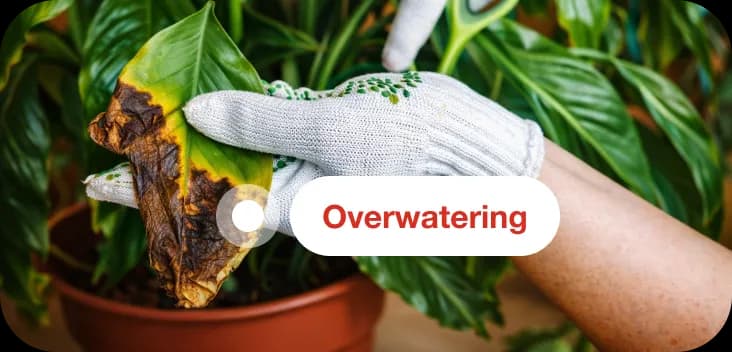
Identify Your Plant’s Problem
Scan with Botan for an instant diagnosis — 98%+ accuracy
How to Make Rice Water for Plants – 3 Methods
Good news for everyone who wants to know how to make rice water for plants — no special equipment or skills are needed.
You only need to choose one of the 3 methods based on the plant and your goals and follow the simple step-by-step instructions for each.
Method 1: Washed Rice Water (Easiest)
This is a perfect method for those who want a good result without any extra effort. All you need to do is:
- Take ½ cup of plain, uncooked rice and 1½ to 3 cups of water (a 3:1 to 6:1 ratio has been shown to be the most effective). Don’t add any oil or seasoning.
- Soak for 20-40 minutes and/or gently rub the grains with your hands for 2–3 minutes.
- Ensure the liquid is completely cloudy and murky.
- Strain the rice through a fine-mesh sieve into a clean jar, spray bottle, or container.
- Store in the refrigerator for up to 3 days.
- Shake well and apply 100–200 mL per plant.
Another important question is how often to use rice water on plants. Start safe: apply every 2-4 weeks, and if the plant responds well, consider increasing to once a week (at that frequency, the solution should be more heavily diluted).
Method 2: Boiled Rice Water (Most Concentrated)
Boiled rice water contains more starch, vitamins, and minerals than washed water. Here’s how to make it:
- Take ½ cup of rice and 2 cups of water (or another amount in a 4:1 ratio).
- Boil for 15-20 minutes.
- Strain the rice and collect the liquid in a clean container.
- Wait until the liquid cools to room temperature.
- Dilute with fresh water at a 1:1 ratio (1:3 or 1:4 ratio for more delicate species).
- Apply every 2-4 weeks.
You can store the solution at room temperature for up to 24 hours and in the refrigerator for up to 3 days.
Method 3: Fermented Rice Water (Most Effective)
Fermented rice water contains more than double the nutrient concentration of plain washed water. To make such an ultra-powerful solution, you’ll need to:
- Take ½ cup of rice and 2 cups of water (again, a 4:1 ratio works best).
- Rinse rice once or twice to remove dirt and dust.
- Add rinsed rice to the cup with clean water.
- Swirl for 1-2 minutes to release starches and nutrients (the liquid must turn cloudy).
- Strain the rice out and cover the jar with a cloth, coffee filter, or lid.
- Leave in a warm, dark place for 3 to 5 days.
- Check on the liquid — it’s ready when it smells sour or tangy.
- Apply once every 2 weeks during the active growth phase.
- Dilute 1:1 for outdoor garden plants or lightly fermented water. For plants with less soil, or if your solution is more concentrated and heavily fermented, dilute 1:5 to 1:10 to avoid overfertilization.
Store the liquid in a refrigerator for 5-7 days and at room temperature for up to 2 days. If your DIY solution develops an unusual color (not milky, but yellowing, grey, black, or green) and a rotten, musty smell, discard it.

What Plants Like Rice Water
Multiple studies, including agricultural research from 2021 and 2023, confirm that rice water has a highly beneficial impact on certain species, including:
- Moth Orchid (Phalaenopsis orchid)
- Desert rose (Adenium obesum)
- Water spinach (Ipomoea reptans)
- Pak choy / choy sum (Brassica chinensis/rapa)
- Lettuce (Lactuca sativa)
- Tomato (Solanum lycopersicum)
- Pepper (Capsicum annuum)
- Celery (Apium graveolens)
- White oyster mushroom (Pleurotus ostreatus)
- Mustard greens (Brassica juncea)
In most cases, rice water increased the height, total fresh weight, root length, stem diameter, and/or yield. Also, it has a positive effect on many other plants, such as peace lily, pothos, and monstera — there's just no in-depth scientific research on these yet.

Plants That Don't Like Rice Water
Now you know what plants like rice water, but what about those that don’t? Using this fertilizer might not be the best option for:
- Succulents and cacti (for instance, Jade plant or Christmas cactus).
- Plants grown in hydroponic/aquaponic systems.
- Plants are already suffering from poor drainage and/or overwatering.
- Aroids like philodendrons, alocasias, and anthuriums (for these, lentil water, rich in micronutrients and nitrogen, would be a better option).
- Stressed or sick plants (ones with root rot, wilting, or infested with pests).
Also, avoid using a fermented solution on alkaline-loving species such as rosemary, clematis, or lavender. Washed would be a safer option.
3 Ways to Give Rice Water to Plants
There are 3 methods of applying rice water. Select the most effective one depending on the type of plant.
- Watering. Pour the liquid directly into the soil — not in one zone, but evenly distributed across the entire surface. That’s how you can avoid waterlogging, infections, and root rot. Avoid the leaves, and water in the morning or evening when temperatures are lower.
- Misting. Lightly spray the liquid on the leaves so nutrients and starches can be absorbed directly through them. Avoid drenching the leaves. Try to make a light, even coating instead. Also, spray onto the topsoil. This method works best for species that absorb nutrients through leaves and aerial roots, such as orchids.
- Bottom watering. Add the liquid to a flat container until the water level reaches 1-2 inches. Place the plant pot inside and let it sit for 15-20 minutes. Use the finger test to ensure the soil is moist (don’t wait until it's fully wet). This method suits species with dense roots or sensitive leaves, such as peace lilies, pothos, ferns, orchids, and spider plants.
Monitor how your plant reacts to the solution. If you notice a moldy odor, soil crusting, or wilting, stop applying it.

Rice Water, Regular Water, or Fertilizer — What's Best?
Both overfertilization and underfertilization can be problems. Take a look at the table to see which groups may require more or less heavy feeding or no extra nutrients at all.
Type | Compatible Plants | Comment |
Rice Water | Leafy vegetables, houseplants (pothos, monstera, orchids, ferns, etc.) | Can show up to 70% heavier growth, even compared to commercial fertilizer, no need for extra nutrients |
Rice Water + Fertilizer | Fruiting vegetables (tomatoes, peppers, eggplants) | Heavy feeders that benefit from starch, which helps roots absorb liquid |
Plain Water Only | Succulents, plants grown in hydroponic/aquaponic systems | Don’t tolerate extra water or excessive nutrients — can cause root rot, fungal & bacterial infections |
Powerful Fertilizer Only | Ultimate heavy feeders (cucumbers, sunflowers, corn, etc.) | The plants that fruit and flower most heavily need concentrated, precise NPK fertilizer |
Still, it’s best to do some deeper research for your specific plant — fertilization nuances depend on the species a lot. If you want to simplify the process, you can use Botan. One identification is enough to get extensive fertilization and other environmental tips.
For example, you can identify your succulent, flower, fern, or any other plant with our app and see fertilization recommendations for your specific case.
On top of that, you can get custom advice from our botanist via live chat. For example, ask what will work better — rice water or banana water for plants, and get a detailed, step-by-step explanation.
FAQ
Consider starting safely: water your plant every 2-4 weeks. If the plant is reacting well, you can use it more frequently, up to once a week. Though some studies suggest applying twice a week, we’d recommend consulting with our specialist via Botan chat first for your specific plant.
Dariia Plaksina
Botanist
5 years of botanical research experience
Dariia Plaksina is a biologist, botanist, and writer of informational articles with over 5 years of experience exploring the world of plants, nature, and biology. She studied at Taras Shevchenko National University of Kyiv, Educational and Scientific Center “Institute of Biology and Medicine,” where she built a strong scientific foundation for her future work.
For Dariia, writing is a hobby, a calling, and a way to make reliable knowledge easier to understand. Her articles focus on plant care, plant health, and natural processes, helping readers learn more about the living world through clear, accessible, and science-based explanations.
Related Articles

5 min read · 28 Sept 2026
How to Winterize Your Garden in 6 Steps
Learn how to prepare your garden for winter with a practical six-step checklist covering cleanup, tender plant care, watering, mulching, winter protection, and winterizing equipment and containers.

6 min read · 15 Sept 2026
Can Plants Grow With Artificial Light?
Plants can grow under artificial light when the setup provides a suitable spectrum, enough intensity, and sufficient daily exposure. This guide explains how artificial lighting compares with sunlight, which options work indoors, and how to match a setup to houseplants.
4 min read · 14 Sept 2026
Is Sugar Water Good for Plants?
Sugar water may sound like an easy boost, but most rooted plants do not need extra sucrose. This guide explains how green tissues produce carbohydrates, when a sweetened solution can be useful, and why too much can cause problems.
Explore Plants by Care Needs



Identify the plant and problem. Help your plant recover
Identify plant problems early, understand what's wrong, and get clear care guidance. Botan helps you turn guesswork into confident plant care