Root collar protection
Keep the stem base slightly elevated and free of mulch or decorative rock so water sheds away from the crown and reduces the risk of rot in heavy rains or irrigation splash.

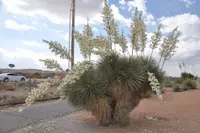
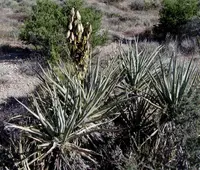
The soaptree yucca, Yucca elata, is a slow-growing evergreen succulent shrub or small tree from arid regions of the southwestern United States and northern Mexico. It forms a narrow trunk topped with dense rosettes of stiff, slender, bluish-green leaves.
In the right climate it develops a tall flowering stalk with creamy white bell-shaped flowers, giving it strong architectural presence in dry landscapes. Its natural adaptation to desert conditions makes it highly drought tolerant but less suited to very wet or humid climates.
Understanding how to care for soaptree yucca starts with providing strong light, sharply drained soil, and minimal watering, which reflect its native desert habitat.

Care Difficulty
Easy Care

Light Preference
Full Sun

Water Requirements
Low Water

Temperature Preference
Cold Hardy

Hardiness Zone
5–11

Soil Texture
Sandy, Loamy, Rocky

Soil pH
Slightly acidic (6.5–7.0), Slightly alkaline (7.0–7.5)

Soil Drainage
Well-drained

Fertilization
Minimal (feed rarely)
Scan your plant to receive care tips personalized for your specific plant
Available on iOS and Android
Yucca elata thrives in strong, direct light similar to open desert conditions.
Yucca elata is drought-adapted and prefers infrequent, deep watering in very fast-draining soil.
This desert species prefers hot summers but can survive significant cold if kept dry.
This desert species tolerates very dry air and rarely needs humidity adjustment indoors.
Yucca elata needs fast-draining, mineral, low-organic soil to prevent root and crown rot.
This species can be grown in containers if the pot and setup account for its deep, top-heavy growth.
This desert-adapted species needs minimal feeding, especially when grown in the ground.
Pruning Yucca elata is mainly cosmetic and focuses on removing old or damaged tissue.
This species is usually landscape-grown and prefers infrequent disturbance once established.
Yucca elata is most practically propagated by offsets, with seed used more for restoration or large-scale projects.
This species is quite cold hardy when established and often needs little intervention in mild winter climates.

Plant Health Check
Not sure what's wrong with your plant? Check your plant's health inside the app.
This species develops a tall, narrow trunk with a dense skirt of dead leaves that insulates living tissues from heat and cold and helps reduce water loss in its native Chihuahuan and Sonoran Desert habitats.
It relies on a close pollination mutualism with specific yucca moths, whose females deliberately pack pollen onto the flowers’ stigmas while laying eggs, ensuring both seed production and food for their larvae.
Deep, fibrous roots and a stout taproot allow this plant to anchor loose desert soils and dunes, making it an important natural stabilizer in arid ecosystems.

Traditional Indigenous communities of the American Southwest have long used the fibrous leaves of this species to make cordage, baskets, and mats, while the roots were processed as a natural soap due to their high saponin content.
Brown tips usually come from low humidity, excess fertilizer, or accumulated salts in the soil. Browning and mushy tissue at the base often indicates rot from chronic overwatering or poorly drained soil. Remove damaged leaves and correct conditions.
Keep your plants happy and healthy with plant identification, disease detection, and easy care guidance.