Mounting for airflow
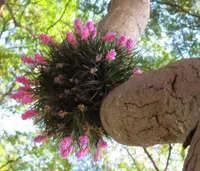
Mount the orchid on cork bark or tree fern with a thin layer of sphagnum so roots dry quickly and receive excellent air circulation, which helps prevent rot and supports vigorous root growth.

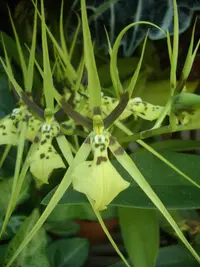
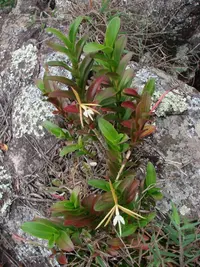
Brassia gireoudiana, often called Gireoud's brassia or spider orchid, is an epiphytic orchid that usually grows attached to trees in warm, humid forests. It produces long, narrow, star-like flowers on arching stems, giving a striking, spidery look.
In nature, it occurs in tropical regions of Central and South America, where it experiences bright but filtered light and moving air. Its epiphytic habit and preference for evenly moist, airy media mean it can be moderate in difficulty for beginners.
Those familiar with basic orchid culture will find it easier to care for Gireoud's brassia, especially when providing stable warmth, high humidity, and good drainage.

Care Difficulty
Moderate Care

Light Preference
Bright Indirect Light

Water Requirements
Regular Water

Temperature Preference
Tropical / Frost Sensitive

Hardiness Zone
Unknown

Soil Texture
Organic-rich, Peaty, Loamy

Soil pH
Acidic (5.5–6.5)

Soil Drainage
Moist but well-drained

Fertilization
Moderate (every 2–4 weeks)
Scan your plant to receive care tips personalized for your specific plant
Available on iOS and Android
This orchid prefers bright, filtered light that mimics dappled forest conditions.
This orchid prefers evenly moist but never waterlogged conditions around its roots.
This species prefers warm, stable temperatures with no exposure to frost.
This orchid prefers high, stable humidity to maintain vigorous growth and prevent leaf stress.
Brassia gireoudiana grows best in a coarse, airy orchid medium rather than standard potting soil.
This species is suitable for container growing when the pot supports its epiphytic root system and tall growth habit.
This orchid benefits from modest, targeted feeding during active growth to support flowering.
Pruning for this orchid is light and focused on hygiene rather than shaping.
Repotting Brassia gireoudiana maintains airy conditions around the roots and prevents medium breakdown.
Division is the standard method for multiplying this orchid while keeping cultivar traits true to type.
This tropical orchid is not frost tolerant and needs warm, sheltered conditions in winter.

Plant Health Check
Not sure what's wrong with your plant? Check your plant's health inside the app.
This species produces long, narrow sepals and petals that resemble the legs of a spider, an adaptation that visually mimics certain spiders to influence pollinator behavior.
In its native range in Central and South America, this orchid is pollinated primarily by parasitic wasps that mistake the flower for a spider they normally attack, a classic example of deceptive pollination.
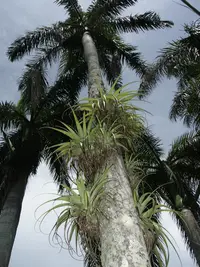
Brassia gireoudiana usually grows as an epiphyte on tree trunks and branches in humid tropical forests, anchoring to bark with its roots while obtaining moisture and nutrients from rain, mist, and decomposing organic matter around it.

Historical descriptions note that Brassia gireoudiana was among the early Brassia species brought into European cultivation in the 19th century, helping shape horticultural interest in spider orchids and contributing to modern Brassia hybrid breeding programs through its distinctive flower form.
Lack of flowers usually comes from insufficient light, inadequate temperature difference between day and night, or low nutrition. Provide bright, indirect light, a slight cooler night drop, and a balanced orchid fertilizer to support spike formation.
Keep your plants happy and healthy with plant identification, disease detection, and easy care guidance.