Firecracker flower Care (Crossandra infundibuliformis)

Firecracker flower

About Firecracker flower

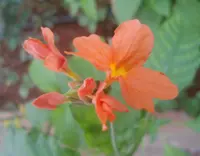
Firecracker flower, Crossandra infundibuliformis, is a compact tropical shrub grown mainly for its bright, fan-shaped blooms in shades of orange, salmon, or yellow. It typically forms a dense, leafy clump with glossy, medium-green foliage that stays attractive year-round in warm conditions.

This species is native to southern India and Sri Lanka, where it grows in warm, humid, partially shaded habitats. In cultivation it is valued as a long-blooming ornamental that can flower for many months when kept in stable conditions.

Crossandra infundibuliformis is moderately easy to grow if temperature, humidity, and moisture are kept consistent. It prefers bright, indirect light, evenly moist but well-drained soil, and protection from cold drafts, which are the main points to understand to care for Firecracker flower.

Main Plant Requirements

Care Difficulty

Moderate Care

Light Preference

Partial Sun

Water Requirements

Keep Soil Moist

Temperature Preference

Tropical / Frost Sensitive

Hardiness Zone

10–11

Soil Texture

Loamy, Sandy, Organic-rich

Soil pH

Acidic (5.5–6.5), Slightly acidic (6.5–7.0)

Soil Drainage

Moist but well-drained

Fertilization

Moderate (every 2–4 weeks)

Get Personalized Care Plan

Scan your plant to receive care tips personalized for your specific plant

Available on iOS and Android

How to Care for the Firecracker flower

Crossandra infundibuliformis needs bright, warm conditions with protection from harsh midday sun.

  • Provide 4–6 hours of bright, indirect light or gentle morning sun; east- or southeast-facing positions suit the Firecracker flower well.
  • Allow light afternoon shade in hot climates; strong midday or late-afternoon sun can scorch leaves and fade blooms.
  • In winter, shift plants to brighter positions or closer to windows, as low light leads to sparse flowering and leggy, weak growth.

This species prefers evenly moist, not soggy, soil and reacts quickly to inconsistent watering.

  • Water when the top 2–3 cm of soil feels dry, aiming for consistently damp soil that never stays waterlogged.
  • Improve drainage with a loose, well-aerated mix; yellowing, soft leaves suggest overwatering, while drooping, crisp edges point to underwatering.
  • Reduce watering slightly in cooler months when growth slows, but do not let the root zone dry out completely between waterings.

This tropical shrub thrives in warm, stable temperatures without cold drafts or frost exposure.

  • Aim for 70–85°F (21–29°C) for best growth and flowering, with only slight night-time drops.
  • Protect from temperatures below 55°F (13°C); prolonged exposure near 40°F (4°C) can cause leaf drop and may kill the plant.
  • Tolerates brief heat up to about 95°F (35°C) if shaded from intense sun and kept evenly moist during hot, dry periods.

This species prefers high, stable humidity and reacts quickly to dry indoor air.

  • Aim for 50–70% humidity to support continuous foliage and flower production.
  • Dry air causes brown, crispy leaf edges, drooping new growth, and slower budding, especially near heating or air-conditioning vents.
  • Increase humidity with a nearby humidifier, grouped plants, or a pebble tray that keeps the Firecracker flower above, not in, standing water.

This plant performs best in a loose, airy, moisture-retentive but fast-draining mix.

  • Use a peat- or coco-coir-based potting mix amended with 20–30% perlite and some fine bark to improve aeration.
  • Target slightly acidic to neutral pH around 6.0–7.0, which supports nutrient availability and steady growth in Crossandra infundibuliformis.
  • Ensure water drains freely within a few seconds; water should not pool on the surface or sit in the saucer afterward.
  • Avoid dense garden soil, heavy clay, or mixes high in unamended compost that compact, stay soggy, and suffocate roots.

This species is well suited to container culture on warm patios or bright, sheltered outdoor spots.

  • Choose a pot that is wider than it is deep to match its bushy, spreading root system and reduce the risk of tipping.
  • Select heavier materials such as ceramic or clay if the plant is exposed to wind, as its top growth can become slightly top-heavy in bloom.
  • Ensure large, unobstructed drainage holes so water exits quickly, preventing the fine feeder roots from sitting in anaerobic, waterlogged pockets.

Crossandra infundibuliformis responds well to modest, consistent feeding during its active growing season.

  • Apply a balanced liquid fertilizer (for example 10-10-10) at 1/2 strength every 2–4 weeks in spring and summer.
  • Use a slow-release granular fertilizer in early spring if you prefer fewer applications, following label rates.
  • Pause or reduce feeding to once every 6–8 weeks in fall and winter when growth slows.
  • Water before applying fertilizer to avoid root burn and keep salts from building up in the potting mix.

Pruning helps Crossandra infundibuliformis stay compact and produce more flowers.

  • Lightly trim stem tips after each flush of blooms to encourage branching and bushier growth.
  • Remove dead, diseased, or damaged stems as soon as noticed using clean, sharp scissors or pruners.
  • Thin out crowded interior stems in spring to improve air flow and reduce fungal problems.
  • Pinch off spent flower spikes at the base to direct energy toward new buds and foliage.

This plant prefers slightly snug pots but benefits from periodic repotting to refresh the root zone.

  • Repot every 2–3 years in spring when roots circle the pot, emerge from drainage holes, or growth slows.
  • Choose a container 2–5 cm wider with drainage holes and use a light, well-draining peat-free potting mix.
  • Gently loosen circling roots, trim any rotten sections, and keep the original soil level at the stem base.
  • Water thoroughly after repotting, then keep in bright, indirect light and slightly reduced watering for 1–2 weeks to limit stress.

Crossandra infundibuliformis is most often propagated from softwood cuttings under warm, humid conditions.

  • Take 7–10 cm non-flowering stem cuttings in late spring or summer, cutting just below a node.
  • Remove lower leaves, dip the cut end in rooting hormone, and insert into moist, sterile, well-draining mix.
  • Maintain 70–80°F, high humidity, and bright, indirect light until roots form in 3–6 weeks.
  • Seeds can also be sown on the surface of warm, moist mix and kept lightly covered to improve germination.

This tropical Firecracker flower is frost-tender and needs protection in regions with cold winters.

  • In USDA zones below 10, grow in containers and move indoors before temperatures approach 50°F.
  • Indoors, provide bright, indirect light, 60–70°F, and slightly drier soil to reduce root rot risk.
  • Outdoors in mild climates, add a light mulch layer around the root zone to moderate temperature swings.
  • Avoid exposing the plant to cold drafts, unheated windowsills, or sudden temperature drops during winter.

Care Tips

Pinch For Bushiness

Pinch out the soft tips of each stem after a flush of flowers to encourage branching and a denser, more floriferous plant over the next growth cycle.

Rotate For Even Shape

Turn the pot 90° every 1–2 weeks so that all sides receive similar light exposure, which reduces leaning and helps maintain a compact, symmetrical canopy.

Deadhead Spent Spikes

Remove entire faded flower spikes down to the first healthy leaf node to prevent seed formation and divert energy into new buds and vegetative growth.

Monitor Salt Build‑Up

Every 4–6 weeks, flush the potting mix thoroughly with plain water until it runs freely from the drainage holes to reduce fertilizer salt accumulation that can scorch roots and leaf edges.

Quarantine New Plants

Keep any new plants in a separate area for 10–14 days and inspect regularly for mites, aphids, or whiteflies before placing them nearby, which lowers pest risk when caring for Firecracker flower indoors or on a patio.

Common Pests and Diseases

Aphids

This pest feeds on young shoots and flower buds, causing distortion, sticky honeydew, and sooty mold on leaves and stems.

Solution

Rinse colonies off with a firm stream of water, then spot-treat remaining clusters with insecticidal soap or a neem oil spray, repeating every 5–7 days until control is achieved. Reduce excess nitrogen fertilizer that promotes very soft growth and inspect regularly, especially when growing Crossandra infundibuliformis indoors or in sheltered spots.

Spider mites

These insects thrive in warm, dry conditions and cause pale stippling, fine webbing, and dull, yellowing foliage, especially on the undersides of leaves.

Solution

Increase humidity around the plant, then wash leaf surfaces thoroughly, including undersides, to remove mites and webbing. Follow with repeated applications of insecticidal soap or horticultural oil at 5–7 day intervals, and isolate heavily infested plants to prevent spread.

Whiteflies

This pest sucks sap from tender foliage, leading to yellowing leaves, reduced vigor, and clouds of tiny white insects flying up when the plant is disturbed.

Solution

Hang yellow sticky traps near the plant to catch adults and regularly vacuum or tap off flying insects outdoors. Treat leaf undersides with insecticidal soap or neem oil, repeating weekly until no new adults appear and monitoring new growth closely.

Leaf spot

This disease causes brown or black water-soaked spots on leaves, sometimes with yellow halos and eventual leaf drop in humid, crowded conditions.

Solution

Remove and discard affected leaves, then improve air circulation and avoid wetting foliage when watering. If new spots continue to appear, apply a copper-based or other labeled ornamental fungicide according to the product directions and keep the plant on a regular sanitation schedule.

Botrytis blight

This disease produces soft, gray, fuzzy mold on fading flowers, buds, and nearby leaves, often starting in cool, damp, low-light conditions.

Solution

Promptly remove and discard spent flowers and infected tissue, and increase airflow by spacing plants and reducing overhead watering. In persistent cases, use a labeled ornamental fungicide and adjust care to keep foliage and blooms as dry as possible, especially overnight.

Interesting Facts

Spiraled flower spikes

The plant produces flattened, spiraled flower spikes where individual blooms emerge in overlapping rows, a structure that helps display many small flowers at once to attract pollinators such as butterflies.

Monsoon-season bloomer

In its native range in southern India and Sri Lanka, this species flowers most heavily during warm, humid monsoon periods, responding to seasonal changes in moisture and temperature rather than strict day length.

Heat-tolerant evergreen shrub

This species remains evergreen and can flower nearly year-round in tropical climates, showing good tolerance to high heat and strong light compared with many other ornamental shrubs of similar size.

Botan icon

Did you know?

In parts of southern India, the bright orange flowers of this species are traditionally used in temple offerings and hair garlands, and long-cultivated forms provided the basis for many modern ornamental hybrids grown worldwide.

FAQs about Firecracker flower

Lack of blooms often comes from insufficient light, depleted nutrients, or old, woody stems. Regular deadheading, a balanced fertilizer during the growing season, and periodic pruning of older shoots usually restore flowering over time.

Grow Healthy Plants with Botan Care

Keep your plants happy and healthy with plant identification, disease detection, and easy care guidance.

Botan plant care app — identify plants on mobile

Explore More Plants