Support Upright Stems
Install low, discreet stakes or a short wire ring early in the season so the plant’s slender stems stay upright and floral displays are visible rather than lodging onto the ground.

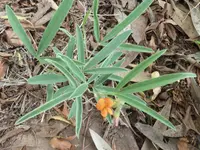
Tephrosia elongata, commonly called orange hoarypea, is a small, herbaceous legume known for its slender stems, fine leaflets, and soft, hairy texture. It produces warm-toned pea-like flowers that give a subtle ornamental effect rather than bold display.
This species occurs naturally in parts of southern Africa, often in open grasslands or light scrub where soils are well-drained and conditions can be seasonally dry. It has a generally modest size and a somewhat sprawling habit, which suits naturalistic or meadow-style plantings.
Gardeners who want to care for Orange Hoarypea should know it prefers sun, good drainage, and moderate moisture, and it often suits low-input, informal landscapes rather than highly manicured beds.

Care Difficulty
Moderate Care

Light Preference
Full Sun

Water Requirements
Moderate Water

Temperature Preference
Warm Climate

Hardiness Zone
9–11

Soil Texture
Sandy, Loamy

Soil pH
Slightly acidic (6.5–7.0)

Soil Drainage
Well-drained

Fertilization
Minimal (feed rarely)
Scan your plant to receive care tips personalized for your specific plant
Available on iOS and Android
Tephrosia elongata prefers bright, open conditions that mimic sunny grasslands.
Tephrosia elongata prefers moderate moisture but is sensitive to prolonged saturation.
This species thrives in warm, frost-free conditions typical of mild to hot climates.
This dry-tolerant species manages well in typical outdoor humidity but benefits from moderate moisture in the air.
This species prefers light, well-structured soil that drains quickly yet does not become hydrophobic when dry.
This species can be grown in containers when provided with a deep, fast-draining setup that prevents waterlogging.
Tephrosia elongata usually grows well in lean soils, but light feeding can support better flowering and foliage in cultivation.
Pruning Tephrosia elongata is mainly used to keep plants compact and remove weak growth.
This species is more often grown in the ground, but container plants or young nursery stock sometimes need transplanting.
Tephrosia elongata is most commonly propagated from seed, with cuttings as a secondary option for gardeners with some experience.
In mild climates Tephrosia elongata usually overwinters with minimal intervention, but cold snaps can still damage foliage and young stems.

Plant Health Check
Not sure what's wrong with your plant? Check your plant's health inside the app.
This species produces dense clusters of orange to reddish pea-shaped flowers that are unusually vivid for the genus, making it a conspicuous component of seasonal wildflower displays in its native range.
As a legume, it forms symbiotic root nodules with nitrogen-fixing bacteria, allowing the plant to enrich nutrient-poor, often sandy or degraded soils where it commonly grows.
The flowers provide nectar and pollen for native insects, while its shrubby structure offers cover in open habitats, so it can contribute to local biodiversity when used in restoration plantings.
This legume’s orange pea-flowers are rich in nectar and pollen, so it often attracts native bees, small wasps, and some butterflies. Flowering patches can support local pollinator diversity, especially when combined with other nectar plants nearby.
Keep your plants happy and healthy with plant identification, disease detection, and easy care guidance.