Early staking support
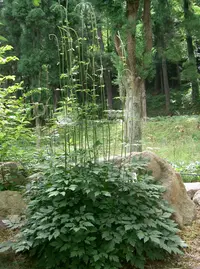
Install low, discreet stakes or a short ring support in late spring before stems reach 30–40 cm so the plant grows through the support and resists flopping in late-season wind and rain.

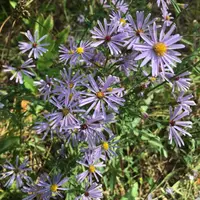
Smooth blue aster (Symphyotrichum laeve) is a herbaceous perennial native to prairies, open woods, and roadsides across much of North America. It forms upright clumps with smooth, bluish-green leaves and many branching stems.
In late summer to fall, it produces numerous daisy-like flowers with pale blue to violet rays and yellow centers that attract bees and butterflies. Plants are generally long-lived and tolerant of drought once established.
This species adapts well to average, well-drained soils and full sun, which makes it straightforward to care for smooth blue aster in most garden settings.

Care Difficulty
Easy Care

Light Preference
Full Sun

Water Requirements
Moderate Water

Temperature Preference
Cold Hardy

Hardiness Zone
3–8

Soil Texture
Sandy, Loamy, Clay

Soil pH
Slightly acidic (6.5–7.0), Neutral (7.0)

Soil Drainage
Well-drained

Fertilization
Minimal (feed rarely)
Scan your plant to receive care tips personalized for your specific plant
Available on iOS and Android
This sun-loving perennial thrives in open, bright conditions suited to meadow or border plantings.
This prairie-adapted perennial prefers evenly moist but not saturated soil, especially during establishment.
This hardy North American aster tolerates a wide temperature range once established outdoors.
This species handles typical outdoor humidity well, so targeted humidity management is rarely needed.
Symphyotrichum laeve prefers well-drained, moderately fertile mineral soils that do not stay wet.
This species can grow in containers outdoors if the pot and substrate are chosen to prevent waterlogging and instability.
This native perennial needs only modest feeding in average garden soil.
Symphyotrichum laeve responds well to thoughtful pruning that controls height and supports flowering.
This species is usually grown in the ground and benefits more from dividing and transplanting than from repotting.
Symphyotrichum laeve is commonly propagated by division, seed, and softwood cuttings.
This hardy perennial tolerates typical winters in most temperate climates with minimal intervention.

Plant Health Check
Not sure what's wrong with your plant? Check your plant's health inside the app.
The leaves are characteristically smooth, hairless, and often covered with a bluish waxy coating, which helps reduce water loss and gives the plant its common name, smooth blue aster.
Wild populations are especially common on calcareous prairies and open woodlands, indicating a natural tolerance for, and often preference toward, alkaline, calcium-rich soils.
Blooming late in the season, typically from late summer into fall, this species provides an important nectar and pollen source for native bees, flies, and migrating monarch butterflies when many other wildflowers have already finished flowering.

Genetic and field studies have shown that this species frequently hybridizes with closely related blue-flowered asters such as Symphyotrichum oolentangiense and Symphyotrichum oblongifolium, creating natural hybrid swarms that can make field identification challenging even for experienced botanists.
This species is highly attractive to native bees, honeybees, hoverflies, and many butterfly species, especially late in the season. The numerous small flowers provide abundant nectar and pollen when many other garden plants have finished blooming.
Keep your plants happy and healthy with plant identification, disease detection, and easy care guidance.