Splendid Paphiopedilum Care (Paphiopedilum insigne)

Splendid Paphiopedilum

About Splendid Paphiopedilum

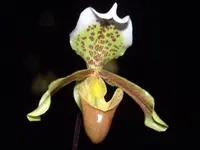
Paphiopedilum insigne, often called splendid Paphiopedilum, is a terrestrial orchid known for its pouch-shaped flowers and neat, fan-like leaves. It grows from short, compact growths rather than tall canes or pseudobulbs.

In nature, it occurs on limestone hillsides and rocky slopes in parts of India and nearby regions, often in cool to mild conditions with good air movement. Flowers typically show green, cream, and brown tones with spots and patterns that last for many weeks.

This species is considered moderately easy for indoor growers who can provide stable temperatures, filtered light, and evenly moist but free-draining medium. Understanding how to care for Splendid Paphiopedilum mainly comes down to avoiding extremes in dryness, heat, and direct sun.

Main Plant Requirements

Care Difficulty

Moderate Care

Light Preference

Bright Indirect Light

Water Requirements

Keep Soil Moist

Temperature Preference

Tropical / Frost Sensitive

Hardiness Zone

Unknown

Soil Texture

Peaty, Organic-rich

Soil pH

Acidic (5.5–6.5)

Soil Drainage

Moist but well-drained

Fertilization

Light (every 4–6 weeks)

Get Personalized Care Plan

Scan your plant to receive care tips personalized for your specific plant

Available on iOS and Android

How to Care for the Splendid Paphiopedilum

Paphiopedilum insigne prefers bright, gentle light that mimics a shaded mountain forest edge.

  • Provide bright, indirect light for 8–12 hours per day, such as an east-facing window or shaded greenhouse bench with no harsh midday sun.
  • Allow soft early morning or late afternoon sun, but protect from strong midday rays that cause yellowing, hard leaves, or burned patches on Splendid Paphiopedilum.
  • In summer, shift plants slightly deeper into shade; in winter, move them closer to the light source to compensate for shorter, weaker daylight.

Paphiopedilum insigne prefers consistently moist but never waterlogged roots.

  • Water when the top 1–2 cm of the mix feels just barely dry, using thorough watering that fully wets the potting media, then let excess drain away completely.
  • Use a fine, well-draining orchid mix so water flows through in seconds; standing water around roots leads to rot, limp foliage, and sour odors.
  • In cooler months reduce frequency as drying slows, watching for wrinkling leaves (too dry) or black, mushy roots and yellowing lower leaves (too wet).

This species grows best at cool to intermediate temperatures with small day–night swings.

  • Aim for 60–75°F (16–24°C) most of the year to support steady growth and flowering potential.
  • Avoid dropping below 45°F (7°C); brief dips to 45–50°F (7–10°C) are tolerable, but freezing causes severe tissue damage and loss of buds.
  • In hot spells above 85°F (29°C), increase airflow and shade, and avoid placing plants near hot, sunlit walls or enclosed spaces that trap heat.

This slipper orchid needs moderate, stable humidity for steady growth.

  • Aim for 50–60% humidity; brief drops to 40% are usually tolerated but slow growth.
  • Crisp leaf edges, wrinkled newer leaves, and buds that shrivel indicate air is too dry.
  • Place the pot on a pebble tray with water, group plants, or run a small humidifier near caring for Splendid Paphiopedilum.

Paphiopedilum insigne grows best in a loose, airy, moisture-retentive but free-draining medium.

  • Use a mix of fine to medium orchid bark, perlite or pumice, and a little sphagnum moss or coco coir for moisture holding.
  • Aim for slightly acidic to neutral conditions around pH 5.5–7 to support nutrient uptake and root health.
  • Ensure the mix feels springy and open; large air spaces around roots reduce rot and support gas exchange.
  • Avoid dense garden soil, peat-heavy potting mixes, or decomposed bark that compacts and stays wet for long periods.

This orchid is well suited to container growing at home or in a greenhouse.

  • Choose a squat, heavy pot shape to keep the plant stable as leaves arch outward and can make the container top-heavy.
  • Select plastic if extra moisture retention is needed, or clay if the medium dries too slowly in your conditions.
  • Keep the medium level just below the rim so irrigation water does not pool against the crown or spill unevenly down one side.

Paphiopedilum insigne benefits from light, consistent feeding rather than heavy doses.

  • Use a balanced orchid fertilizer (for example 20-20-20) at 1/4–1/2 strength in water.
  • Feed every 2–3 weeks during active growth in spring and summer.
  • In autumn and winter, reduce to monthly feeding or pause if growth is very slow.
  • Flush the pot with plain water monthly to prevent salt buildup and root stress.

Pruning needs for Paphiopedilum insigne are minimal and focus on cleanliness rather than shaping.

  • Remove spent flower spikes at the base once blooms fade, using clean, sharp scissors.
  • Trim yellow, dry, or damaged leaves back to healthy tissue to limit disease spread.
  • Leave green, healthy foliage intact, since it supports future flowering.
  • Sterilize tools with alcohol before and after use to reduce pathogen transfer.

This orchid performs best when repotted periodically into a fresh, airy mix.

  • Repot every 1–2 years, or when roots circle the pot, mix decomposes, or growth slows.
  • Choose late winter to early spring, just before new growth, for least stress.
  • Use a fine to medium orchid mix with bark, perlite, and a little sphagnum for moisture.
  • Gently loosen old mix from roots, remove dead roots, then water lightly and keep shaded for 7–10 days.

Paphiopedilum insigne is propagated mainly by careful division of mature clumps.

  • Divide during repotting in late winter or early spring for best recovery.
  • Ensure each division has at least 3–4 healthy growths and a strong root system.
  • Pot divisions into fresh fine to medium orchid mix and keep slightly more humid.
  • Provide bright, indirect light and stable 65–75°F temperatures to support new growth.

This species is not frost hardy and needs cool, frost-free conditions in winter, typical for Splendid Paphiopedilum indoor care.

  • Keep temperatures around 55–65°F in winter with good air movement but no drafts.
  • Move outdoor pots indoors before night temperatures drop below 50°F.
  • Avoid cold windowsills where leaves can touch cold glass and chill.
  • Water sparingly but do not allow the mix to dry out completely in cool conditions.

Care Tips

Potting angle check

Position the plant so the growths sit slightly above the medium surface and keep the crown tilted just enough that water cannot pool in the center, reducing crown rot risk over time.

Targeted airflow

Use a small, quiet fan on a low setting to create very gentle air movement across the leaves and pot surface, which helps prevent fungal spotting and keeps the potting mix from staying wet for too long.

Sheath and leaf grooming

Regularly remove spent flower spikes, dry sheaths around old growths, and dead leaf tips with sterile scissors to lower fungal and bacterial pressure and to make inspection for early pest signs easier.

Seasonal light shift

Move the plant slightly closer to a bright window in late autumn and winter and pull it back a little in late spring and summer, using the seasonal sun angle to maintain strong bud formation without leaf burn.

Transport and display care

When moving or displaying the plant in bloom, carry and support it by the pot rather than the leaves, and brace tall spikes with a stake and soft clip so flowers are not damaged by minor bumps or drafts while growing Splendid Paphiopedilum indoors.

Common Pests and Diseases

Mealybugs

This pest hides in leaf bases, flower spikes, and around the crown, sucking sap and causing yellowing, distortion, and sticky honeydew deposits. Symptoms include cottony white clumps in tight crevices and on roots near the surface of the potting mix.

Solution

Isolate the plant, then dab visible mealybugs with cotton swabs dipped in 70% isopropyl alcohol and gently wipe affected areas, including leaf axils. Improve air movement, avoid overly soft, nitrogen-rich growth, and repeat alcohol treatments weekly until no new insects appear; for large infestations, use a labeled systemic insecticide suitable for orchids according to package directions.

Scale insects

These insects appear as small, rounded or oval brown, tan, or whitish bumps on leaves, pseudobulb-like bases, and flower stems, causing yellow patches and reduced vigor. This pest often produces sticky honeydew that can promote sooty mold on foliage and bench surfaces.

Solution

Physically remove scales by gently scraping with a fingernail or soft toothbrush and wiping leaves with a cloth dampened in 70% isopropyl alcohol. Keep the plant slightly drier between waterings and increase air movement, then apply a horticultural oil or a systemic insecticide labeled for orchids, repeating according to label intervals to target newly emerging crawlers.

Fusarium crown rot

This disease attacks the crown and basal portions of the plant, especially under cool, wet, stagnant conditions, leading to wilting, leaf yellowing, and eventual collapse. Symptoms include a brown to purplish discoloration at the crown and internal streaking when affected tissue is cut.

Solution

Remove the plant from its pot, cut away all discolored and mushy tissue with a sterile tool, and dust the cut surfaces with a fungicidal powder or ground cinnamon as a mild desiccant. Repot into fresh, free-draining orchid mix, keep water out of the crown, maintain moderate humidity with strong air circulation, and avoid overhead watering, especially in cool temperatures, which is central to Paphiopedilum insigne plant care.

Botrytis flower blight

This disease causes small water-soaked spots on petals and sepals that quickly turn brown, giving flowers a speckled or blotchy appearance, especially in cool, humid conditions. Symptoms include rapid spotting of newly opened flowers in poorly ventilated growing areas.

Solution

Remove and discard all affected flowers promptly to reduce spore spread, and avoid misting blooms or allowing water to sit on petals. Increase air circulation, reduce nighttime humidity, space plants so flowers do not touch, and during prolonged cool, damp weather consider using a preventive fungicide labeled for ornamental flowers according to directions.

Spider mites

This pest thrives in warm, dry indoor conditions and feeds on the underside of leaves, causing fine stippling, dulling, and eventual bronzing of foliage. Symptoms include very fine webbing between leaves and at the leaf tips when populations are high.

Solution

Shower the plant with lukewarm water, directing the spray to the undersides of leaves to physically remove mites, and raise humidity to 50–70% to slow their development. For persistent infestations, apply an insecticidal soap or a horticultural oil labeled for mites at 7–10 day intervals, ensuring thorough coverage of leaf undersides and improving regular monitoring as part of Splendid Paphiopedilum indoor care.

Interesting Facts

Natural cliff specialist

This species grows naturally on steep limestone cliffs and rocky slopes in the eastern Himalayas, anchoring in leaf litter and moss rather than true soil, which explains its preference for excellent drainage and a slightly alkaline substrate in cultivation.

Cool-season bloomer

In its native range in India, Nepal, and Bhutan, flowering is typically triggered by cooler, drier winter conditions at mid to high elevations, leading to long-lasting blooms that can remain attractive for several weeks under stable indoor conditions.

Historic breeding parent

Paphiopedilum insigne was one of the earliest slipper orchids introduced to European horticulture in the 19th century and became a key parent in many classic hybrid lines, valued for its distinctive pouch shape and durable, long-holding flowers.

Botan icon

Did you know?

Early horticultural popularity led to heavy wild collection of this species from its native Himalayan habitats, and in some areas it has become rare or locally extinct, making artificially propagated plants the responsible choice for anyone interested in Paphiopedilum insigne care.

FAQs about Splendid Paphiopedilum

This species usually flowers in autumn to winter, once mature. Each flower can last 4–8 weeks in good conditions. Cooler nights, stable moisture, and consistent light help extend display time and reduce premature fading.

Grow Healthy Plants with Botan Care

Keep your plants happy and healthy with plant identification, disease detection, and easy care guidance.

Botan plant care app — identify plants on mobile

Explore More Plants