Nettle-leaved Mullein Care (Verbascum chaixii 'Album')

About Nettle-leaved Mullein

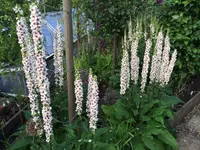
Nettle-leaved mullein, Verbascum chaixii 'Album', is a short-lived perennial grown mainly for its tall white flower spikes and tidy rosettes of textured leaves. It forms upright clumps that add strong vertical accents to mixed borders and wildlife-friendly plantings.

This species is native to parts of Europe and adapts well to many temperate garden conditions. It is generally considered easy to grow because it tolerates poor, dry soils and short dry spells once established.

Plants prefer full sun, well-drained ground, and are often favored in low-maintenance, naturalistic designs. Understanding how to care for Nettle-leaved Mullein helps keep the rosettes healthy and flowering reliable year after year.

Main Plant Requirements

Care Difficulty

Easy Care

Light Preference

Full Sun

Water Requirements

Low Water

Temperature Preference

Cold Hardy

Hardiness Zone

5–8

Soil Texture

Sandy, Loamy, Rocky

Soil pH

Slightly acidic (6.5–7.0), Slightly alkaline (7.0–7.5)

Soil Drainage

Well-drained

Fertilization

Minimal (feed rarely)

Get Personalized Care Plan

Scan your plant to receive care tips personalized for your specific plant

Available on iOS and Android

How to Care for the Nettle-leaved Mullein

This sun-loving perennial thrives in bright conditions typical of open borders and meadow-style plantings.

  • Provide 6–8 hours of direct sun daily; morning to early afternoon sun gives the best flowering and compact growth for Nettle-leaved Mullein.
  • Tolerates light afternoon shade, especially in hotter regions, but flowering will decrease if it receives less than about 4–5 hours of direct sun.
  • In cooler seasons or overcast climates, choose the sunniest, south- or west-facing spot; in very intense summer sun, monitor for leaf scorch and use nearby plants for light filtering if needed.

This species prefers relatively dry conditions and dislikes prolonged soil moisture around its roots.

  • Water only when the top 3–5 cm of soil is fully dry; in average conditions this may mean deep watering every 7–14 days for in-ground Verbascum chaixii 'Album'.
  • Use well-drained, gritty or sandy soil so water runs through quickly; avoid sites where water pools or soil stays wet for more than 1 day after rain or irrigation.
  • Signs of overwatering include yellowing lower leaves, limp growth, and any crown rot smell, while underwatering shows as dull, drooping foliage that recovers quickly after a thorough soak.

This hardy perennial copes well with cool climates but benefits from warm growing-season temperatures.

  • Optimal active growth occurs around 65–80°F (18–27°C), with strong flowering during consistently warm, bright weather.
  • Mature plants tolerate winter lows down to about 0°F (−18°C) in well-drained soil; mulch lightly in colder zones to protect the crown from freeze–thaw cycles.
  • In summer heat above 90°F (32°C), flowering may slow; ensure soil drainage is excellent and avoid reflected heat from walls or paving that can stress foliage.

Humidity is not a significant factor for Verbascum chaixii 'Album', which thrives in typical outdoor air conditions.

Verbascum chaixii 'Album' prefers lean, well-drained soil that does not stay wet after rain or watering.

  • Use a sandy or gravelly loam with low to moderate organic matter to mimic its naturally dry habitats.
  • Aim for slightly alkaline to neutral pH, around 6.8–7.5, avoiding acidic mixes heavy in peat.
  • Blend in coarse sand or grit (20–40%) to improve drainage and prevent root and crown rot.
  • Avoid compacted, clay-rich, or waterlogged sites, which reduce aeration and shorten plant lifespan.

This species can be grown in containers if the pot is set up to stay free-draining and relatively dry between waterings.

  • Choose a deep, heavy pot (such as clay) to counter the tall flower spikes and reduce the risk of tipping in wind.
  • Fill the container with a gritty mix, for example 50% standard potting mix and 50% coarse sand or fine gravel, to keep roots dry.
  • Elevate the pot on feet or bricks so drainage holes stay clear and water does not pool under the container, which suits caring for Nettle-leaved Mullein.

This perennial prefers lean soil but benefits from light feeding in poor or very sandy ground when caring for Nettle-leaved Mullein.

  • Use a balanced, low-strength granular or liquid fertilizer (around 10-10-10) diluted to 50% strength.
  • Apply once in mid-spring and again in early summer if growth appears weak.
  • Supplement with a thin layer of garden compost around the root zone instead of frequent feeding.
  • Stop fertilizing by late summer and do not feed in winter dormancy.

Pruning supports tidy growth and sustained flowering in Verbascum chaixii 'Album'.

  • Deadhead spent flower spikes in summer using clean, sharp pruners to encourage further blooming.
  • Cut back any dead, damaged, or diseased foliage at the base as soon as noticed.
  • In late autumn or early spring, remove old flower stalks and thin congested rosettes to maintain airflow.
  • Disinfect tools between plants to limit disease spread in dense plantings.

This plant is usually grown in beds or borders, so focus on careful transplanting rather than frequent repotting.

  • Transplant in spring or early autumn so roots establish in cool, moist conditions.
  • Move plants only when rootbound in containers, showing circling roots or stalled growth.
  • Lift with a generous soil clump, disturb roots as little as possible, and replant at the same depth.
  • Water thoroughly after planting, then keep soil lightly moist until new growth resumes.

Verbascum chaixii 'Album' is most often propagated by seed and occasionally by careful division.

  • Sow fresh seeds in late summer or early spring on the soil surface; they need light to germinate.
  • Maintain 60–70°F and slightly moist soil until seedlings appear, then thin to avoid crowding.
  • Divide established clumps in early spring, keeping each division with a healthy root and rosette.
  • Replant divisions promptly and water well to limit transplant shock.

This species is generally cold hardy in temperate climates and needs minimal winter care once established.

  • Tolerates typical frosts in USDA zones 5–8 when planted in well-drained soil.
  • Apply a light mulch layer around, not over, the rosettes in late autumn to buffer soil temperature.
  • In very wet winters, improve drainage or raise planting areas to prevent crown rot.
  • Move container-grown plants to a sheltered, unheated spot to avoid waterlogged roots.

Care Tips

Staggered Deadheading

Remove individual spent flower spikes promptly while leaving younger side shoots intact, which extends the overall bloom period and keeps the plant producing fresh spires through the season.

Self‑Sown Seedling Management

Allow a few seedheads to ripen and drop in late summer, then thin or transplant the resulting seedlings in early spring so only the strongest plants remain at 30–40 cm spacing.

Targeted Staking Support

Install discreet, single-bamboo stakes on the windward side of tall flowering stems and secure them with soft ties to prevent snapping in exposed or high-wind sites without spoiling the natural look.

Crown Protection Mulch

Apply a thin, gritty mulch around but not on top of the crown in autumn to improve winter drainage and reduce crown rot risk, especially on heavier soils.

Rust Monitoring Routine

Inspect the undersides of leaves every 1–2 weeks during warm, humid weather for orange-brown pustules of verbascum rust, removing affected leaves promptly and improving air flow as part of caring for Nettle-leaved Mullein.

Common Pests and Diseases

Figwort sawfly larvae

These pests are leaf-feeding caterpillar-like larvae that skeletonize the foliage of mulleins, often leaving only leaf veins and causing a ragged appearance. Symptoms include rapid defoliation starting from the lower leaves upward.

Solution

Hand-pick and destroy larvae as soon as they appear, checking the undersides of leaves regularly during late spring and summer. Encourage natural predators, and if feeding is heavy, use a targeted biological insecticide containing Bacillus thuringiensis (Bt) on young larvae, following label directions and avoiding treatment when pollinators are active.

Verbascum leaf weevil

This pest feeds on foliage, producing small, irregular notches along leaf edges and sometimes minor tunneling in the leaf surface. Damage is usually cosmetic but can be unsightly on young plants or in dry conditions.

Solution

Inspect plants in the evening when adults are more active and remove them by hand into soapy water. Reduce nearby weed hosts, and if damage is persistent, apply a low-impact contact insecticide such as insecticidal soap or pyrethrins, directed only to affected foliage.

Powdery mildew

This disease produces white to gray, powdery patches on the surface of leaves, especially in crowded plantings or during warm, dry days with cool, humid nights. Symptoms include dull, distorted foliage and reduced vigor if infections are repeated.

Solution

Improve air circulation by thinning nearby plants and avoid overhead watering, directing irrigation to the soil instead. Remove and discard heavily affected leaves, and in recurring cases use a sulfur or potassium bicarbonate fungicide labeled for ornamental perennials, applied at the first sign of powdery growth as part of broader Verbascum chaixii 'Album' care instructions.

Rust

This disease causes orange-brown or rust-colored pustules on the undersides of leaves, often with pale or yellow spots on the upper surface. Symptoms include premature leaf yellowing and drop, especially in damp, crowded conditions.

Solution

Promptly remove and dispose of affected leaves to reduce spore spread and avoid wetting foliage when watering. Increase spacing and airflow, and in persistent cases apply a fungicide labeled for rust on ornamentals, rotating products if used more than once a season.

Interesting Facts

Distinctive white spikes

This cultivar produces tall, slender spikes of clean white flowers with contrasting purple-violet stamens, a color combination that makes it easy to distinguish from the yellow-flowered wild type Verbascum chaixii.

Long flowering season

In suitable conditions it can send up multiple flushes of flowering spikes from late spring into mid or even late summer, especially if spent flower stalks are removed promptly.

Pollinator-friendly structure

The open, saucer-shaped flowers arranged along the spike provide easy landing platforms and accessible nectar for bees and hoverflies, so plantings often show high pollinator activity in sunny weather.

FAQs about Nettle-leaved Mullein

This species usually flowers from late spring through mid-summer, with peak display in early summer. Individual flower spikes can look good for several weeks, especially if old stems are deadheaded to encourage fresh side shoots.

Grow Healthy Plants with Botan Care

Keep your plants happy and healthy with plant identification, disease detection, and easy care guidance.

Botan plant care app — identify plants on mobile

Explore More Plants