Early-season thinning
In late spring, selectively thin crowded stems at ground level to improve air circulation and reduce foliar disease pressure later in the season.

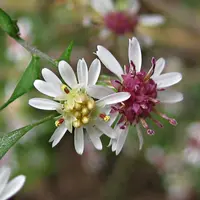
Calico aster, Symphyotrichum lateriflorum, is a perennial wildflower in the aster family, known for its many small, star-shaped white flowers with variable-colored centers. It forms upright, branching clumps that create a fine, airy texture, often used in naturalistic borders and wildlife gardens.
This species is native to North America and commonly found in open woods, along streams, and in meadows. It is valued for late-season bloom and strong support for pollinators.
Calico aster is generally easy to grow, adapting to a range of soils and light levels, though it does best in sun to light shade with moderate moisture. Gardeners who care for calico aster usually find it long-lived and resilient with minimal problems when sited well.

Care Difficulty
Easy Care

Light Preference
Full Sun

Water Requirements
Moderate Water

Temperature Preference
Cold Hardy

Hardiness Zone
3–8

Soil Texture
Sandy, Loamy, Clay

Soil pH
Acidic (5.5–6.5), Slightly acidic (6.5–7.0)

Soil Drainage
Moist but well-drained

Fertilization
Minimal (feed rarely)
Scan your plant to receive care tips personalized for your specific plant
Available on iOS and Android
This species thrives in outdoor sites with moderate, consistent light exposure.
Symphyotrichum lateriflorum prefers evenly moist but not saturated soil, especially during active growth.
This hardy perennial tolerates a wide temperature range typical of temperate outdoor gardens.
Humidity is rarely a concern for Symphyotrichum lateriflorum grown outdoors in its typical range.
Symphyotrichum lateriflorum prefers moderately fertile, well-structured ground that holds moisture yet drains freely.
This species adapts reasonably well to container growing outdoors when given enough root volume and drainage.
This native perennial usually needs only light feeding, especially in reasonably fertile garden soil.
Pruning Symphyotrichum lateriflorum focuses on maintaining structure, vigor, and abundant late-season flowering.
This species is usually grown in the ground and responds best to occasional division and transplanting rather than frequent repotting.
Symphyotrichum lateriflorum is commonly propagated by division, with seeds and cuttings as additional options for increasing stock.
This hardy perennial typically overwinters well in most temperate climates with minimal intervention.

Plant Health Check
Not sure what's wrong with your plant? Check your plant's health inside the app.
This species flowers very late in the season, often from late summer into mid-fall, providing nectar and pollen when many other native plants in its range have already finished blooming, which supports late-flying bees, hoverflies, and migrating butterflies.
Its name lateriflorum refers to the way the small flower heads are produced along the sides of arching branches rather than mainly at the tips, giving the plant a layered, airy spray of blooms that differs from the more clustered heads of many other asters.
Each small “flower” is actually a composite head with white ray florets surrounding a yellow disk that often turns pinkish or reddish with age, a color change that signals to pollinators which florets are still rewarding.

Genetic and morphological studies of North American asters led to this species being transferred from the traditional genus Aster into Symphyotrichum in the late 20th century, making it an example often cited in modern plant systematics to illustrate how DNA evidence can reshape long-standing botanical classifications.
This species spreads moderately by rhizomes and self-seeding. In good conditions it can form colonies, but it is usually manageable. Divide clumps every few years and deadhead before seeds drop if tighter control is needed.
Keep your plants happy and healthy with plant identification, disease detection, and easy care guidance.