


Encourage Low Mounding
Pinch back the longest stems once plants are 5–8 cm tall to promote a dense, even mound that flowers more uniformly and resists lodging in wind.

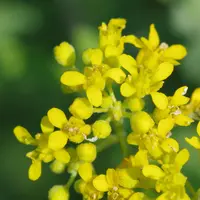
Alyssum lenense is a small, herbaceous perennial in the mustard family, known for its low, tufted growth and clusters of tiny yellow flowers. It typically forms compact mats or cushions that suit rock gardens and well-drained, open sites.
This species is native to cold, often rocky regions of Siberia and nearby areas, where it copes with poor soils and harsh conditions. Its natural tolerance to cold and drought makes it relatively undemanding in cultivation.
Gardeners who want to care for Alyssum lenense should provide sunny exposure, moderate moisture, and gritty, free-draining soil. Under suitable conditions it usually remains healthy with minimal intervention.

Care Difficulty
Easy Care

Light Preference
Full Sun

Water Requirements
Low Water

Temperature Preference
Cold Hardy

Hardiness Zone
3–7

Soil Texture
Sandy, Loamy, Rocky

Soil pH
Slightly acidic (6.5–7.0), Neutral (7.0)

Soil Drainage
Well-drained

Fertilization
Minimal (feed rarely)
Scan your plant to receive care tips personalized for your specific plant
Available on iOS and Android
This alpine species prefers bright, open conditions that mimic rocky slopes.
This plant prefers slightly dry, well-drained conditions rather than constant moisture.
This species is adapted to cool, continental climates with cold winters and mild summers.
This species is adapted to dry, open habitats, so humidity is usually not a limiting factor for Alyssum lenense.
Alyssum lenense prefers lean, mineral, well-drained soil that dries between waterings.
This low, mat-forming species is suitable for container growing, especially in shallow, free-draining pots.
Light feeding supports flowering but this species often manages in lean soils.
Thoughtful pruning keeps Alyssum lenense compact and encourages continued flowering.
This species is usually grown in the ground, so focus on careful transplanting rather than frequent repotting.
Propagation is straightforward from seed, with occasional division for established clumps.
Alyssum lenense is generally cold hardy and needs minimal winter care in most temperate climates.

Plant Health Check
Not sure what's wrong with your plant? Check your plant's health inside the app.
Alyssum lenense is naturally restricted to cold, dry steppe and rocky habitats of Siberia and parts of northern Asia, where it endures long winters and short growing seasons.
This species often grows on stony, nutrient-poor substrates and has a compact growth form and deep root system that help it exploit limited water and mineral resources.
In its native range, it flowers early in the short summer, providing one of the first nectar sources for local pollinating insects in harsh continental climates.
This species forms low, slowly spreading clumps rather than running aggressively. It can self-seed lightly in suitable spots, but seedlings are usually easy to manage or relocate if they appear where not wanted.
Keep your plants happy and healthy with plant identification, disease detection, and easy care guidance.

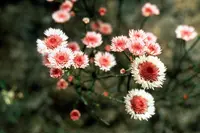
Actinodium
Actinodium cunninghamii
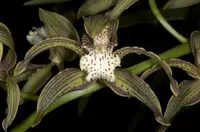
Tracy's cymbidium
Cymbidium tracyanum
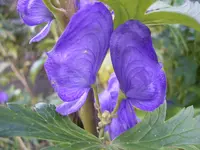
Carmichael's monkshood
Aconitum carmichaelii
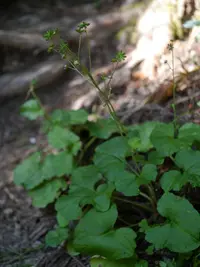
Adenocaulon himalaicum
Adenocaulon himalaicum
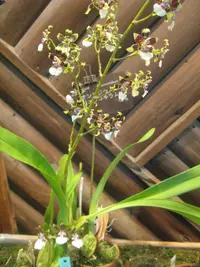
white-lipped oncidium
Oncidium leucochilum
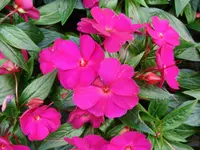
New Guinea Impatiens
Impatiens hawkeri
Douglas iris
Iris douglasiana
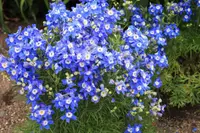
Chinese delphinium
Delphinium grandiflorum