


Discreet staking
Install slender stakes or low grow-through hoops early in the season so the tall, top-heavy stems stay upright in wind and rain without looking obviously supported.

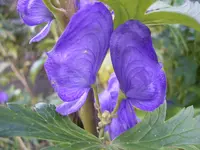
Carmichael's monkshood, Aconitum carmichaelii, is an herbaceous perennial grown mainly for its tall spires of hooded blue to violet flowers. It typically forms upright clumps with divided dark green leaves, creating a strong vertical accent in mixed borders.
This species is native to parts of East Asia, where it grows in cool, moist mountain habitats. It is considered moderately demanding, because it dislikes heat, drought, and waterlogged soil.
Gardeners who learn how to care for Carmichael's monkshood usually find it reliable in cool to mild climates with partial sun and consistently moist, well-drained soil.

Care Difficulty
Moderate Care

Light Preference
Partial Shade

Water Requirements
Keep Soil Moist

Temperature Preference
Cold Hardy

Hardiness Zone
3–8

Soil Texture
Loamy, Clay, Organic-rich

Soil pH
Acidic (5.5–6.5), Slightly acidic (6.5–7.0)

Soil Drainage
Moist but well-drained

Fertilization
Light (every 4–6 weeks)
Scan your plant to receive care tips personalized for your specific plant
Available on iOS and Android
This perennial prefers cool, bright conditions with some protection from intense midday sun.
This species prefers consistently moist, cool soil without becoming waterlogged.
This plant is a hardy perennial adapted to cool to moderate climates.
This species prefers even moisture in the air but usually adapts to typical outdoor garden humidity.
This perennial grows best in cool, moisture-retentive but free-draining soil.
This species can be grown in containers, but the pot must support its tall, upright growth and moisture needs.
This perennial benefits from modest feeding to support tall growth and late-season flowering.
Pruning Aconitum carmichaelii is straightforward and mainly focused on cleanliness and flowering performance.
This species is usually grown in the ground and prefers to stay undisturbed once established.
Propagation is possible but should be done with care, as all parts of the plant are poisonous if ingested and irritating to skin.
Established plants are generally cold hardy and need minimal winter intervention in most temperate gardens.

Plant Health Check
Not sure what's wrong with your plant? Check your plant's health inside the app.
This species flowers very late in the year, often from late summer into mid-fall, providing one of the last sources of nectar for bees and other pollinators in temperate gardens.
It is naturally associated with cooler, mountainous regions of East Asia and shows strong tolerance to low temperatures, often remaining robust in climates where many ornamentals struggle.
Its deep violet-blue flowers have a pronounced hood formed by the upper sepal, a specialized structure that helps shield reproductive parts from rain while guiding pollinators to the nectar.

All parts of Carmichael's monkshood contain potent diterpenoid alkaloids such as aconitine, and documented poisoning cases led to its use being heavily restricted or abandoned in many traditional medicinal practices despite a long historical interest in the plant.
This species usually flowers in late summer to mid-fall, often from August into October, depending on climate. Blooms can last several weeks, especially in cool conditions, before individual spikes gradually fade from the bottom upward.
Keep your plants happy and healthy with plant identification, disease detection, and easy care guidance.

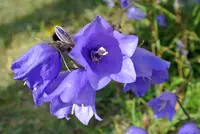
peach-leaved bellflower
Campanula persicifolia
San Felipe dogweed
Adenophyllum porophylloides
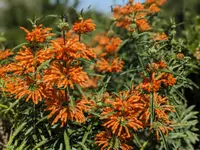
Lion's Tail
Leonotis leonurus
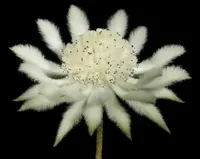
Actinotus leucocephalus
Actinotus leucocephalus

New Guinea Impatiens
Impatiens hawkeri
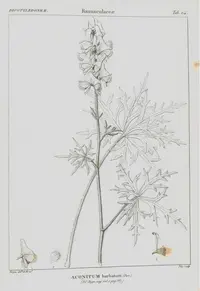
slenderleaf monkshood
Aconitum barbatum
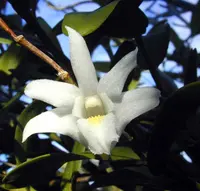
pigeon orchid
Dendrobium crumenatum

Douglas iris
Iris douglasiana