peach-leaved bellflower Care (Campanula persicifolia)

Also known as: peachleaf bellflower, Peach-bells
peach-leaved bellflower

About peach-leaved bellflower

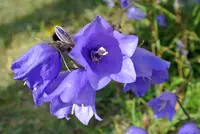
Peach-leaved bellflower, Campanula persicifolia, is a clump-forming perennial grown for its upright stems topped with soft blue or white bell-shaped flowers. Plants usually have narrow, lance-like leaves that resemble those of a peach tree, which gives the species its common name.

In the wild it occurs in meadows, open woodlands, and light mountain forests across Europe, often in moderately fertile, well-drained soils. It is generally considered easy to grow, as long as the soil does not stay waterlogged and the site offers at least moderate light. Gardeners who learn how to care for peach-leaved bellflower appreciate its reliable summer flowering and neat, vertical habit in mixed borders.

Main Plant Requirements

Care Difficulty

Easy Care

Light Preference

Partial Sun

Water Requirements

Moderate Water

Temperature Preference

Cold Hardy

Hardiness Zone

3–7

Soil Texture

Sandy, Loamy, Organic-rich

Soil pH

Acidic (5.5–6.5), Slightly acidic (6.5–7.0)

Soil Drainage

Moist but well-drained

Fertilization

Light (every 4–6 weeks)

Get Personalized Care Plan

Scan your plant to receive care tips personalized for your specific plant

Available on iOS and Android

How to Care for the peach-leaved bellflower

This perennial prefers bright conditions with gentle sun to produce strong flowering.

  • Provide 4–6 hours of direct morning sun with light or dappled shade in the afternoon to prevent leaf scorch, especially in warmer regions.
  • Allow partial shade, particularly in hot summers; flowering of peach-leaved bellflower may decrease if it receives less than 3–4 hours of direct light daily.
  • In cooler climates, it can handle full sun, but monitor during heatwaves and use neighboring plants or light mulch to protect roots from overheating.

This species needs consistent moisture in free-draining soil to stay healthy and flower well.

  • Water when the top 3–5 cm of soil feels dry, aiming for soil that is evenly moist but never waterlogged to protect the roots.
  • Increase watering during hot, dry periods and reduce in cool or rainy weather, using soil feel rather than a fixed schedule to guide frequency.
  • Watch for yellowing, soft stems as a sign of overwatering, and for limp, drooping leaves with dry soil as an indicator that Campanula persicifolia is too dry.

This hardy perennial tolerates a wide temperature range but grows best in moderate conditions.

  • Active growth and flowering are strongest around 60–75°F (16–24°C), typical of late spring and early summer in many temperate climates.
  • Mature plants tolerate winter cold down to about -20°F (-29°C) in the ground with good drainage, though young plants benefit from light mulch protection.
  • In hot spells above 85°F (29°C), flowering may slow; provide extra mulch and soil moisture to buffer roots from heat stress and reduce plant decline.

This species manages well in typical indoor humidity but benefits from slightly moist air in heated homes.

  • Aim for 40–60% humidity; most household levels suit peach-leaved bellflower without special equipment.
  • Leaves curling at edges or browning tips signal air that is too dry or heat stress rather than root issues.
  • Group plants together or place the pot on a pebble tray with water below the pot base to gently raise local humidity.

This plant prefers loose, moist, well-drained mineral-organic soil that does not stay waterlogged.

  • Use a loamy mix with roughly equal parts garden soil, compost, and coarse sand or fine grit to balance nutrients and drainage.
  • Aim for slightly acidic to neutral pH, around 6.0–7.0, which keeps nutrients like iron and manganese available.
  • Add coarse sand or perlite to heavy or clay soil to improve aeration and reduce the risk of root rot.
  • Avoid compacted, peat-heavy mixes that stay soggy, and avoid pure sand or rubble that dries out within hours.

Campanula persicifolia grows reliably in containers outdoors when given enough depth and drainage.

  • Choose a pot at least 25–30 cm deep so the taproot can develop without curling tightly at the base.
  • Select a heavier material like ceramic or clay to stabilize tall flower stems in wind-prone sites.
  • Raise the pot slightly on feet or bricks so drainage holes stay clear and water does not pool under the container.

Campanula persicifolia benefits from light, balanced feeding during its active growing and flowering period.

  • Apply a balanced NPK fertilizer at half strength every 4–6 weeks from spring to mid-summer.
  • Use a slow-release granular fertilizer or a diluted liquid feed for container-grown plants.
  • Incorporate a thin layer of compost around plants in spring to support soil fertility.
  • Stop feeding in late summer and do not fertilize during winter dormancy.

Pruning supports tidy growth and sustained flowering in Campanula persicifolia.

  • Deadhead spent flower stalks in summer to encourage repeat blooming and reduce self-seeding.
  • In late autumn or early spring, cut back dead or damaged stems to just above ground level.
  • Thin crowded shoots at the base to improve air flow and maintain an upright clump shape.
  • Use clean, sharp scissors or hand pruners and disinfect blades when moving between plants.

This perennial is more often transplanted in beds than repotted, but container plants may occasionally need fresh space.

  • Transplant or repot in early spring or early autumn to avoid heat stress and support quick establishment.
  • Look for roots circling the container, water running straight through, or slowed growth as signs it needs attention.
  • Shift to a container 2–5 cm wider, loosening the outer roots gently to limit transplant shock.
  • Water thoroughly after planting, then keep soil evenly moist and shaded for several days to reduce stress.

Campanula persicifolia is commonly propagated by seed or by lifting and dividing mature clumps.

  • Sow seeds in late winter–spring on the surface of moist, well-drained mix and keep at 60–68°F with bright, indirect light.
  • Do not cover fine seed heavily; a light dusting of mix or vermiculite is enough for germination.
  • Divide established clumps in early spring or early autumn, replanting sections with several shoots and healthy roots.
  • Water newly divided or seeded areas gently and maintain consistent moisture until growth is well established.

This species is generally cold hardy in temperate climates and needs only modest winter attention outdoors.

  • Once frost blackens foliage, cut stems back close to the crown to reduce disease carryover.
  • Apply a 5–8 cm mulch layer around the root zone in late autumn, avoiding direct contact with the crown.
  • In very cold regions or exposed sites, add extra mulch or evergreen boughs for insulation.
  • Move containers to a sheltered, unheated area where soil stays cold but not constantly waterlogged.

Care Tips

Staggered Division

Lift and divide mature clumps every 3–4 years in early spring or early fall, replanting only the youngest, most vigorous outer sections to maintain strong flowering and prevent congestion in the center of the clump.

Targeted Flower Staking

Insert thin, discreet stakes or short link-stakes around tall stems just before bud formation so the plant is supported against wind and heavy rain without needing to tie up floppy stems after they have already bent.

Basal Shoot Selection

In spring, thin crowded basal shoots by pinching out the weakest ones at soil level, which directs energy into fewer, stronger flowering stems and reduces humidity in the crown that can favor fungal issues.

Seed Head Management

If self-seeding is desired, leave a few spent flower stems to ripen and scatter seed, but remove most seed heads promptly so the plant does not overexert itself on seed production at the expense of next year’s vigor.

Slime Barrier For Slugs

To protect young rosettes from slug damage, place a rough-textured barrier such as a ring of horticultural grit or crushed lava rock around the crown, and combine this with evening slug checks during the peak growing season when caring for peach-leaved bellflower.

Common Pests and Diseases

Aphids

This pest clusters on tender stems and flower buds, sucking sap and causing distortion, sticky honeydew, and reduced flowering.

Solution

Spray colonies off with a firm stream of water, then treat remaining insects with insecticidal soap or a ready-to-use neem oil spray, repeating weekly until under control; encourage natural predators like lady beetles by avoiding broad-spectrum insecticides nearby.

Leaf miners

These insects create winding, pale tunnels inside leaves, which can cause cosmetic damage and premature leaf yellowing on peach-leaved bellflower clumps.

Solution

Remove and dispose of affected leaves to break the life cycle, then use a spinosad-based spray on new growth if damage continues, applying in the evening and ensuring thorough coverage of both leaf surfaces.

Slugs and snails

These pests chew irregular holes in leaves and flowers, often leaving shiny slime trails, and can severely disfigure young Campanula plants in damp conditions.

Solution

Hand-pick at dusk or early morning, use iron phosphate slug pellets around clumps according to label directions, and reduce hiding places by clearing debris and keeping mulch thin around the plant crowns.

Powdery mildew

This disease produces a white, powdery coating on leaves and stems, leading to yellowing and reduced vigor in crowded or shaded plantings.

Solution

Improve air circulation by thinning or spacing plants, water at soil level rather than over foliage, remove heavily affected leaves, and apply a labeled fungicide such as a sulfur or potassium bicarbonate product at the first signs of infection.

Rust

This disease shows as small orange to brown pustules on the undersides of leaves, with yellow spots on the upper surface and possible early leaf drop.

Solution

Promptly remove and discard infected leaves, avoid wetting foliage, keep clumps well spaced, and apply a rust-labeled fungicide if new pustules keep appearing, focusing on young leaves and following the interval recommended on the product label.

Interesting Facts

Peach-like foliage

The species name persicifolia means peach-leaved and refers to its narrow, lance-shaped basal leaves that resemble those of a peach tree more than typical broad bellflower leaves.

Two flower forms

This species naturally occurs with both single and double flowers, a trait that has been selected in cultivation to create popular double-flowered cultivars with very full, layered corollas.

Short-lived perennial strategy

Although often described as a perennial, individual plants of this species are relatively short-lived and tend to persist in gardens by self-seeding into suitable open soil rather than surviving many years from the original crown.

Botan icon

Did you know?

In parts of central and northern Europe, this species is considered an archaeophyte, meaning it has been associated with human cultivation and disturbed habitats such as old meadows and field margins for many centuries, likely spreading alongside traditional agriculture.

FAQs about peach-leaved bellflower

Poor flowering often comes from too little light, excess shade from neighboring plants, or nutrient imbalance, especially high nitrogen. Old, crowded clumps also bloom less. Divide every few years and deadhead spent stems to maintain strong flowering.

Grow Healthy Plants with Botan Care

Keep your plants happy and healthy with plant identification, disease detection, and easy care guidance.

Botan plant care app — identify plants on mobile

Explore More Plants