Encourage Bushier Growth
Pinch back soft shoot tips when plants reach 15–20 cm tall to encourage branching and a fuller, more floriferous mound rather than tall, floppy stems.

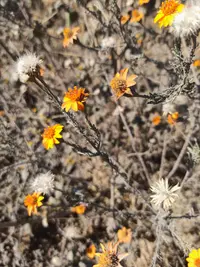
Poreleaf dogweed, Adenophyllum porophyllum, is an aromatic annual herb in the daisy family, often grown for its fine, lacy foliage and strong scent. It usually forms a loose, upright clump with slender stems and small yellow flower heads.
This species is native to arid and semi-arid regions of the southwestern United States and Mexico, where it thrives in dry, open habitats. Its adaptation to poor, well-drained soils and low moisture makes it relatively undemanding in cultivation.
Because it prefers full sun, lean soil, and limited watering, gardeners who understand how to care for poreleaf dogweed often find it an easy plant in xeric or low-maintenance plantings.

Care Difficulty
Easy Care

Light Preference
Full Sun

Water Requirements
Low Water

Temperature Preference
Warm Climate

Hardiness Zone
8–11

Soil Texture
Sandy, Loamy, Rocky

Soil pH
Slightly acidic (6.5–7.0), Neutral (7.0)

Soil Drainage
Well-drained

Fertilization
Minimal (feed rarely)
Scan your plant to receive care tips personalized for your specific plant
Available on iOS and Android
This sun-loving annual thrives in bright, open sites typical of dry grasslands and roadsides.
This drought-tolerant species prefers infrequent, deep watering that allows the soil to dry between soakings.
This warm-season plant is adapted to hot, dry climates with mild winters and strong summer heat.
This species tolerates typical indoor humidity but benefits from slightly dry air.
This species prefers lean, well-drained, slightly sandy soil that never stays waterlogged.
This plant can be grown successfully in containers outdoors when drainage is managed carefully.
This species is a light feeder and often grows well in lean soils, so fertilizing poreleaf dogweed should stay modest.
Pruning Adenophyllum porophyllum focuses on maintaining a tidy shape and supporting flowering.
This species is more often grown in the ground than in pots, so care focuses on transplanting rather than frequent repotting.
New Adenophyllum porophyllum plants are most commonly raised from seed, with stem cuttings used less often.
This warm-region species has limited frost tolerance, so some winter attention is useful in cooler climates.

Plant Health Check
Not sure what's wrong with your plant? Check your plant's health inside the app.
The leaves and stems carry conspicuous resin glands that appear as translucent dots, which is why the species is called poreleaf dogweed.
This species produces a strong, often pungent scent from its resinous glands, a trait thought to deter herbivores and reduce insect damage in its arid native habitats.
It is native to dry, open habitats of the southwestern United States and Mexico, where it grows as a short-lived herb in disturbed soils and along rocky slopes.
Lack of flowering usually comes from insufficient light, excessive nitrogen fertilizer, or plants that are still too young. Ensure it receives strong sun, avoid high-nitrogen feeds, and allow a full growing season for buds to develop.
Keep your plants happy and healthy with plant identification, disease detection, and easy care guidance.