desert globemallow Care (Sphaeralcea ambigua)

Also known as: apricot mallow, Desert Mallow
desert globemallow

About desert globemallow

Desert globemallow, Sphaeralcea ambigua, is a small, long-lived shrub native to arid regions of the southwestern United States and northern Mexico. It naturally occurs on dry slopes, desert scrub, and open, rocky ground.

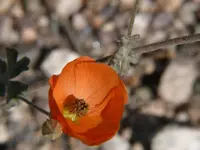
Plants form bushy clumps with gray-green, softly hairy leaves and many slim stems topped with orange, cup-shaped flowers. Blooming can be very long in mild climates.

This species is adapted to heat, drought, and poor soils, which makes it relatively easy in dry gardens if drainage is excellent. It suits low-water landscapes and anyone who wants to learn how to care for desert globemallow without frequent watering.

Main Plant Requirements

Care Difficulty

Easy Care

Light Preference

Full Sun

Water Requirements

Low Water

Temperature Preference

Cold Hardy

Hardiness Zone

6–9

Soil Texture

Sandy, Loamy, Rocky

Soil pH

Neutral (7.0), Slightly alkaline (7.0–7.5)

Soil Drainage

Well-drained

Fertilization

Minimal (feed rarely)

Get Personalized Care Plan

Scan your plant to receive care tips personalized for your specific plant

Available on iOS and Android

How to Care for the desert globemallow

This sun-loving perennial from arid regions thrives in strong, direct light when established.

  • Provide 6–8 hours of direct sun daily; full sun is best for compact growth and abundant flowering in desert globemallow.
  • In very hot, low-desert climates, allow light afternoon shade or filtered sun after 2–3 pm to reduce leaf scorch and stress.
  • In cooler seasons or coastal areas, choose an open, unobstructed site; avoid dense shade, which causes leggy stems and poor bloom.

This drought-adapted shrub prefers infrequent, deep watering rather than frequent light moisture.

  • Allow the top 5–8 cm of soil to dry completely before watering, then soak the root zone deeply and let excess drain away.
  • During hot, dry months, monitor leaves; slight midday wilting that recovers by evening is normal, persistent limp foliage signals the need for water.
  • In winter, water Sphaeralcea ambigua only during extended dry spells; yellowing, soft stems or a sour soil smell indicate overwatering and poor drainage.

This desert perennial handles a wide temperature range but performs best within moderate warmth.

  • Optimal growth occurs around 70–90°F (21–32°C), with strong flowering in warm, dry conditions and good air circulation.
  • Mature plants typically tolerate down to about 15–20°F (-9 to -6°C); light frosts may burn foliage but roots often survive and resprout.
  • In extreme heat above 100°F (38°C), expect some leaf scorch; mulch lightly and avoid overhead watering during the hottest part of the day to limit stress.

Humidity is rarely a concern for Sphaeralcea ambigua, which is adapted to very dry air.

Sphaeralcea ambigua prefers very well-drained, lean, sandy soil that mimics arid native habitats.

  • Use a gritty mix such as 50–70% coarse sand or fine gravel blended with 30–50% native soil or cactus mix.
  • Aim for slightly alkaline to neutral pH around 7.0–8.0, avoiding strongly acidic mixes.
  • Avoid heavy clay or peat-heavy media that hold water and stay wet for more than 1–2 days.
  • Improve drainage and aeration in marginal soils by raising the planting area or forming shallow mounds.

This species can be grown in containers outdoors if drainage is kept very sharp.

  • Select a wide, heavy container to stabilize the plant against wind and its shrubby top growth.
  • Use a cactus-style mix with extra pumice or gravel so water drains through within seconds of watering.
  • Choose unglazed clay pots where possible, since they allow faster evaporation and reduce root-zone moisture buildup.

This desert native needs minimal feeding, but light fertilization can support flowering in poor soils.

  • Apply a low-strength balanced NPK fertilizer (about 1/4 strength) once in mid-spring if growth is weak.
  • Alternatively, top-dress with a thin layer of compost, keeping it away from the stems.
  • Stop feeding desert globemallow by late summer to allow natural hardening for winter.

Pruning Sphaeralcea ambigua is useful to maintain a compact, flowering shape and remove stressed growth.

  • Cut back dead, damaged, or diseased stems at ground level in late winter or very early spring.
  • Lightly shear or tip back leggy growth after the main bloom to encourage denser branching.
  • Use clean, sharp hand pruners to make small, angled cuts just above healthy buds.
  • Avoid cutting into old woody bases too hard, as this can reduce vigor and flowering.

This species is usually grown in the ground, so focus on careful transplanting rather than frequent repotting.

  • Transplant in early spring or fall, when temperatures are mild and soil is workable.
  • Move plants only when necessary, such as poor performance, overcrowding, or construction work.
  • Lift with a wide root ball, disturb roots as little as possible, and replant at the same depth.
  • Water deeply after transplanting, then allow soil to dry between waterings to limit transplant shock.

Sphaeralcea ambigua is commonly propagated from seed, with cuttings used less often.

  • Collect ripe seed pods in late summer and dry them before extracting seeds.
  • Sow seeds in late winter–early spring in a gritty, fast-draining mix, barely covering them.
  • Provide bright light and moderate warmth (65–75°F), keeping the medium just slightly moist.
  • For semi-woody cuttings, take non-flowering tips in late spring and root in a sandy mix.

This plant is quite cold hardy in dry climates and usually needs only minimal winter care.

  • Established plants tolerate light to moderate frost, especially in well-drained soil.
  • In colder or wetter regions, apply a thin gravel or organic mulch around the root zone, not touching stems.
  • Container plants in very cold areas can be moved to a bright, cool, frost-free spot for winter.

Care Tips

Establish deep roots

During the first growing season, give one slow, deep soak every 10–14 days rather than frequent light watering to encourage a deep taproot that will make caring for desert globemallow easier in long dry spells.

Skip summer deadheading

In hot, arid climates, avoid heavy deadheading in midsummer and instead trim lightly only where stems become woody or tangled to reduce stress and preserve the plant’s natural drought resilience.

Renew with hard cutback

Every 2–3 years, cut the plant back to 15–20 cm above the crown in late winter to remove old woody growth and stimulate a flush of dense, floriferous new stems.

Use gravel mulch

Apply a thin 2–3 cm layer of coarse gravel around the base instead of organic mulch to suppress weeds, keep the root collar dry, and mimic the plant’s natural rocky habitat.

Monitor self-seeding

Allow a limited number of seed pods to mature and drop if you want a natural drift, but remove excess spent stems before seeds ripen to prevent the plant from colonizing more space than intended.

Common Pests and Diseases

Spider mites

This pest thrives on desert globemallow foliage in hot, dry conditions, causing stippling, bronzing, and fine webbing on leaves. Severe feeding can lead to leaf drop and a generally dusty, stressed appearance.

Solution

Rinse foliage thoroughly with a firm spray of water, focusing on leaf undersides, and repeat every few days until populations drop. For persistent infestations, use insecticidal soap or horticultural oil labeled for mites and reduce drought stress slightly while still keeping the soil on the dry side typical for Sphaeralcea ambigua care.

Leaf rust

This disease produces yellow to orange spots on upper leaf surfaces and powdery orange pustules on the undersides. Symptoms include premature yellowing and dropping of lower leaves, especially in crowded or overhead-watered plantings.

Solution

Remove and discard affected leaves to reduce spore spread, and avoid overhead watering so foliage stays dry. Improve spacing and airflow, and if the problem is severe, apply a sulfur or copper-based fungicide labeled for rust on ornamental plants, following label directions carefully.

Leaf spots

This disease causes small tan, brown, or dark purple spots on leaves that may merge into larger blotches, sometimes with a pale halo. Symptoms include thinning foliage on older parts of the plant during humid or unseasonably wet periods.

Solution

Prune out badly affected stems and collect fallen leaves to limit reinfection, then water at soil level to keep foliage dry. Increase sun exposure and air movement around plants; in persistent cases, a broad-spectrum ornamental fungicide can be used early in the season when spots first appear.

Aphids

These insects cluster on tender shoot tips and flower stalks, sucking sap and causing curled, distorted new growth. Sticky honeydew and sooty mold can develop on leaves beneath colonies.

Solution

Dislodge aphids with a strong stream of water every few days, and pinch back heavily infested tips if needed. For ongoing problems, apply insecticidal soap or a light horticultural oil in the early morning, repeating as needed while protecting nearby beneficial insects.

Root-knot nematodes

These microscopic worms attack roots in sandy, low-organic soils, causing galls or swellings on roots and leading to stunted growth and reduced flowering. Symptoms include plants that wilt quickly in heat despite apparently adequate moisture and never establish well.

Solution

Remove and discard severely affected plants and avoid replanting desert globemallow in the same exact spot. Improve soil health by adding coarse organic matter, using resistant or non-host plants in rotation, and where practical, solarize infested soil during the hottest part of summer to reduce nematode populations.

Interesting Facts

Desert-adapted leaf hairs

The leaves are densely covered with fine star-shaped hairs that give the plant its gray-green color and help reduce water loss and leaf temperature in intense desert sun.

Specialist pollinator relationships

Its orange to apricot flowers are an important nectar and pollen source for native desert bees and butterflies, including specialist bees that preferentially visit globe mallows in the Mojave and Sonoran deserts.

High salinity tolerance

This species can grow on alkaline and moderately saline soils typical of arid basins, where many other perennials struggle to survive.

Botan icon

Did you know?

Genetic and field studies show that Sphaeralcea ambigua forms natural hybrid zones with closely related globe mallow species, creating populations with intermediate flower colors and leaf forms in areas where their ranges overlap.

FAQs about desert globemallow

Poor flowering usually comes from too little sun, overly rich or moist soil, or heavy summer pruning. Ensure full exposure, avoid high-nitrogen fertiliser, and prune lightly only after main bloom flush to maintain flower production.

Grow Healthy Plants with Botan Care

Keep your plants happy and healthy with plant identification, disease detection, and easy care guidance.

Botan plant care app — identify plants on mobile

Explore More Plants