fuchsiaflower gooseberry Care (Ribes speciosum)

Also known as: fuchsia-flowered gooseberry
fuchsiaflower gooseberry

About fuchsiaflower gooseberry

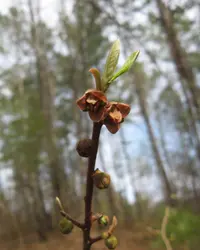
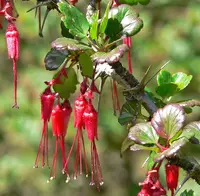
Fuchsiaflower gooseberry, Ribes speciosum, is a thorny deciduous shrub grown mainly for its striking, pendulous red flowers that resemble small fuchsias. It forms a dense, arching framework with spiny branches, making it useful as a barrier or informal hedge.

This species is native to coastal and chaparral habitats of California and Baja California, where it thrives in mild, dry-summer climates. It is generally considered moderate in difficulty, as it prefers specific conditions and resents heavy disturbance once established.

Plants grow best with sun to light shade, well-drained soil, and occasional moisture during dry periods. Gardeners who learn how to care for fuchsiaflower gooseberry usually find it a long-lived, low-maintenance landscape shrub.

Main Plant Requirements

Care Difficulty

Moderate Care

Light Preference

Partial Sun

Water Requirements

Moderate Water

Temperature Preference

Cold Hardy

Hardiness Zone

7–10

Soil Texture

Sandy, Loamy, Rocky

Soil pH

Acidic (5.5–6.5), Slightly acidic (6.5–7.0)

Soil Drainage

Well-drained

Fertilization

Minimal (feed rarely)

Get Personalized Care Plan

Scan your plant to receive care tips personalized for your specific plant

Available on iOS and Android

How to Care for the fuchsiaflower gooseberry

Ribes speciosum prefers bright outdoor conditions with a balance of sun and light shade.

  • Provide 4–6 hours of sun daily, best as morning sun with light afternoon shade, to support flowering on fuchsiaflower gooseberry.
  • In hotter regions, place in dappled or filtered light after 12 p.m. to prevent leaf scorch and dry, stressed foliage.
  • In cooler climates, a site with full sun in winter and light afternoon shade in summer gives strong growth and more blooms.

This shrub prefers evenly moist but not saturated soil, especially during the growing season.

  • Water when the top 3–5 cm of soil feels dry, soaking the root zone deeply, then let excess drain away fully.
  • Reduce watering in fall and winter, only moistening the soil when it has clearly dried, to limit root rot risk.
  • Watch leaves: yellowing, soft foliage can signal overwatering, while limp, browning leaf edges and twig dieback suggest the plant is too dry.

This species is a hardy shrub that tolerates cool winters and mild to warm summers.

  • Optimal growth occurs around 60–75°F (16–24°C), with good flowering in regions that have cool, moist winters and dry summers.
  • Established plants can tolerate down to about 10–15°F (-12 to -9°C), going dormant and leafless through winter in many climates.
  • Heat above 90°F (32°C) can stress the plant; combine mulch with afternoon shade and consistent soil moisture during hot spells.

This shrub handles typical outdoor humidity well, so humidity management is rarely necessary.

This shrub prefers well-structured, free-draining soil that does not stay waterlogged.

  • Use a loamy or sandy-loam soil with moderate organic matter to support anchoring roots and balanced moisture retention.
  • Aim for slightly acidic to neutral pH around 6.0–7.0, avoiding very alkaline or compacted clay conditions.
  • In heavy soils, incorporate coarse sand or fine gravel plus compost to improve drainage and aeration before planting.
  • Avoid sites where water pools after rain, since persistent saturation promotes root rot in Ribes speciosum.

This species can be grown in containers if the pot is large and stable enough for its arching, spiny branches.

  • Select a deep, heavy container that resists tipping and provides room for a substantial root system to anchor the shrub.
  • Use a sharply draining mix, such as 2 parts loam-based compost with 1 part coarse grit, to prevent prolonged saturation after watering.
  • Raise the pot on feet or bricks so drainage holes stay clear and excess water leaves quickly, especially after winter rain.

Ribes speciosum benefits from light feeding but often performs well in reasonably fertile garden soil.

  • Apply a thin layer of compost around the root zone in early spring to support flowering and new growth.
  • Use a balanced slow-release fertilizer (around 8-8-8 to 10-10-10) once in early spring at label rates for shrubs.
  • Avoid high-nitrogen lawn fertilizers, which can lead to soft, leafy growth and fewer flowers on fuchsiaflower gooseberry.
  • Stop feeding by late summer and do not fertilize during winter dormancy to prevent weak, frost-prone growth.

Ribes speciosum responds well to thoughtful pruning that maintains its arching shape and flowering wood.

  • Prune just after flowering in late spring so next year’s flower buds on older wood are not removed.
  • Cut out dead, diseased, or storm-damaged stems at the base using clean, sharp bypass pruners.
  • Thin crowded interior shoots to improve air flow and light penetration, reducing fungal issues and encouraging stronger flowering.
  • Lightly shorten overly long branches to preserve the natural fountain form rather than creating tight, formal shapes.

This shrub is usually grown in the ground, so focus on careful transplanting rather than frequent repotting.

  • Transplant in late fall or early spring when the plant is dormant and soil is workable.
  • Choose a sunny to lightly shaded site with well-drained soil and dig a hole slightly wider but no deeper than the root ball.
  • Handle the root ball gently; loosen circling roots only lightly to reduce stress and water thoroughly after planting.
  • Expect established plants to dislike repeated moves; plan locations so transplanting is needed only every many years.

Ribes speciosum is most often propagated vegetatively to maintain desirable flowering traits.

  • Take semi-ripe cuttings in late summer, 8–12 cm long, and root them in a free-draining, slightly moist medium under bright, indirect light.
  • Use hardwood cuttings in late fall or winter, inserting leafless shoots into gritty soil outdoors or in a cold frame.
  • Try simple layering in spring by pegging a flexible low stem to the soil until roots form, then detach and transplant.
  • Seeds are possible but slow and variable; they need cold stratification, so sow in trays left outdoors over winter.

This shrub is generally hardy in mild to moderate winter climates and needs only modest preparation.

  • Tolerates light to moderate frost once established, but very young plants are more sensitive to extreme cold.
  • Apply a 5–8 cm layer of organic mulch around the root zone in late fall, keeping it slightly away from the stems.
  • In colder areas or exposed sites, shelter from harsh drying winds to limit twig dieback and winter burn.
  • Container-grown plants in frosty regions can be moved to an unheated garage or porch to buffer temperature swings.

Care Tips

Branch fan-training

Install a low wire or trellis and gently fan out young shoots horizontally in late winter to create an open, airy framework that shows off the flowers and improves light and air penetration into the plant.

Spine-safe maintenance

Wear thick gloves and use long-handled pruners when shaping or thinning the shrub so you can safely reach into the spiny interior to remove weak, crossing, or congested stems without damaging buds or skin.

Targeted mulch collar

Apply a 5–8 cm ring of coarse organic mulch around but not touching the base to suppress weeds, moderate root temperature, and protect shallow feeder roots from disturbance by foot traffic or cultivation.

Dry-season stress check

During extended drought, watch for slight midday leaf droop or early leaf drop on established shrubs as a cue to provide one deep soak rather than frequent light watering to maintain floral performance the following season.

Flower display renewal

Every 2–3 years, remove a portion of the oldest, least-productive stems right after flowering to stimulate new, arching growth that carries the heaviest bloom, which is key when growing fuchsiaflower gooseberry for ornamental impact.

Common Pests and Diseases

Currant aphids

This pest feeds on young shoots and leaf undersides, causing curling, distortion, and sticky honeydew that can lead to sooty mold. Symptoms include stunted new growth and clusters of soft-bodied insects on tender tissue.

Solution

Prune out heavily infested shoot tips and dispose of them. For light infestations, hose down plants with a firm water spray, then use insecticidal soap or a ready-to-use horticultural oil labeled for edible Ribes, ensuring thorough coverage of leaf undersides and repeating as needed.

Currant sawfly

These insects defoliate plants by skeletonizing or completely stripping leaves, often starting low on the shrub and moving upward. Symptoms include rapid leaf loss, ragged foliage, and green caterpillar-like larvae on the leaves.

Solution

Inspect plants frequently in spring and early summer, hand-pick and destroy larvae when numbers are low, and remove heavily infested shoots. For larger infestations, apply a horticultural oil or spinosad-based product labeled for currants, coating foliage thoroughly while avoiding application during bloom to protect pollinators.

Gooseberry powdery mildew

This disease causes white, powdery fungal growth on young leaves, shoots, and sometimes fruit, leading to distorted growth and reduced vigor. Symptoms include curling leaves, stunted shoots, and a felt-like coating on affected tissue.

Solution

Prune to open the center of the shrub, removing dense or crossing branches to improve airflow, and cut out and discard infected shoot tips. Use a sulfur or potassium bicarbonate fungicide labeled for gooseberry and currant, starting early in the season and repeating at recommended intervals during humid or crowded conditions as part of broader Ribes speciosum care instructions.

Leaf spot

This disease produces small brown or purplish spots on leaves that may merge, causing premature leaf drop and reduced plant vigor. Symptoms include thinning foliage and spotted leaves that yellow and fall earlier than normal.

Solution

Collect and dispose of fallen leaves to reduce overwintering spores and avoid overhead watering that wets the foliage for long periods. If the problem recurs, apply a copper-based or other labeled fungicide in early spring and after harvest, and maintain good spacing and pruning to keep foliage dry and well-ventilated.

Currant blister aphid

This pest causes raised, blister-like, red or yellow patches on leaves while feeding on sap inside distorted tissue. Symptoms include puckered leaves with discolored blisters, mainly on upper leaf surfaces.

Solution

Remove and discard heavily affected leaves early in the season to reduce population buildup. Encourage beneficial insects, avoid high-nitrogen fertilization that promotes soft growth, and if needed apply insecticidal soap to expanding foliage in spring, ensuring coverage of both leaf surfaces.

Interesting Facts

Hummingbird‑specialized flowers

The long, tubular scarlet flowers hang beneath spiny stems and are shaped so that hummingbirds, especially in coastal California, are the main effective pollinators.

Spines from modified shoots

The very sharp spines at the nodes are modified short shoots, an adaptation that helps protect the shrub from browsing animals in its native chaparral and coastal scrub habitats.

Summer drought strategy

In its native range, this species often slows growth and can look sparse in the dry summer season, an adaptation to the Mediterranean climate with wet winters and long dry periods.

Botan icon

Did you know?

Ribes speciosum is one of the few gooseberries that became valued more as an ornamental shrub than as a fruit crop, selected in 19th‑century California and Europe primarily for its showy pendant flowers rather than for edible berries.

FAQs about fuchsiaflower gooseberry

Poor flowering often results from pruning at the wrong time, excessive shade, or drought stress. This shrub forms buds on older wood, so heavy winter pruning removes blooms. Ensure stable moisture, good light, and avoid hard cutting except right after flowering.

Grow Healthy Plants with Botan Care

Keep your plants happy and healthy with plant identification, disease detection, and easy care guidance.

Botan plant care app — identify plants on mobile

Explore More Plants