Establish deep roots
During the first growing season, water more deeply but less frequently to encourage a deep root system, which greatly improves drought resilience and long-term stability in sandy or gravelly sites.

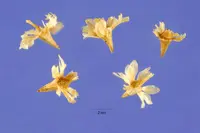
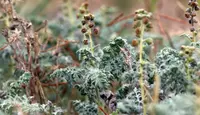
Singlewhorl burrobrush (Ambrosia monogyra) is a small, finely branched shrub native to arid and semi-arid regions of the southwestern United States and northern Mexico. It typically grows with a loose, airy form and narrow, threadlike leaves that give it a delicate, feathery look.
This species is adapted to dry, rocky washes and desert slopes, where it tolerates heat, drought, and poor soils. It produces small, inconspicuous flowers that are wind-pollinated and can trigger allergies in sensitive people.
Because of its drought tolerance and low nutrient needs, it is generally easy to grow in dry landscapes. Gardeners who want to care for Singlewhorl Burrobrush should provide full sun, well-drained soil, and minimal watering once established.

Care Difficulty
Easy Care

Light Preference
Full Sun

Water Requirements
Low Water

Temperature Preference
Warm Climate

Hardiness Zone
8–10

Soil Texture
Sandy, Loamy, Rocky

Soil pH
Slightly acidic (6.5–7.0), Slightly alkaline (7.0–7.5)

Soil Drainage
Well-drained

Fertilization
Minimal (feed rarely)
Scan your plant to receive care tips personalized for your specific plant
Available on iOS and Android
This desert shrub needs strong light to flower and keep its airy form.
This species is drought-adapted and prefers dry to slightly moist soil conditions.
This plant is adapted to hot, dry climates with mild winters.
Ambrosia monogyra is highly drought-adapted and humidity is rarely a concern in typical indoor air.
This shrub prefers very lean, fast-draining mineral soils that mimic arid habitats.
This species can be grown in containers, but only long term if dry, mineral conditions are maintained.
Ambrosia monogyra is a tough native shrub that usually needs minimal supplemental feeding in average to poor soils.
Ambrosia monogyra benefits from light, targeted pruning to maintain a natural, airy form and healthy wood.
This shrub is usually established directly in the ground, so care focuses on thoughtful transplanting rather than routine repotting.
Propagation of Ambrosia monogyra is usually done from seed, reflecting its natural regeneration in dry habitats.
Established plants are generally cold hardy in much of their native range and need little active winter care.

Plant Health Check
Not sure what's wrong with your plant? Check your plant's health inside the app.
This shrub has extremely narrow, thread-like leaves that can be only 0.5–1 mm wide, giving the entire plant a wispy, smoke-like appearance quite unlike most other ragweeds.
It is naturally restricted to arid and semi-arid washes and dry stream channels in the southwestern United States and northern Mexico, where it is adapted to flash-flooding and highly draining, gravelly soils.
Although often overlooked, this species flowers late in the season and produces wind-dispersed pollen that contributes to desert ragweed pollen loads and serves as a late resource for certain insects that visit its inflorescences.

Genetic and morphological studies have shown that this species is distinct within the ragweed group, and older botanical literature placed it in a separate genus, Hymenoclea, before it was reclassified into Ambrosia based on more detailed taxonomic research.
This species can self-seed readily in suitable dry, disturbed sites, forming loose colonies over time. In parts of the southwestern US it may behave weedy, so monitor seedlings and remove unwanted volunteers before they mature and set seed.
Keep your plants happy and healthy with plant identification, disease detection, and easy care guidance.