Control Spreading
Install a shallow root barrier or use deep edging around beds to contain its creeping root system and make long-term management easier when growing dwarf bur ragweed in mixed plantings.

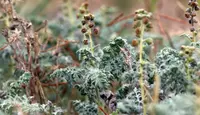
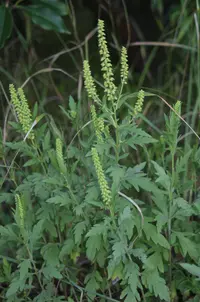
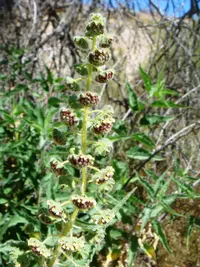
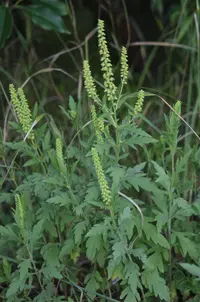
Dwarf bur ragweed (Ambrosia pumila) is a small, perennial herb in the sunflower family, forming low clumps or patches close to the ground. Its leaves are finely divided and gray‑green, giving the plant a soft, somewhat fernlike look, while its flowers are small and not showy.
This species is native to southern California and northern Baja California, where it grows in open, dry sites, often in disturbed or sandy soils. It is drought-tolerant and long-lived but can be slow to establish, which influences how to care for dwarf bur ragweed in cultivation.
The plant prefers full sun, well-drained soil, and low to moderate moisture, and it generally suits gardeners who are comfortable with less ornamental, more naturalistic plantings.

Care Difficulty
Moderate Care

Light Preference
Full Sun

Water Requirements
Low Water

Temperature Preference
Warm Climate

Hardiness Zone
8–10

Soil Texture
Sandy, Loamy

Soil pH
Slightly acidic (6.5–7.0), Neutral (7.0)

Soil Drainage
Well-drained

Fertilization
Minimal (feed rarely)
Scan your plant to receive care tips personalized for your specific plant
Available on iOS and Android
This low-growing perennial prefers bright, open sites with strong light but not extreme exposure.
This species is drought-tolerant once established and prefers infrequent, deep watering.
This plant is adapted to mild to warm climates with limited frost exposure.
This species tolerates a wide humidity range and usually does not need special humidity control in cultivation.
Ambrosia pumila prefers dry, fast-draining mineral soils that mimic its native sandy and alluvial habitats.
This species can be grown in containers if the pot and substrate are managed to stay sharply drained and not waterlogged.
This endangered native wildflower grows best in lean soils and usually needs little to no fertilizer in garden or restoration settings, so caring for dwarf bur ragweed focuses more on proper light and moisture than feeding.
Pruning Ambrosia pumila is minimal and mainly focused on plant health rather than shaping.
This species is rarely kept as a potted plant, so care centers on careful outdoor transplanting rather than routine repotting.
Propagation of Ambrosia pumila is specialized and usually handled in conservation or nursery settings rather than home gardens.
This perennial from mild climates shows limited frost tolerance and benefits from some winter protection in colder regions.

Plant Health Check
Not sure what's wrong with your plant? Check your plant's health inside the app.
This species is native to a very limited stretch of coastal southern California, where it occurs mainly in coastal sage scrub and grassland habitats on well-drained, often sandy or gravelly soils.
Ambrosia pumila often spreads by rhizomes, forming clonal patches in the soil. This clonal growth allows long-lived underground persistence even when above-ground stems are sparse or damaged.
The plant is listed as endangered under the U.S. Endangered Species Act, and many regional habitat conservation plans specifically track and manage its remaining populations to reduce impacts from urban development and invasive plants.

Genetic studies have shown that many above-ground patches of this species within a site can be part of a single, long-lived genetic individual, which means loss of a patch can represent the loss of unique genetic diversity important for Ambrosia pumila plant care and conservation planning.
This species spreads slowly by short rhizomes and seed, forming low patches rather than large colonies. In typical garden conditions it is not aggressive, but in ideal sandy sites it can gradually expand and fill gaps.
Keep your plants happy and healthy with plant identification, disease detection, and easy care guidance.