Cuman ragweed Care (Ambrosia psilostachya)

Also known as: western ragweed, perennial ragweed
Cuman ragweed

About Cuman ragweed

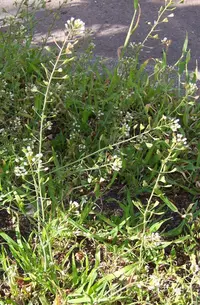
Cuman ragweed (Ambrosia psilostachya) is a hardy perennial weed native to North America, often found in prairies, pastures, roadsides, and disturbed ground. It spreads by creeping roots and forms dense patches over time.

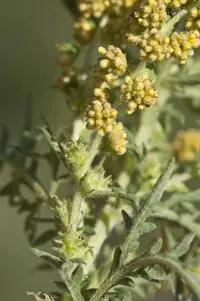
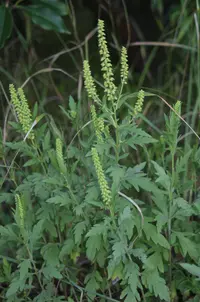
Plants usually grow with upright, branched stems and finely divided, gray‑green leaves that give a somewhat feathery look. In late season it produces small, greenish flower spikes that release large amounts of wind-borne pollen.

This species tolerates drought, poor soil, and full sun, so it survives where many other plants struggle. These same traits make it persistent and sometimes invasive, which is important to consider when planning how to care for Cuman ragweed.

Main Plant Requirements

Care Difficulty

Easy Care

Light Preference

Full Sun

Water Requirements

Low Water

Temperature Preference

Cold Hardy

Hardiness Zone

3–9

Soil Texture

Sandy, Loamy, Rocky

Soil pH

Slightly acidic (6.5–7.0), Slightly alkaline (7.0–7.5)

Soil Drainage

Well-drained

Fertilization

Minimal (feed rarely)

Get Personalized Care Plan

Scan your plant to receive care tips personalized for your specific plant

Available on iOS and Android

How to Care for the Cuman ragweed

This sun-loving perennial thrives in open, exposed sites with long daily light periods.

  • Provide full sun for 6–10 hours per day; light, shifting afternoon shade is acceptable in very hot, dry climates.
  • Cuman ragweed tolerates partial shade (4–5 hours of direct sun), but stems stretch and flowering decreases when light is consistently low.
  • In cooler seasons, full exposure is ideal, while in midsummer monitor for leaf scorch on extremely dry, reflective sites and improve soil moisture rather than reducing sun.

This species is naturally drought-tolerant and prefers infrequent, deeper watering once established.

  • In the first growing season, water when the top 5–7 cm of soil are dry; apply enough to moisten soil 15–20 cm deep, then let it dry again.
  • For established Ambrosia psilostachya in the ground, rely mainly on rainfall, watering only during prolonged dry spells when foliage wilts and does not recover overnight.
  • Use fast-draining, sandy or loamy soil and avoid standing water; yellowing lower leaves and soft stems indicate overwatering, while crisp, brown leaf tips signal chronic drought stress.

This hardy perennial tolerates a wide climate range, from cold winters to hot summers.

  • Active growth is strongest at 65–85°F (18–29°C), with good performance in typical spring and summer outdoor conditions.
  • Mature plants survive winter lows near -20°F (-29°C) in many regions, dying back to the crown and resprouting in spring when soils warm above about 50°F (10°C).
  • Heat tolerance is high up to about 95°F (35°C) if soil moisture is not extremely low, but young plants may stall or scorch in sudden heat waves combined with intense sun and drought.

This species tolerates a wide humidity range and usually does not need special humidity control.

  • Ideal humidity is 30–60%, similar to most outdoor and indoor air in temperate regions.
  • Plants tolerate very dry air but may show slight leaf edge browning or faster soil drying in heated rooms.
  • If foliage repeatedly wilts between waterings, group pots together or place near an open tray of water to slightly raise local humidity.

Ambrosia psilostachya prefers dry, lean, well-drained soil and is highly tolerant of poor sites.

  • Use a sandy or sandy-loam mix with low to moderate organic matter to mimic its prairie and roadside habitats.
  • Aim for pH 6.0–7.5; the plant copes with slightly acidic to slightly alkaline conditions without special amendments.
  • Combine roughly 50–60% coarse sand, 20–30% loam or garden soil, and 10–20% compost for structure plus a small amount of perlite for extra aeration.
  • Avoid heavy clay, compacted beds, or mixes high in peat that stay wet, since persistent moisture around the roots encourages rot and weak growth.

This species can be grown in containers, but its spreading roots and tall stems make management more demanding than in open ground.

  • Choose a deep, heavy container (ceramic or thick-walled) to anchor the tall, wind-catching stems and reduce tipping risk outdoors.
  • Select a pot wide enough to accommodate creeping rhizomes, as cramped lateral space encourages congestion and rapid dry-out.
  • Use a very free-draining mix and raise the pot on feet or bricks so drainage holes stay clear and water runs off quickly after rain.

This tough native perennial generally needs little feeding, especially in fertile or naturalized sites, but light nutrition can support stand establishment.

  • Use a balanced, diluted liquid fertilizer (for example 10-10-10 at 1/4 strength) only for young or newly transplanted Cuman ragweed in poor soils.
  • Apply every 4–6 weeks during active growth in spring–summer, then stop feeding by late summer.
  • In garden beds, a thin top-dressing of compost in spring is usually sufficient.
  • Avoid high-nitrogen products and overfeeding, which encourage weak, overly lush growth.

Pruning for Ambrosia psilostachya is minimal and mainly focuses on sanitation and stand control.

  • Cut back dead or damaged stems in late winter or very early spring using clean, sharp shears.
  • Remove crowded or leaning stems at ground level to thin dense patches and improve air circulation.
  • If height reduction is desired, lightly trim young shoots in late spring before flowering starts.
  • Dispose of flowering stems before seed set if spread needs to be limited.

This species is seldom kept long term in containers and is better managed through careful outdoor transplanting.

  • Transplant in early spring or fall when temperatures are mild and soil is workable.
  • Move plants when they show crowded clumps, poor vigor, or when roots circle inside a nursery pot.
  • Lift clumps with a spade, keeping as much root and attached soil as possible to limit stress.
  • Water thoroughly after transplanting, then keep soil evenly moist (not saturated) for 1–2 weeks to support root re-establishment.

Ambrosia psilostachya is commonly propagated by seed and by division of its spreading rhizomes.

  • Divide established clumps in early spring or fall, lifting sections with several shoots and healthy roots.
  • Replant divisions at the same depth in well-drained soil, then water to settle soil around rhizomes.
  • Sow ripe seeds outdoors in fall or early spring; natural cold exposure aids germination.
  • For controlled seed starting, provide a moist, well-drained medium and bright light, keeping temperatures near local outdoor spring conditions.

This hardy perennial usually needs little winter care in most temperate climates, especially once established in the ground.

  • Plants tolerate typical frosts; stems naturally die back in cold regions while roots persist.
  • In colder areas, apply a 5–8 cm mulch layer over the root zone after soil cools to moderate freeze–thaw cycles.
  • Container-grown plants benefit from shelter near a building wall or in an unheated garage to prevent deep pot freezing.

Care Tips

Rhizome containment

Install a 20–30 cm deep root barrier or plant in bottomless containers sunk into the ground to limit spread of the creeping rhizomes and keep stands manageable for long-term Ambrosia psilostachya plant care.

Targeted stand thinning

Once established, selectively remove weaker or crowded stems in late spring so remaining shoots get better airflow and light, which reduces foliar disease and produces sturdier, more uniform plants.

Managed competition

To stabilize soil without letting this species dominate, interplant with deep-rooted native grasses and periodically mow or trim the ragweed higher than the grass so it persists but does not outcompete the planting mix.

Seed head control

If natural reseeding is not desired, cut and dispose of seed-bearing inflorescences before they fully mature to reduce volunteer seedlings and keep the stand within its intended area.

Disturbance-based renewal

Every 3–4 years, lightly disturb or shallowly cultivate a portion of the patch in late winter to stimulate new rhizome growth and maintain a dense, vigorous cover, especially on erosion-prone sites when growing Cuman ragweed.

Common Pests and Diseases

Leaf beetles

This pest chews ragged holes in leaves and can skeletonize foliage when populations are high.

Solution

Hand-pick beetles where practical and drop them into soapy water, and remove heavily damaged stems to reduce feeding sites; in larger stands, use targeted applications of a spinosad- or pyrethrin-based product in the evening to limit impact on pollinators while managing chewing damage as part of Ambrosia psilostachya care instructions.

Ragweed leaf beetle larvae

These insects feed primarily on new leaves and shoot tips, causing tattered, scorched-looking foliage and slowed growth.

Solution

Inspect young growth regularly, crush or rinse off larvae with a firm stream of water, and encourage natural predators such as lady beetles by avoiding broad-spectrum chemicals; if needed, spot-treat infested patches with a labeled Bacillus thuringiensis (Bt) product directed at leaf-feeding larvae only.

Rust

This disease causes yellow to orange powdery pustules on the undersides of leaves, often leading to premature leaf drop on stressed plants.

Solution

Remove and discard infected leaves and nearby plant debris, avoid overhead watering, and increase spacing or mowing around stands to improve airflow; in severe, persistent cases, use a sulfur or copper fungicide labeled for rust on ornamentals and apply only to actively infected clumps.

Powdery mildew

This disease appears as white to gray, powdery patches on upper leaf surfaces, which can lead to distortion and early browning of foliage in dense stands or humid conditions.

Solution

Thin or cut back overcrowded stems to increase light and air movement, water at soil level rather than on foliage, and prune out heavily affected shoots; if conditions stay humid and symptoms persist, apply a potassium bicarbonate or neem oil product according to label directions, focusing on young expanding leaves.

Interesting Facts

Strong clonal colonies

This species spreads vigorously through creeping rhizomes, forming dense clonal colonies that can dominate sandy prairies and disturbed sites over time.

Specialist moth association

The ragweed flower moth Schinia rivulosa relies on this plant as one of its primary larval host species, with caterpillars feeding on the flower heads and seeds.

Extended pollen season

Unlike some annual ragweeds, this perennial can flower and release allergenic pollen for a relatively long late-summer to fall period, especially in warm, open habitats.

Botan icon

Did you know?

This species is remarkably resistant to mowing and grazing because its perennating buds and energy reserves are stored in underground rhizomes, allowing shoots to re-sprout repeatedly even when the aboveground growth is removed.

FAQs about Cuman ragweed

This species spreads strongly by creeping rhizomes and abundant wind-dispersed seed. In open, disturbed ground it can form dense patches and behave aggressively, so regular monitoring and removal of unwanted shoots is recommended to keep populations contained.

Grow Healthy Plants with Botan Care

Keep your plants happy and healthy with plant identification, disease detection, and easy care guidance.

Botan plant care app — identify plants on mobile

Explore More Plants