Establish dry zones
Create a 10–15 cm wide, slightly raised, unmulched gravel or bare soil ring around the crown to keep stems dry and reduce rot and fungal issues during unexpected wet periods.

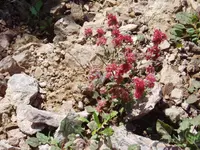
Abert's buckwheat (Eriogonum abertianum) is a small annual wildflower in the knotweed family, native to arid regions of the southwestern United States and northern Mexico. It typically forms low, branching mounds with narrow gray-green leaves and airy clusters of tiny white to pinkish flowers.
This species is adapted to dry, open habitats such as desert flats, sandy washes, and disturbed soils. It is generally considered easy to grow where conditions are sunny and well-drained, making it suitable for dry gardens and restoration plantings.
Understanding how to care for Abert's buckwheat starts with providing strong light, minimal summer water once established, and gritty, fast-draining soil that mimics its natural desert environment.

Care Difficulty
Easy Care

Light Preference
Full Sun

Water Requirements
Low Water

Temperature Preference
Warm Climate

Hardiness Zone
7–10

Soil Texture
Sandy, Rocky, Loamy

Soil pH
Slightly acidic (6.5–7.0), Slightly alkaline (7.0–7.5)

Soil Drainage
Well-drained

Fertilization
Minimal (feed rarely)
Scan your plant to receive care tips personalized for your specific plant
Available on iOS and Android
This desert perennial thrives in strong light and handles intense sun when established.
This species is highly drought-adapted and prefers infrequent, deep watering in fast-draining soil.
This plant is adapted to hot, dry climates but also tolerates notable cold when established.
This species is adapted to arid climates and does not have demanding humidity requirements.
This desert perennial prefers very lean, fast-draining mineral soils and reacts poorly to excess moisture.
This species can be grown in containers if the pot and substrate are managed to mimic very dry, fast-draining native sites.
This desert native requires minimal feeding and often thrives in poor soils without added fertilizer.
Eriogonum abertianum benefits from light structural pruning to maintain a compact, flowering form.
This species is usually grown in the ground; transplant sparingly to avoid disturbing its drought-adapted roots.
Seed propagation is the most practical method for Eriogonum abertianum in home landscapes.
This species is cold hardy in much of its native range and needs little specific winter attention.

Plant Health Check
Not sure what's wrong with your plant? Check your plant's health inside the app.
This species usually behaves as a short-lived annual in desert washes and sandy soils, germinating and completing its life cycle quickly during brief favorable moisture periods in late summer and fall.
Its small clustered flowers are an important nectar and pollen source for specialist desert bees that track blooming Eriogonum species through arid landscapes.
The plant is naturally tied to disturbed desert habitats such as ephemeral stream channels and roadside washes, where periodic flooding and shifting sands reduce competition from longer-lived shrubs.

This species was first described for science in the 19th century from material collected in the arid Southwest of what is now the United States, and it remains an indicator of relatively intact desert wash ecosystems where many other annuals struggle to persist.
This species is typically an annual in cultivation, completing its life cycle in 1 growing season. In mild, dry regions it may self-seed freely, so new seedlings appear each year without the original plants surviving long term.
Keep your plants happy and healthy with plant identification, disease detection, and easy care guidance.