Black-Eyed Susan Care (Rudbeckia hirta)

Also known as: brown betty, common black-eyed Susan, black-eyed coneflower
Black-Eyed Susan

About Black-Eyed Susan

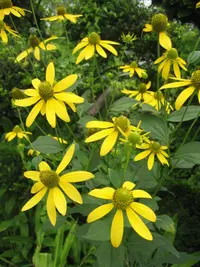
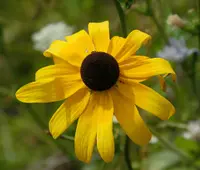
Black-eyed Susan, Rudbeckia hirta, is a herbaceous perennial often grown as an annual, known for its bright yellow petals and dark central cone. It forms upright clumps and sends up sturdy, branching stems topped with daisy-like flowers.

This species is native to North American prairies, meadows, and open roadsides, where it thrives in full sun and well-drained soil. Its strong stems, drought tolerance, and general pest resistance make it a forgiving choice for beginners.

Gardeners who want to learn how to care for Black-Eyed Susan usually appreciate its adaptability to different garden styles, from formal borders to naturalized plantings. It supports pollinators, attracting bees and butterflies through a long flowering season.

Main Plant Requirements

Care Difficulty

Easy Care

Light Preference

Full Sun

Water Requirements

Moderate Water

Temperature Preference

Cold Hardy

Hardiness Zone

3–9

Soil Texture

Sandy, Loamy, Clay

Soil pH

Acidic (5.5–6.5), Slightly acidic (6.5–7.0)

Soil Drainage

Well-drained

Fertilization

Minimal (feed rarely)

Get Personalized Care Plan

Scan your plant to receive care tips personalized for your specific plant

Available on iOS and Android

How to Care for the Black-Eyed Susan

Rudbeckia hirta performs best in open, bright sites where it can receive strong direct sun for most of the day.

  • Provide 6–8 hours of direct sun daily; full sun with morning and early afternoon exposure produces the most flowers and sturdy stems.
  • Accepts light partial shade, especially with 3–4 hours of strong morning sun, but flowering density and stem strength decline as shade increases.
  • In hot summers, intense late-afternoon sun can scorch foliage in very dry sites; use mulch to protect roots and avoid shading from taller plants in late season.

This species prefers evenly moist but not saturated soil, especially during establishment and peak flowering.

  • Water when the top 3–5 cm of soil feels dry, applying a deep soak at the root zone rather than light surface sprinkling to encourage deeper roots.
  • Reduce watering once Rudbeckia hirta is established; it tolerates short dry spells but prolonged wilting, crisp leaf edges, or drooping flower stems indicate the need for a thorough soak.
  • Ensure well-drained soil or raised beds so water does not pool; yellowing lower leaves, soft stems, and persistent wet soil signal overwatering or poor drainage.

This plant is adapted to temperate climates with warm summers and cold winters outdoors.

  • Active growth and flowering occur best around 70–85°F (21–29°C); plants still perform in 60–90°F (16–32°C) but growth slows outside the ideal range.
  • Mature plants tolerate brief drops to about 20°F (-6°C); hard freezes below this can kill top growth, though seed often survives to self-sow.
  • In hot spells above 90°F (32°C), flowering may pause and foliage can scorch if soil is dry; mulch and consistent soil moisture help buffer heat stress.

Humidity is rarely a concern for Rudbeckia hirta, which thrives in typical outdoor air.

Rudbeckia hirta prefers moderately fertile, well-drained soil that does not stay waterlogged.

  • Use a loamy or sandy-loam texture with some organic matter to support strong flowering.
  • Aim for slightly acidic to neutral pH, roughly 6.0–7.0, for best nutrient availability.
  • In heavy clay, mix in coarse sand or fine gravel plus compost to improve drainage and aeration.
  • Avoid compacted, soggy spots where water stands after rain, as roots are prone to rot.

This species grows reliably in containers outdoors when provided with enough root space and drainage.

  • Choose a deep pot at least 20–25 cm across so the plant can form a broad root system that anchors tall stems.
  • Use a heavier ceramic or clay container in windy sites to reduce tipping as the plant becomes top-heavy in bloom.
  • Fill the pot with a fast-draining mix and raise it on feet or bricks so drainage holes release water freely after storms.

Rudbeckia hirta benefits from modest feeding in nutrient-poor soils but does not need heavy fertilization.

  • Use a balanced, slow-release fertilizer (for example 10-10-10) or a light top-dressing of compost in early spring.
  • Apply fertilizer every 6–8 weeks during the main growing season if growth or flowering is weak.
  • Dilute liquid feeds to 1/2 strength to avoid lush, floppy growth in Black-Eyed Susan plantings.
  • Stop feeding in late summer to early fall so plants can harden off before winter dormancy.

Pruning supports tidy growth and sustained flowering in Rudbeckia hirta.

  • Deadhead spent blooms through summer by cutting stems back to a leaf node to encourage more flowers.
  • Remove dead, diseased, or badly damaged stems whenever noticed using clean, sharp pruners.
  • Thin crowded or weak stems in late spring to improve air flow and reduce foliar disease.
  • Cut back brown, finished stems to near ground level in late fall or early spring to refresh the clump.

Transplanting is more common than repotting for Rudbeckia hirta, which is usually grown in garden beds.

  • Transplant or divide in early spring or early fall, when weather is cool and soil is moist.
  • Move plants when clumps become crowded, flowering declines, or roots circle inside a pot and growth slows.
  • Lift with a wide root ball, keep roots shaded and moist, and replant at the same depth in well-drained soil.
  • Water deeply after transplanting and maintain even moisture for 1–2 weeks to reduce transplant shock.

Rudbeckia hirta is commonly propagated by seed and sometimes by division of mature clumps.

  • Collect dry, mature seed heads in late summer or fall and clean out the seeds.
  • Sow seeds outdoors in fall or early spring, or indoors 6–8 weeks before the last frost under bright light.
  • Keep seed-starting mix lightly moist at 65–75°F; germination usually occurs in 7–21 days.
  • Divide healthy, multi-stem clumps in early spring, replant divisions promptly, and water well.

Rudbeckia hirta is generally cold hardy in much of the US and needs only modest winter care in the ground.

  • In cold regions, apply a 5–8 cm layer of mulch after the ground cools to insulate the root zone.
  • Stems can be left standing over winter for wildlife value, then cut back in late winter or early spring.
  • Move container-grown plants into a sheltered, frost-free or slightly protected area to prevent root freezing.

Care Tips

Staggered Pinch-back

Pinch out the growing tips of young plants when they are 10–15 cm tall, then again 2–3 weeks later on only half the stems to create a mix of early and later blooms for a longer flowering season.

Targeted Deadheading

Instead of removing single spent flowers, cut entire flowering stems back to a strong side shoot or basal leaf cluster to redirect energy into new buds and keep the plant compact and productive.

Basal Clump Renewal

In early spring, thin crowded basal shoots by removing the weakest ones at the base, which improves air circulation and reduces foliar disease pressure later in the season.

Powdery Mildew Management

At the first sign of white, powdery leaf patches, remove and discard affected leaves, then water only at soil level and increase spacing to lower humidity around foliage and slow the disease.

Timed Self-seeding Control

If self-seeding is desired, leave only the healthiest seed heads to ripen fully and cut the rest before they brown, which lets you direct where new plants appear while still growing Black-Eyed Susan as a short-lived perennial.

Common Pests and Diseases

Septoria leaf spot

This disease causes small, dark brown to purplish spots with tan centers on older leaves, which may yellow and drop early. Symptoms include a lower-to-upper spread in dense plantings, especially in warm, wet weather.

Solution

Remove and discard heavily spotted leaves and any fallen debris to reduce spore spread, and avoid overhead watering so foliage dries quickly. Improve spacing and airflow; in persistent cases, apply a labeled copper or chlorothalonil fungicide at the first signs of spotting, following all label directions.

Powdery mildew

This disease shows as white, powdery patches on upper leaf surfaces, often appearing late in the season on crowded or shaded plants. Affected leaves may yellow, curl slightly, and age prematurely.

Solution

Increase spacing and sun exposure, water at soil level, and remove severely affected leaves to lower disease pressure. For recurring issues, use a labeled sulfur or potassium bicarbonate fungicide at the first sign of white growth, repeating as directed during humid periods to support healthy growing Black-Eyed Susan stands.

Aster yellows

This disease causes stunted growth, deformed or greenish flowers, and yellowed, twisted foliage, often turning blooms into leafy structures. Symptoms include slow decline across the season rather than rapid collapse.

Solution

Promptly remove and discard entire affected plants, including roots, since there is no cure once infected. Control leafhopper populations with reflective mulch or fine netting, reduce nearby weedy hosts, and replant only with healthy stock in the same area.

Leafhoppers

These insects are small, wedge-shaped, and quick-moving, feeding on leaf sap and causing pale stippling, yellowing, and sometimes brown leaf tips or distorted growth. This pest can also transmit aster yellows between plants.

Solution

Rinse plants with a firm stream of water to dislodge nymphs, and reduce nearby tall weeds and grasses that shelter populations. For heavier infestations, use insecticidal soap or neem oil, applied thoroughly to leaf undersides in the early morning or evening, repeating as needed according to the product label.

Spider mites

These pests are tiny, often reddish or yellowish, and feed on the undersides of leaves, creating fine webbing and a dusty appearance. Symptoms include bronzed, speckled foliage that may dry and drop in hot, dry weather.

Solution

Spray foliage, especially undersides, with a strong stream of water several times per week to knock mites off and increase humidity around the plants. If populations remain high, apply insecticidal soap or horticultural oil, ensuring full coverage and repeating at 5–7 day intervals until new growth appears clean.

Interesting Facts

Short‑lived perennial strategy

In much of its native range, this species behaves as a biennial or short‑lived perennial, investing heavily in seed production rather than long-term vegetative growth. This life-history strategy allows it to colonize disturbed or open habitats quickly and then rely on a persistent seed bank.

Specialized pollinator rewards

The dark central disk is packed with many tiny florets that open in sequence, providing nectar and pollen over an extended period. This staggered flowering pattern supports a wide range of pollinators, especially native bees, throughout the blooming season.

Native prairie pioneer

Rudbeckia hirta is naturally widespread in North American prairies, meadows, and open woods, where it often appears early in succession on disturbed soils. Its fibrous root system helps stabilize bare ground while its dense flowering stems add structural diversity for insects and small wildlife.

Botan icon

Did you know?

The species was formally described by Carl Linnaeus in 1753 and named to honor the Swedish botanist Olof Rudbeck, making it one of the classic North American wildflowers recognized in the foundational work of modern plant taxonomy.

FAQs about Black-Eyed Susan

Lack of blooms often comes from too much shade, excess nitrogen fertilizer, or plants that are still immature. Crowding, old congested clumps, or stress from drought or root damage can also reduce flower production significantly.

Grow Healthy Plants with Botan Care

Keep your plants happy and healthy with plant identification, disease detection, and easy care guidance.

Botan plant care app — identify plants on mobile

Explore More Plants