Bugleweed Care (Ajuga reptans)

Also known as: carpet bugle, Carpet Bugleweed, Common Bugle
Bugleweed

About Bugleweed

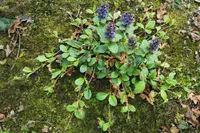
Bugleweed (Ajuga reptans) is a low-growing, spreading perennial often used as a groundcover in gardens and landscapes. It forms dense mats of foliage with short flower spikes.

Leaves are usually glossy, in shades of green, bronze, or purple, and the plant produces blue to violet flowers in spring. Its creeping habit allows it to fill gaps between taller plants and along paths.

Ajuga reptans is native to Europe but is now widely grown in temperate regions, especially in North America. It is generally easy to grow and can adapt to different garden conditions.

It prefers moist, well-drained soil and partial shade, which makes it simple to care for Bugleweed in many home gardens.

Main Plant Requirements

Care Difficulty

Easy Care

Light Preference

Partial Shade

Water Requirements

Regular Water

Temperature Preference

Cold Hardy

Hardiness Zone

3–9

Soil Texture

Sandy, Loamy, Clay

Soil pH

Acidic (5.5–6.5), Slightly acidic (6.5–7.0)

Soil Drainage

Moist but well-drained

Fertilization

Minimal (feed rarely)

Get Personalized Care Plan

Scan your plant to receive care tips personalized for your specific plant

Available on iOS and Android

How to Care for the Bugleweed

Ajuga reptans grows best in cool, bright conditions with limited direct sun.

  • Provide 2–4 hours of gentle morning sun with afternoon shade, or bright dappled light under shrubs or open trees.
  • Allow part shade to full shade in warmer zones; foliage color is richest with some filtered light rather than deep, dense shade.
  • Protect Bugleweed from strong midday and afternoon sun, which can scorch leaves and dry the soil quickly, especially in summer heat.

Ajuga reptans prefers consistently moist but not waterlogged soil.

  • Water when the top 2–4 cm of soil feels dry, using deeper, less frequent soakings rather than light daily sprinkles.
  • Increase monitoring during hot, dry periods; wilting, dull leaves, or gaps in the mat indicate underwatering, while yellowing, soft growth suggests excess moisture.
  • Plant in well-drained soil with added organic matter so water infiltrates quickly and does not pool around crowns, reducing root rot risk.

This groundcover is cold hardy and prefers moderate temperatures during active growth.

  • Best growth occurs around 55–75°F (13–24°C), with cooler spring and fall conditions often producing denser foliage.
  • Ajuga reptans tolerates winter cold down to about -20°F (-29°C) when established, going dormant and resprouting in spring.
  • In summer, protect from prolonged heat above 85°F (29°C) by providing shade and moisture, as extreme heat plus full sun can scorch foliage and thin the carpet.

Ajuga reptans tolerates a wide range of outdoor humidity and usually does not need special humidity management.

Ajuga reptans prefers consistently moist, well-structured soil that stays aerated yet does not dry out quickly.

  • Use a loamy soil rich in organic matter, such as a mix of garden soil, compost, and leaf mold, to support dense mat-forming growth.
  • Ensure drainage is moderate; soil should retain moisture but never stay waterlogged, which encourages crown and root rot.
  • Aim for slightly acidic to neutral pH, roughly 6.0–7.0, and adjust with compost or a small amount of garden lime if soil is very acidic.
  • Improve heavy clay by incorporating coarse sand or fine gravel plus compost to increase pore space and prevent compaction.

This species is suitable for container growing when the potting setup supports its shallow, spreading root system.

  • Select a wide, shallow container to match its creeping habit and prevent roots from circling tightly near the surface.
  • Use a heavier or more stable pot if the planting will be placed on slopes or windy spots, as dense foliage mats can shift the container.
  • Leave 3–5 cm below the rim free of soil so surface runners have room to spread and can be mulched lightly without spilling over.

This groundcover benefits from modest feeding to support dense foliage and flowering without becoming overly lush.

  • Use a balanced slow-release fertilizer or thin layer of compost in early spring to support new growth when caring for Bugleweed.
  • Apply once more in mid-summer in poor soils; skip extra feeding in rich or amended beds.
  • Dilute liquid balanced NPK to 1/2 strength for container plants during active growth every 4–6 weeks.
  • Stop feeding in late summer to early fall so plants harden off before winter dormancy.

Pruning helps Ajuga reptans stay compact, control spread, and maintain a tidy appearance.

  • Cut back spent flower spikes in late spring to early summer with clean hand pruners or scissors.
  • Trim or shear lightly after flowering to encourage fresh foliage and reduce legginess.
  • Remove dead, damaged, or diseased leaves and crowded patches to improve airflow and reduce fungal problems.
  • Edge or cut back creeping runners where they invade lawns or other beds to contain the planting area.

This plant is most often transplanted in garden beds rather than repotted in containers.

  • Transplant clumps in early spring or early fall when temperatures are mild and soil is moist.
  • Move plants when growth declines, centers thin out, or mats become too dense, usually every 3–5 years.
  • Lift clumps gently, tease apart rooted sections, and replant at the same depth into loosened, well-drained soil.
  • Water thoroughly after transplanting and keep soil evenly moist for 1–2 weeks to limit transplant shock.

Ajuga reptans is commonly propagated by division and rooted runners rather than from seed.

  • Divide mature mats in early spring or early fall, separating sections with healthy roots and foliage.
  • Replant divisions immediately into prepared soil, spacing 20–30 cm apart, and water well to settle roots.
  • Use creeping runners with small rooted rosettes; cut and transplant once they have several leaves and firm roots.
  • For seed, sow on the soil surface in spring, keep evenly moist, and provide bright, indirect light for germination.

This groundcover is generally cold hardy and needs only minimal winter care in most temperate climates.

  • In zones with freezing winters, a 2–5 cm layer of mulch stabilizes soil temperature and moisture around roots.
  • Leave most foliage in place over winter to shield crowns, cutting it back in early spring if it looks tattered.
  • In very cold or exposed sites, add extra mulch over young plantings during the first winter for added insulation.
  • Move small container specimens to a sheltered, unheated area and keep soil slightly moist, not waterlogged.

Care Tips

Control Spreading Edges

Use a flat spade or hand edger 1–2 times per year to slice off runners that creep into lawns or beds where they are not wanted, then lift and discard or replant them in designated areas.

Divide To Rejuvenate

Every 3–4 years, lift overcrowded mats in early spring or early fall, split them into smaller clumps with healthy crowns and roots, and replant at the same depth to maintain vigor and dense coverage when growing Bugleweed.

Improve Air Circulation

When planting, leave small gaps around tree trunks, fence bases, and solid edging so air can move through the patch, which reduces humidity in the crown zone and helps prevent foliar diseases.

Clean After Winter

In late winter or very early spring, gently rake or hand-pick out dead leaves and debris lodged in the foliage rosettes so new growth can emerge cleanly and fungal issues are less likely.

Spot-Treat Weeds

Hand-pull or carefully spot-treat isolated weeds early, before they root deeply into the mat, so the groundcover stays uniform and Bugleweed does not have to compete for space and nutrients.

Common Pests and Diseases

Crown rot

This disease develops in dense, wet plantings where crowns stay damp for long periods, leading to wilting and collapse of rosettes. Symptoms include brown, mushy crown tissue and a rapid thinning of the groundcover patches.

Solution

Remove and discard affected plants with rotting crowns, then improve drainage and reduce watering frequency so the soil surface dries between waterings. Thin overcrowded mats, avoid burying the crown with mulch, and if needed replant into raised or better-drained beds as part of long-term Ajuga reptans care.

Southern blight

This disease is caused by a soilborne fungus that attacks stems at or just above the soil line, leading to sudden wilt and plant death. Symptoms include tan lesions on lower stems, white fungal growth, and small round tan to orange sclerotia on the soil surface.

Solution

Promptly remove and discard infected plants along with surrounding soil to reduce inoculum. Avoid overhead watering, keep mulch pulled back from stems, and consider relocating plantings to a new area with better drainage and airflow if losses are recurring.

Powdery mildew

This disease appears in humid, shaded sites as white, powdery patches on leaves, which can cause yellowing and leaf distortion. Symptoms include reduced vigor and an overall dull, grayish look to the foliage mat.

Solution

Increase air circulation by thinning dense plantings and trimming nearby vegetation, and avoid frequent overhead watering. Remove and discard heavily affected leaves, and in persistent cases use a labeled fungicide or a horticultural oil product applied according to directions during dry weather.

Crown-feeding weevils

These insects feed on the crowns and leaf bases, causing notched leaves and weakening or dieback of individual rosettes. This pest is usually more noticeable where plantings are old, dense, and stressed by poor drainage or shade extremes.

Solution

Inspect crowns for adult weevils at night and hand-pick where practical, then remove severely damaged rosettes to reduce hiding places. Encourage birds and beneficial insects, avoid overmulching the planting, and, if damage continues, use a targeted soil-applied insecticide labeled for weevils in ornamental groundcovers.

Aphids

These insects cluster on young shoots and flower spikes, sucking sap and causing distorted growth and sticky honeydew on foliage. This pest can lead to sooty mold growth on the honeydew, making the mat appear dirty and reducing photosynthesis.

Solution

Rinse plants with a firm stream of water to dislodge aphids, focusing on undersides of leaves and flower stalks. If populations persist, apply insecticidal soap or a light horticultural oil in the early morning or evening, repeating as needed and avoiding treatment during high heat to prevent leaf burn.

Interesting Facts

Clonal carpet former

This species spreads mainly through above-ground stolons, forming dense, genetically identical patches that can rapidly cover open soil in lawns and woodlands.

Shade-tolerant rosette

Its low rosette leaves are adapted to low light in deciduous forests, allowing the plant to photosynthesize efficiently early in spring before tree canopies fully leaf out.

Bee-attracting blue spikes

The blue to violet flower spikes produce nectar and pollen that attract bees and hoverflies, making the plant an important early-season resource in temperate gardens and woodlands.

Botan icon

Did you know?

In parts of Europe, this species has been used as an indicator plant for ancient woodland, because long-established, undisturbed forests often retain stable populations that persist for many decades.

FAQs about Bugleweed

This species spreads rapidly by surface runners, forming a dense mat over time. In favorable conditions it can crowd nearby plants. Contain it with edging, root barriers, or by lifting and thinning outer runners each year.

Grow Healthy Plants with Botan Care

Keep your plants happy and healthy with plant identification, disease detection, and easy care guidance.

Botan plant care app — identify plants on mobile

Explore More Plants